The arrest of three anti-dam activists has intensified tensions over the proposed 11,200-MW Siang Upper Multipurpose Project in Arunachal Pradesh. While police investigate arson and vandalism in Pasighat, the activists have condemned the violence and called for peaceful protest.
BY PC Bureau
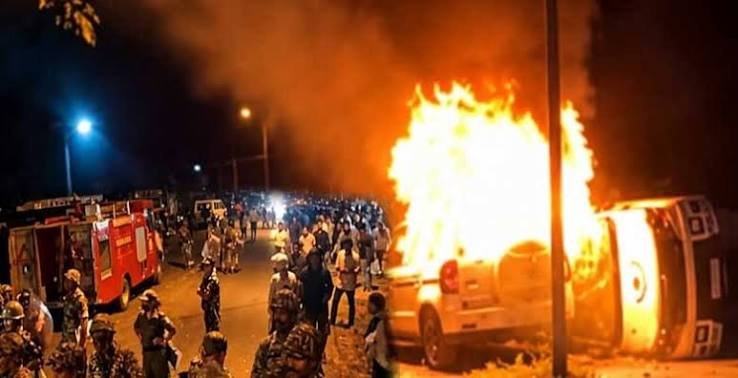
October 26: Three prominent opponents of the proposed 11,200-MW Siang Upper Multipurpose Project (SUMP) have been arrested in Arunachal Pradesh following a night of violence in Pasighat, where mobs allegedly torched government vehicles, set fire to a National Hydroelectric Power Corporation (NHPC) office and ransacked the homes of political leaders.
Those arrested include human rights lawyer and activist Ebo Mili and youth leaders Otul Jerang and Tajong Talom. Their arrests have added to tensions surrounding the mega-dam project in Arunachal Pradesh, which has faced sustained opposition from sections of indigenous communities concerned about its environmental, social and cultural consequences.
Mili and Jerang surrendered at the Pasighat police station, saying they wanted to cooperate with the authorities. Talom was detained in Assam while travelling to Delhi to brief national media about the project.
The three have been booked under provisions of the Bharatiya Nyaya Sanhita (BNS) and the Prevention of Damage to Public Property Act in connection with Pasighat Police Station Case No. 114/2026. Section 48 of the Bharatiya Nagarik Suraksha Sanhita (BNSS) is also cited in connection with the case.
The arrests followed outbreaks of stone-pelting, arson and vandalism that began on Friday night and continued into Saturday. The NHPC office was set on fire, several police vehicles were torched and the Pasighat police station was damaged. The violence also targeted political residences, including the homes of Arunachal Pradesh BJP president Kaling Moyong, Pasighat West MLA Ninong Ering and Mariyang-Geku MLA Oni Panyang.
The three arrested leaders have distanced themselves from the violence, maintaining that their opposition to the dam was intended to remain peaceful. They condemned the destruction of public and private property and urged young protesters not to allow the movement to be discredited by violence.
READ: Jamia Agrees to Student Union Elections After Prolonged Stir
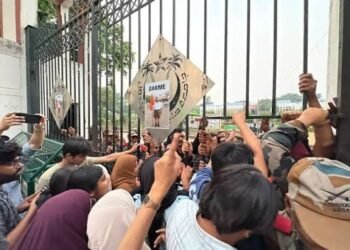
In a social media statement, Mili said the demonstration had remained peaceful until police allegedly used stun grenades and tear gas, triggering panic and confusion. He denied any involvement in the violence and appealed to protesters to uphold non-violent methods.
“We are not part of this violence and do not support any kind of violence,” Mili said, condemning the damage to public and private property.
Look at the sheer number of armed personnel that have descended upon Pasighat, which saw a night of violence, vandalism, and the looting of the homes of elected representatives from Friday night to Saturday. This followed a Gen Z protest against militarisation and the arrest of villagers protesting against the Siang upper multipurpose project. The flights bringing in Rapid Action Forces stopped just a short while ago. This is state-sponsored violence and provocation.
— Tongam Rina (@tongamrina) October 25, 2026
Jerang similarly maintained that genuine protesters had no role in the midnight arson and vandalism. He alleged that outside elements had exploited the situation to carry out the destruction.
Talom resigned from the Adi Students’ Union (AdiSU) shortly before his detention, citing intense personal pressure and what he described as targeted harassment of his family because of his opposition to the project.
The 11,200-MW Siang Upper Multipurpose Project is among the major proposed hydropower developments in the Siang basin of Arunachal Pradesh Its scale has fuelled concerns among sections of local communities over potential displacement, ecological damage and threats to indigenous livelihoods and cultural heritage.
The arrests have brought the conflict between the state’s development plans and local opposition into sharper focus. While the violence has raised questions about public order and accountability, the protesters’ stated concerns over the project remain a separate issue from the criminal allegations arising from the unrest.
The immediate challenge for the authorities is to investigate the violence and identify those responsible while ensuring that opposition to the dam can be expressed peacefully and that the underlying concerns of affected communities receive a hearing.