



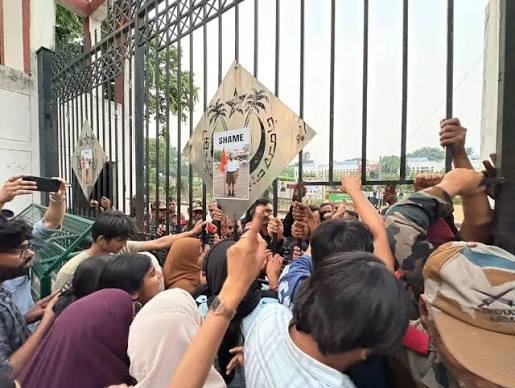
In a major concession to protesting students, Jamia Millia Islamia has revoked suspensions and show-cause notices issued during the agitation and ordered an inquiry into security personnel’s conduct. However, uncertainty over the constitution’s approval leaves the election date unclear.
BY PC Bureau
October 26: Jamia Millia Islamia has agreed to hold student union elections after nearly two decades, following prolonged protests and an indefinite hunger strike by students demanding an elected representative body.
An order issued by the university’s Registrar on October 26, 2026, states that elections to the Jamia Millia Islamia Students’ Union (JMISU) will be held 15 days after approval of the union’s constitution. The administration has also revoked suspension orders and show-cause notices issued to students during the agitation and ordered an inquiry into the conduct of security personnel during the protests.
The decision marks a significant concession after days of demonstrations, hunger strikes and negotiations between student representatives and the university administration.
Jamia Elections Tied to Constitution Approval
The university’s order does not specify when the students’ union constitution will be approved, leaving the election schedule dependent on the completion of that process.
The administration has also recorded the protesting students’ undertaking to issue a public apology at a press conference for defamatory statements, actions or social media posts directed against the university administration. The posts are to be removed immediately, with compliance monitored by the university.
The order calls for the protest to be withdrawn immediately following its issuance. However, some students have expressed dissatisfaction, arguing that the administration has not provided a definitive date for constitution approval or addressed all their demands, including calls for the removal of senior officials responsible for campus discipline and security.
READ: Trump Baiter Lula Halts Right-Wing Advance in Brazil Poll
Office of the Chief Public Relations Officer, JMI https://t.co/S0ydd6j8xo
— Jamia Millia Islamia (NAAC A++ Grade Central Univ) (@jmiu_official) October 26, 2026
Nearly Two Decades Without an Elected Union
The students’ union was dissolved in 2006 following campus violence and academic disruptions. The last elections were held around 2005, leaving generations of students without an elected representative body.
The latest agitation began in October, with students demanding a clear election timeline, withdrawal of disciplinary action against protesters and an inquiry into the conduct of security personnel.
The protest escalated as hunger strikes continued and hundreds of students joined demonstrations. The university witnessed heightened security deployment, confrontations over protest sites and disruptions to normal campus activities. Classes were shifted online and libraries were closed during the agitation.
Students argued that Jamia should restore an elected union, pointing to institutions such as Jawaharlal Nehru University and Delhi University, where student organisations play a prominent role in campus affairs.
The administration, meanwhile, maintained that the election process must comply with the Lyngdoh Committee recommendations, University Grants Commission norms and the provisions of the Jamia Act. A committee had already been tasked with drafting the union’s constitution.
Uncertainty Over End of Agitation
The university’s announcement has produced mixed reactions among protesters. While some students viewed the order as a breakthrough and indicated that the agitation could end, others questioned the absence of a firm deadline for approving the constitution and conducting the elections.
The inquiry into security personnel’s conduct and the withdrawal of disciplinary notices address two major student demands. However, demands concerning the removal of senior university officials remain unresolved.
The coming weeks will determine whether the administration can complete the constitutional process and announce an election schedule acceptable to the students.
The decision nevertheless represents a major development in Jamia’s prolonged dispute over student representation. After nearly 20 years without an elected union, the challenge now is to translate the university’s assurance into a functioning electoral process.




Comments 1