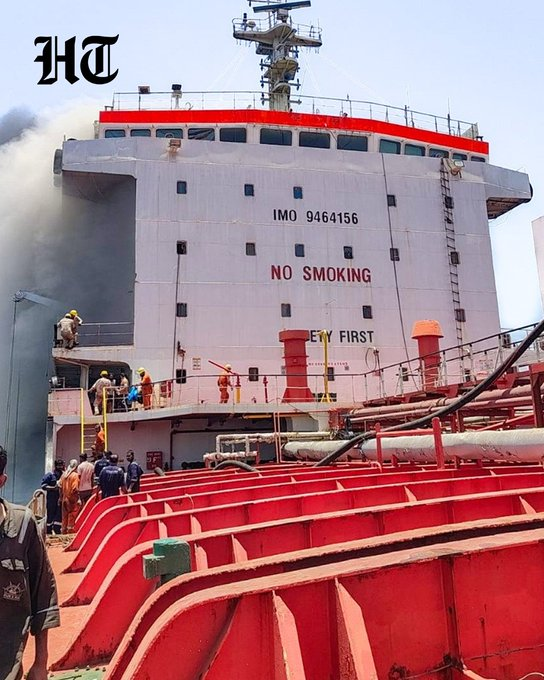
The attack highlights the growing dangers facing commercial shipping and Indian sailors amid escalating tensions in the Gulf region.
BY PC Bureau
New Delhi, June 10: Three Indian nationals remain missing after a commercial oil tanker was struck by a missile near the Strait of Hormuz on Wednesday, prompting a major search-and-rescue operation and renewed concerns over the safety of civilian shipping in the increasingly volatile Gulf region.
India’s Ministry of External Affairs (MEA) confirmed that 21 Indian crew members had been rescued following the attack on the tanker Settebello, while efforts were continuing to locate the remaining three sailors.
The Palau-flagged vessel was carrying a crew of 28, including 24 Indian nationals, when it came under attack approximately 20 nautical miles northeast of Sohar, a key port city on Oman’s northern coast.
According to maritime authorities, a missile struck the vessel’s engine room, triggering a fire and forcing the crew to issue an emergency distress call.
India Launches Emergency Response
The Ministry of External Affairs strongly condemned the attack and said the Indian Embassy in Muscat had been activated to coordinate with Omani authorities and maritime agencies involved in the rescue effort.
Officials said search teams were continuing operations in the surrounding waters as concerns mounted over the fate of the missing crew members.
The incident marks the latest case of Indian seafarers being caught in the crossfire of escalating tensions in the Gulf, where commercial vessels have increasingly become vulnerable amid growing military confrontation and maritime restrictions.
READ: Remains of Six Abducted Naga Youths Found in Manipur Hills
Attack Amid Escalating Gulf Crisis
Maritime security analysts believe the strike is linked to the worsening security environment surrounding the Strait of Hormuz, one of the world’s most critical energy chokepoints.
British maritime security firm Ambrey assessed that the attack may be connected to ongoing hostilities involving US-led efforts to enforce restrictions on Iran-linked shipping traffic.
The region has witnessed a sharp deterioration in maritime security since April, when Washington intensified measures targeting vessels suspected of links to Iran following disputes over freedom of navigation and commercial shipping through the Strait of Hormuz.
Since then, multiple confrontations at sea have been reported, raising fears that civilian vessels are increasingly becoming collateral victims of a broader geopolitical standoff.
READ:
24 Indian crew members were rescued from an oil tanker after it was struck by a US missile off the coast of Oman. pic.twitter.com/D7wZlIIT5t
— Al Jazeera English (@AJEnglish) June 9, 2026
Commercial Shipping Under Threat
The attack on the Settebello is the latest in a series of incidents affecting merchant shipping across the Gulf.
Security agencies have reported several strikes and maritime security incidents near the coasts of Oman, the United Arab Emirates, and Kuwait in recent months. Tankers and cargo vessels operating in the region have faced heightened risks as tensions between regional and international actors continue to rise.
The Strait of Hormuz remains one of the world’s busiest maritime corridors, carrying a significant share of global oil and liquefied natural gas exports. Any disruption to traffic through the narrow waterway has immediate implications for global energy markets and international trade.
Growing Concern for Indian Seafarers
India supplies one of the world’s largest pools of merchant navy personnel, with thousands of Indian sailors serving aboard international commercial vessels operating across conflict-prone maritime routes.
As tensions in the Gulf continue to escalate, concerns are growing about the safety of Indian crews working in one of the world’s most strategically sensitive regions.
For the families of the three missing sailors, however, the focus remains on the ongoing rescue effort and the hope that they will be found alive.
Authorities in India and Oman have said search op