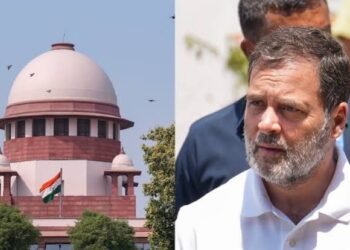
The Supreme Court has quashed criminal proceedings and summons against Rahul Gandhi over his remarks on V.D. Savarkar, holding that the required legal sanction for prosecution had not been established.
BY PC Bureau
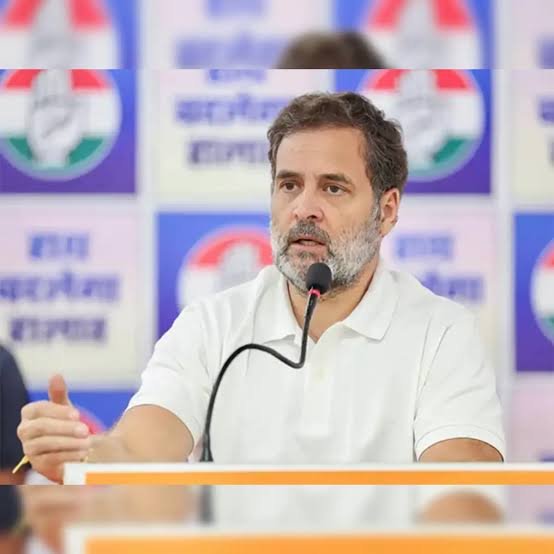
August 14, 2026: The Supreme Court on Friday brought an end to criminal proceedings against Congress leader and Leader of Opposition Rahul Gandhi over his remarks about Hindutva ideologue Vinayak Damodar Savarkar, holding that the required legal sanction to prosecute him had not been established.
A Bench of Justices Dipankar Datta and Sheel Nagu allowed Gandhi’s plea challenging the summons issued by a magistrate in Uttar Pradesh and quashed the orders initiating proceedings against him.
The Court relied on the Uttar Pradesh government’s own affidavit, which did not disclose that the necessary sanction for prosecution had been granted.
“We have heard learned counsel for parties. In affidavit filed by respondent State of UP, there is no disclosure of sanction having been granted. In such view of matter, orders passed by Magistrate shall be quashed,” the Bench said.
A detailed order explaining the legal reasoning is awaited.
Case over Savarkar remarks
The case originated from remarks Gandhi made during the Bharat Jodo Yatra on November 17, 2022, in which he described Savarkar as having collaborated with the British and claimed that he had received a pension from them.
Advocate Nripendra Pandey subsequently approached the court, alleging that Gandhi’s comments were intended to promote hostility and create ill-will.
The complaint invoked Sections 153A and 505 of the Indian Penal Code (IPC).
Pandey had also argued that Mahatma Gandhi had recognised Savarkar as a patriot and alleged that Rahul Gandhi’s comments were therefore objectionable.
How the case reached the Supreme Court
The litigation went through several stages before reaching the top court.
In June 2023, an Additional Chief Judicial Magistrate dismissed Pandey’s complaint.
Pandey challenged that decision before the sessions court, which allowed his plea and sent the matter back for consideration.
In December 2024, a Lucknow magistrate subsequently summoned Rahul Gandhi, holding that his remarks describing Savarkar as a British servant who received a pension had the potential to spread hatred and ill-will and that a prima facie case was made out.
Gandhi challenged the summons.
The Allahabad High Court declined to grant him relief on April 4, 2025, with Justice Subhash Vidyarthi observing that Gandhi could pursue the statutory remedy before the sessions court under Section 397 of the Code of Criminal Procedure.
Gandhi then approached the Supreme Court.
The top court had earlier stayed the summons while taking exception to the language used by Gandhi. It had described the remarks as irresponsible and cautioned that similar statements in the future could invite action by the court on its own motion.
The Bench had also referred during the proceedings to a letter written by former Prime Minister Indira Gandhi praising Savarkar.
The Supreme Court has now quashed the proceedings because the required sanction for prosecution was not shown to have been obtained.
What is Section 153A?
Section 153A of the IPC dealt with promoting enmity between different groups on grounds such as religion, race, place of birth, residence or language, and with acts prejudicial to the maintenance of harmony.
The provision was frequently invoked in cases involving allegedly inflammatory speeches or statements.
READ: CJI Surya Kant Slams BCI Action Against NALSAR Student
Importantly, prosecution under Section 153A could require prior sanction from the appropriate government in circumstances covered by the relevant procedural law.
The Supreme Court’s present ruling, based on the absence of the required sanction, therefore addresses a procedural and legal requirement for prosecution. It does not amount to a judicial finding that Gandhi’s statements about Savarkar were historically correct or incorrect.
The IPC has since been replaced by the Bharatiya Nyaya Sanhita (BNS), which came into force in July 2024. Cases relating to offences allegedly committed before its implementation can continue to be governed by the earlier legal framework, subject to the applicable law.
Who was Savarkar?
Vinayak Damodar Savarkar (1883–1966) was an Indian political activist, writer and one of the most influential proponents of Hindutva.
He was involved in revolutionary nationalist activity during the British colonial period and was associated with the India House network in London. He was arrested by British authorities in 1910 and eventually transported to the Cellular Jail in the Andaman Islands, where he spent years in imprisonment.
Savarkar later became a prominent ideological figure for Hindu nationalist politics and served as president of the Hindu Mahasabha.
His political legacy remains deeply contested.
Supporters regard him as an important revolutionary nationalist who advocated India’s independence and developed a powerful conception of Indian national identity. Critics have focused on his Hindutva ideology, his later political positions and his petitions for clemency submitted during his imprisonment.
His role in the freedom movement and his relationship with the British authorities have therefore remained subjects of intense historical and political debate.
The criminal case against Rahul Gandhi arose from that contested historical legacy. The Supreme Court’s decision, however, was based on the absence of the legally required sanction and not on a final judicial determination of the historical claims made by either side.