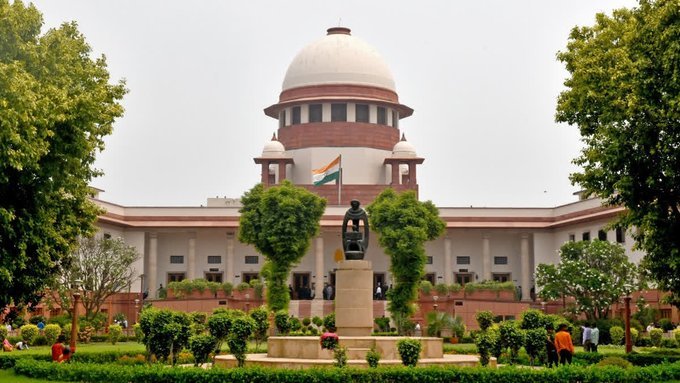
Hearing petitions alleging lathi charges, pellet guns, tear gas and electric weapons against student protesters, the Supreme Court directed authorities to preserve CCTV footage, drone videos, body-camera recordings and other digital evidence for an independent probe.
BY PC Bureau
New Delhi, July 28: The Supreme Court on Tuesday directed all states not to take any coercive action against students who participated in the Cockroach Janta Party (CJP)-led protests demanding the resignation of Union Education Minister Dharmendra Pradhan over the alleged NEET-UG 2026 paper leak. The Court also ordered the immediate release of detained protesters who have no prior criminal record, while making it clear that this protection would not automatically extend to individuals with criminal antecedents.
A Bench comprising Chief Justice of India Surya Kant and Justices Joymalya Bagchi and V. Mohana passed the interim directions while hearing a batch of petitions alleging excessive police force against student demonstrators across several states.
The Court clarified that police authorities are free to register First Information Reports (FIRs) wherever offences are alleged, but directed that no coercive measures, including arrests or other punitive action, should be taken against protesters with clean records until further orders.
However, the Bench excluded persons with previous criminal antecedents from the scope of the interim relief. It did not specify what action could be taken against such individuals, leaving that issue open for consideration at a later stage.
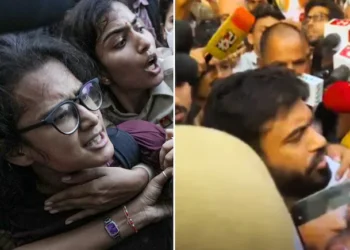
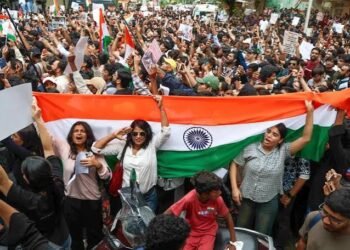
The petitions before the Court allege that police resorted to disproportionate force during the nationwide protests, which began at Delhi’s Jantar Mantar before spreading to Maharashtra, Bihar, Gujarat, Assam, West Bengal and Kerala. According to the petitioners, protesters were subjected to lathi charges, tear gas, pellet guns and electric weapons while exercising their constitutional right to peaceful assembly.
The petitioners argued that the police action violated the students’ fundamental rights under Articles 14, 19, 20 and 21 of the Constitution, contending that the use of force was arbitrary, excessive and disproportionate.
During the hearing, the Bench observed that the allegations raised “prima facie require an independent and impartial inquiry,” indicating that the material placed before it warranted closer judicial scrutiny.
READ: Opinion: Who Gets to Lecture India’s Gen Z on Civility?
To preserve evidence, the Court directed all concerned authorities to ensure that CCTV footage, drone recordings, body-camera videos, wireless communication logs and Police Control Room (PCR) records relating to the protests are preserved without alteration or deletion. The Bench also instructed the authorities to secure all digital evidence generated during the protests, including video recordings and electronic data.
Expressing concern over the privacy of those who participated in the demonstrations, the Court further directed police authorities not to disclose or circulate the personal details of protesters in the public domain, emphasising the need to protect their digital privacy while the matter remains under judicial consideration.
In a significant step, the Supreme Court directed the Chief Secretaries and Directors General of Police of the states where the protests took place to remain personally present at the next hearing to assist the Court. Their appearance has been scheduled for Monday, August 3, when the Bench is expected to consider the progress made by the states and decide the future course of the proceedings.
The case is likely to have far-reaching implications for the handling of mass protests, police accountability and the constitutional limits on the use of force against demonstrators.