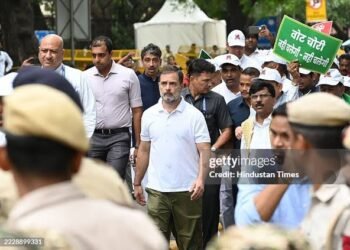
Congress president Mallikarjun Kharge sought the resignation of Union Education Minister Dharmendra Pradhan, while AAP leaders visited injured protesters, accusing the Centre of using force instead of addressing students’ concerns over paper leaks.
BY PC Bureau
New Delhi, July 21, 2026: The violent police crackdown on students marching towards Parliament over the NEET paper leak and examination irregularities has escalated into a major political flashpoint, with Opposition parties closing ranks behind the protesters and demanding an apology from Prime Minister Narendra Modi, the resignation of Union Education Minister Dharmendra Pradhan, and an immediate debate in Parliament.
The confrontation on Monday, during which Delhi Police used lathis and tear gas to stop thousands of protesters from reaching Parliament, has triggered nationwide outrage and intensified the ongoing student agitation centred at Jantar Mantar.
Rahul Gandhi Questions PM’s Silence
Leader of Opposition Rahul Gandhi launched a sharp attack on the Centre, accusing the government of responding to students’ demands with force instead of dialogue.
Speaking outside Parliament on Tuesday, Gandhi questioned Prime Minister Modi’s silence over the incident.
“Why is the Prime Minister silent? He hasn’t even apologised to the students who were beaten by the police. He should speak up and end this nonsense,” Gandhi said.
He announced that he, along with Congress MP Priyanka Gandhi Vadra, would visit injured protesters admitted to Delhi’s Ram Manohar Lohia (RML) Hospital.
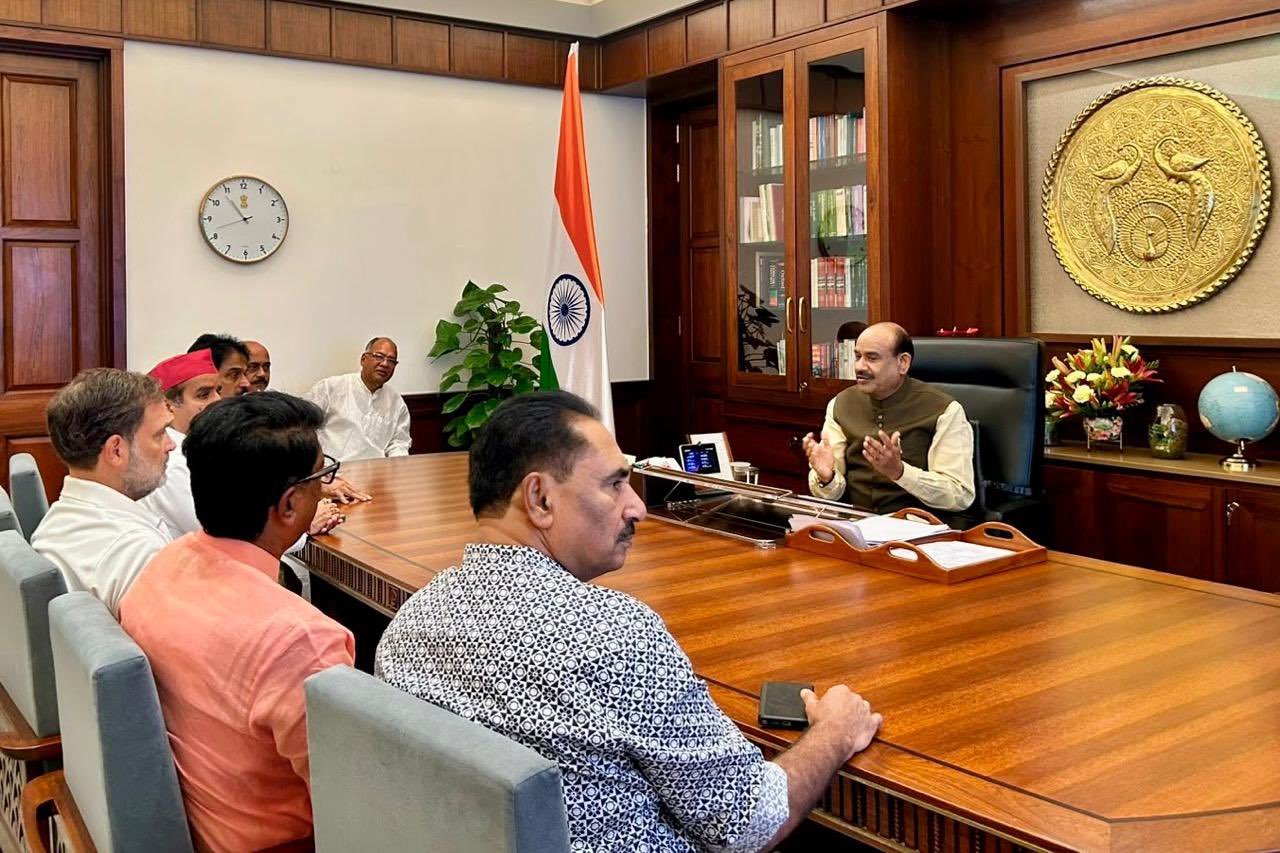
Earlier in the day, Rahul Gandhi, accompanied by several Opposition MPs, met Lok Sabha Speaker Om Birla and demanded a detailed discussion on the police action and the larger examination crisis.
In a post on X, Gandhi said Parliament must debate “the brutality unleashed on students” and the government’s “complete lack of accountability” over repeated examination scandals.
“If Parliament cannot discuss the future of India’s youth, what is it for?” he asked, adding that the Opposition would continue its fight both inside Parliament and on the streets.
Met the Hon’ble Lok Sabha Speaker today along with MPs of the Opposition.
Our demand is simple: Parliament must have a detailed discussion on the brutality unleashed on students yesterday and on the government’s complete lack of accountability for the examination crisis.… pic.twitter.com/qc2ptKQUt7
— Rahul Gandhi (@RahulGandhi) July 21, 2026
Kharge Demands Pradhan’s Resignation
Congress president Mallikarjun Kharge also condemned the police action, questioning why students demanding justice were met with lathi charges and tear gas.
He criticised the security lockdown around Parliament and alleged restrictions on internet services in parts of the capital during the protests.
Kharge demanded the resignation of Union Education Minister Dharmendra Pradhan, saying he must accept moral and political responsibility for repeated paper leaks and the anxiety faced by lakhs of students.
The Congress chief also called for an urgent discussion on the issue in both Houses of Parliament.
AAP, Other Opposition Leaders Extend Support
Leaders of the Aam Aadmi Party (AAP) also extended support to the injured students.
Several party leaders, including Arvind Kejriwal, visited hospitals to meet those injured during Monday’s clashes, while senior AAP leader Sanjay Singh criticised the use of force against what he described as peaceful protesters seeking accountability for examination irregularities.
Several other Opposition parties also backed the students, transforming the protest into one of the biggest political issues of the ongoing Parliament session.
CJP Refuses to Back Down
Amid the political storm, Cockroach Janta Party (CJP) founder Abhijeet Dipke declared that the movement would continue despite police action.
Addressing a large gathering at Jantar Mantar, Dipke said:
“We will not back down. Our movement will continue as it is.”
Thousands of protesters returned to the protest site on Tuesday despite heavy security, removal of protest infrastructure and alleged disruptions to water and electricity supplies.
What the Protesters Want
The agitation, spearheaded by the CJP and supported by several student organisations, is demanding:
- A comprehensive probe into NEET and other examination paper leaks.
- Action against those responsible for recruitment and examination scams.
- Resignation of Union Education Minister Dharmendra Pradhan.
- Compensation for affected students and families.
- Structural reforms to make India’s examination system transparent and tamper-proof.
- Justice for students who allegedly died due to examination-related stress.
The movement gained nationwide prominence after environmentalist Sonam Wangchuk joined the protest with a hunger strike before being hospitalised following police intervention.
READ: Massive Crowds Return to Jantar Mantar as CJP Vows to Continue Protest
Monday’s Violent Confrontation
Monday witnessed one of the largest student demonstrations in Delhi in recent years as thousands attempted to march from Jantar Mantar to Parliament.
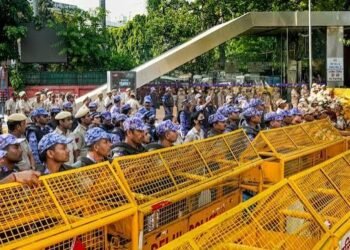
Delhi Police used barricades, lathi charges and tear gas to stop the procession, leading to violent clashes in which more than 100 police personnel and over 60 protesters were reportedly injured.
The confrontation brought demonstrators within a short distance of Parliament, prompting heightened security, traffic restrictions and widespread disruption across central Delhi.
Government Defends Action
Meanwhile, Parliamentary Affairs Minister Kiren Rijiju, briefing reporters after the NDA Parliamentary Party meeting, said Prime Minister Narendra Modi had described the NEET paper leak as a “ghor paap” (grave sin) and called for the strictest punishment for those responsible.
According to Rijiju, the Prime Minister stressed that ensuring the integrity of public examinations was a national responsibility and urged states and institutions to work together to prevent future leaks.
With protests continuing at Jantar Mantar and Opposition parties united in demanding accountability, the NEET paper leak has evolved from an examination controversy into a major political challenge for the government.
As Parliament’s Monsoon Session continues, the issue is expected to dominate proceedings, with demands for a full debate, judicial scrutiny and sweeping reforms to India’s examination system likely to intensify in the days ahead.