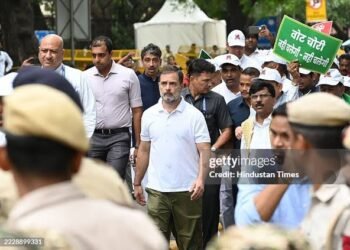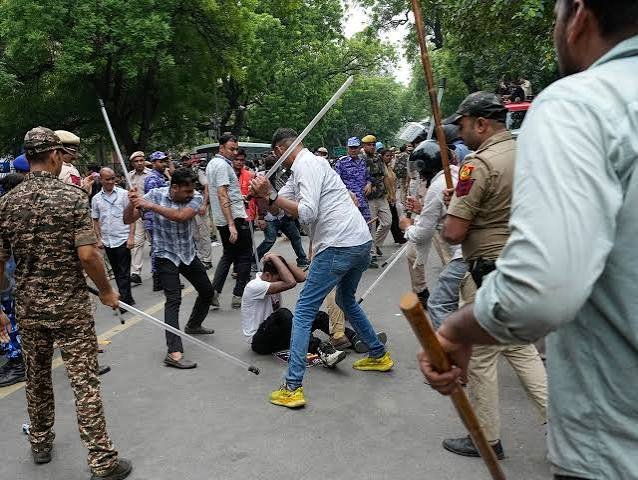
The police crackdown on the CJP’s “Chalo Sansad” march has sparked fresh controversy after videos circulating on social media appeared to show baton charges, alleged plainclothes personnel carrying lathis, and clashes with student protesters near Parliament.
BY PC Bureau
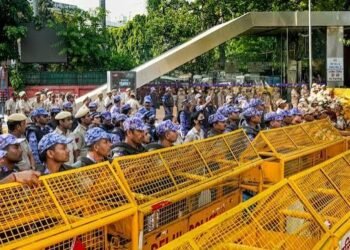
New Delhi, July 21, 2026: The police action against students during the CJP’s “Chalo Sansad” march has triggered a fresh controversy after videos circulated on social media appeared to show baton charges, tear gas, and confrontations between “unidentified” security personnel and protesters near Jantar Mantar and Parliament Street.
The footage, which has not been independently verified, has prompted Opposition parties, student groups and civil rights activists to question the manner in which the protest was handled and to demand greater transparency over the use of force.
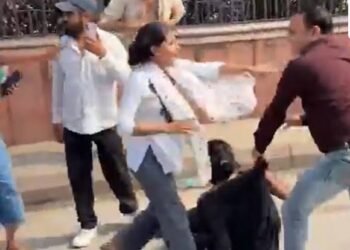
One of the major concerns raised by protesters relates to the identity of personnel involved in the operation. Several videos appear to show individuals in police uniforms with no name plates or identification badges, while other clips show men in civilian clothing carrying batons and beating up protestors.
Student organisations have questioned whether plainclothes personnel were authorised to participate in crowd-control operations and, if so, under what legal and operational framework.
READ: Massive Crowds Return to Jantar Mantar as CJP Vows to Continue Protest
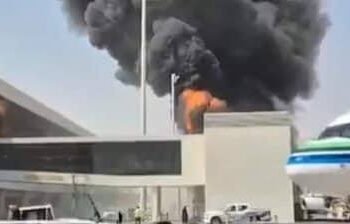
The videos also appear to show security personnel using lathis against protesters as police attempted to stop the march towards Parliament. Protest organisers have alleged that many demonstrators were peaceful and unarmed when force was used against them. Another set of videos circulating online appears to show damage to vehicles during the clashes.
There you go with proof, todh phod to public property wasn’t done by protesters. It was done by Police itself.
I’m shocked i swear! #CJPProtest pic.twitter.com/5NqVKfArU7
— ꜰᴀɪᴢ ྀི (@Mog_Faiz) July 21, 2026
The protests were organised over alleged irregularities in competitive examinations, including the NEET paper leak, and in support of broader demands for transparency and accountability in the education system. The agitation had also drawn support from environmentalist Sonam Wangchuk, whose hunger strike became a focal point of the movement.
The Delhi Police has maintained that it acted to prevent protesters from breaching security restrictions around Parliament and to maintain public order. Authorities have also stated that several police personnel were injured during the confrontation.
These guys are beating everyone including small kids and girls. Police are also supporting them. They are roaming in civilian dress and also destroying the properties in order to blame the students pic.twitter.com/Fv32vMwtDJ
— Harshh (@Hrshhhhhhhhh) July 21, 2026
However, civil rights groups and Opposition leaders have argued that the allegations raised by protesters warrant an independent examination.
Among the key questions being raised are:
- Whether all personnel involved in the operation were properly identified in accordance with policing protocols.
- Whether plainclothes personnel were authorised to participate in crowd-control duties.
- Whether the force used against demonstrators was proportionate to the situation.
- How the reported damage to vehicles occurred during the clashes.
@DelhiPolice @DCPNewDelhi Why are ppl in common clothes beating the protesters?? And if they are police then why no uniform?? Also saw ppl in uniform without name tags.
— ∞ doraemon (@bwwooah) July 21, 2026
Opposition parties have demanded a judicial or independent inquiry into the incident, arguing that a transparent investigation is necessary to establish the sequence of events, determine responsibility, and restore public confidence.
As political reactions continue to intensify, the police operation during the “Chalo Sansad” march has become as contentious as the students’ original demands, adding another dimension to the growing debate over examination reforms, the right to peaceful protest, and the accountability of law enforcement agencies.
Note: Several videos referenced in public discourse are circulating on social media. Their authenticity and the full context of the events have not been independently verified, and investigations into the incident are ongoing.