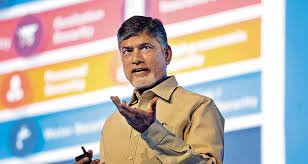
The announcement marks a major policy shift from earlier population-control campaigns, with the Andhra Pradesh government now advocating larger families amid concerns over ageing demographics.
BY PC Bureau
May 16, 2026: Andhra Pradesh Chief Minister N. Chandrababu Naidu on Friday announced a major shift in the state’s population policy, unveiling financial incentives aimed at encouraging larger families in response to declining birth rates and demographic concerns.
Addressing a public gathering at Narsannapeta in Srikakulam district during the SwarnaAndhra–SwachAndhra cleanliness programme, Naidu said the state government would provide ₹30,000 to families on the birth of a third child and ₹40,000 for a fourth child. He added that detailed operational guidelines for the scheme would be released within a month.
“I have made a new decision. We will provide ₹30,000 immediately after the birth of a third child and ₹40,000 for a fourth child. Isn’t this the right decision?” Naidu said while addressing the gathering.
The announcement marks a dramatic reversal from the population-control policies that dominated Indian governance for decades, including during Naidu’s earlier political career when smaller families were actively promoted through state welfare campaigns.
Shift From Population Control to Population Growth
Naidu said changing demographic realities now require governments to encourage higher fertility rather than restrict it. He noted that urbanisation, rising living costs, delayed marriages, and changing social preferences have led many couples to opt for smaller families, often limiting themselves to a single child.
He also referred to social attitudes in parts of India where some couples wait for the birth of a male child before planning a second pregnancy, contributing to lower overall fertility levels.
READ: Manipur: Kuki Rights Body Seeks Action Against Naga Militants Over Pastor’s Killing
The Chief Minister stressed the importance of maintaining the replacement-level Total Fertility Rate (TFR) — the average number of children born per woman needed to sustain a stable population.
TFR=2.1TFR = 2.1TFR=2.1
Naidu warned that several countries are already facing economic stagnation, labour shortages, and pension crises because of ageing populations and falling birth rates.
“Children are not a burden; they are an asset,” he said, arguing that future economic growth depends on maintaining a healthy working-age population.
ఆంధ్రప్రదేశ్ సీఎం చంద్రబాబు రాష్ట్ర జనాభా సమతుల్యతపై మరోసారి కీలక వ్యాఖ్యలు చేశారు. “పిల్లలు భారం కాదు.. దేశానికి, రాష్ట్రానికి వారే అసలైన సంపద” అని ఆయన స్పష్టం చేశారు. కుటుంబంలో మూడో బిడ్డ పుడితే రూ.30 వేలు, ఒకవేళ నాలుగో బిడ్డ పుడితే రూ.40 వేల ఆర్థిక సహాయం అందిస్తామన్నారు. pic.twitter.com/5VGUvJY2kF
— Newsmeter Telugu (@NewsmeterTelugu) May 16, 2026
Earlier Proposal for Second Child Incentive
The latest incentives build on an earlier proposal announced in the Andhra Pradesh Assembly on March 5, when Naidu said the government was considering a ₹25,000 incentive for couples having a second child.
Officials said the government is now exploring a broader pronatalist policy framework that may include maternity support, childcare assistance, and welfare-linked incentives for larger families.
The move places Andhra Pradesh among a growing number of Indian states reconsidering demographic policies amid fears of long-term population decline.
Understanding TFR and Its Economic Impact
What is TFR?
The Total Fertility Rate (TFR) measures the average number of children a woman is expected to have during her lifetime.
A TFR of approximately 2.1 is considered the “replacement level,” meaning each generation is large enough to replace itself without population decline.
- TFR above 2.1 → population grows
- TFR below 2.1 → population ages and eventually declines
India’s national fertility rate has already fallen below replacement level in many states, especially in southern India.
Economic Impact of Declining Fertility
Economists say persistently low fertility rates can reshape economies in several ways:
1. Shrinking Workforce
Fewer births eventually mean fewer workers entering the labour market. This can reduce industrial productivity, innovation, and economic growth.
Countries such as Japan and South Korea are already struggling with labour shortages caused by ageing populations.
2. Rising Burden on Younger Generations
As elderly populations grow, fewer working-age citizens must support pensions, healthcare systems, and social welfare programmes through taxation.
3. Slower Consumption and Economic Activity
Young populations drive housing demand, education spending, consumer markets, and entrepreneurship. Population decline can weaken domestic demand.
4. Migration Dependence
Countries with declining populations often rely on immigration to sustain workforce numbers and economic activity.
But Higher Population Also Brings Challenges
Experts caution that simply increasing birth rates without expanding employment, healthcare, housing, and education infrastructure can create additional pressures.
India already faces challenges related to:
- youth unemployment,
- urban congestion,
- resource stress,
- and unequal access to healthcare and education.
Analysts say population growth policies must therefore be paired with investments in human capital and job creation.
Andhra Pradesh’s Population Policy: Then and Now
Earlier Approach: Population Control
Like many Indian states in the 1990s and early 2000s, Andhra Pradesh strongly promoted smaller families through:
- family planning campaigns,
- sterilisation programmes,
- maternal health schemes,
- and awareness drives encouraging “two-child norms.”
At one stage, local body election rules in several states even disqualified candidates with more than two children.
Naidu himself was once associated with governance models focused on economic modernisation, urban development, and controlled population growth.
Current Approach: Pronatalist Incentives
The new policy reflects a broader demographic transition now visible across southern India.
States such as:
- Andhra Pradesh,
- Tamil Nadu,
- Kerala,
- and Karnataka
have witnessed falling fertility rates due to higher literacy, urbanisation, women’s education, and rising living standards.
With fertility rates now approaching or falling below replacement levels, policymakers are increasingly concerned about future ageing populations and shrinking labour pools.
Comparison With Other Regions
- Japan offers childcare subsidies and parental benefits to encourage births.
- South Korea has spent billions on pro-birth schemes with limited success.
- Singapore provides tax incentives, housing benefits, and baby bonuses.
- Some Indian leaders, meanwhile, continue to advocate population control in high-fertility regions.
Naidu’s announcement therefore signals a notable policy divergence within India itself — from population restraint to population encouragement.
Political observers say the success of Andhra Pradesh’s initiative will depend not only on cash incentives, but also on whether families feel economically secure enough to raise more children in the long term.