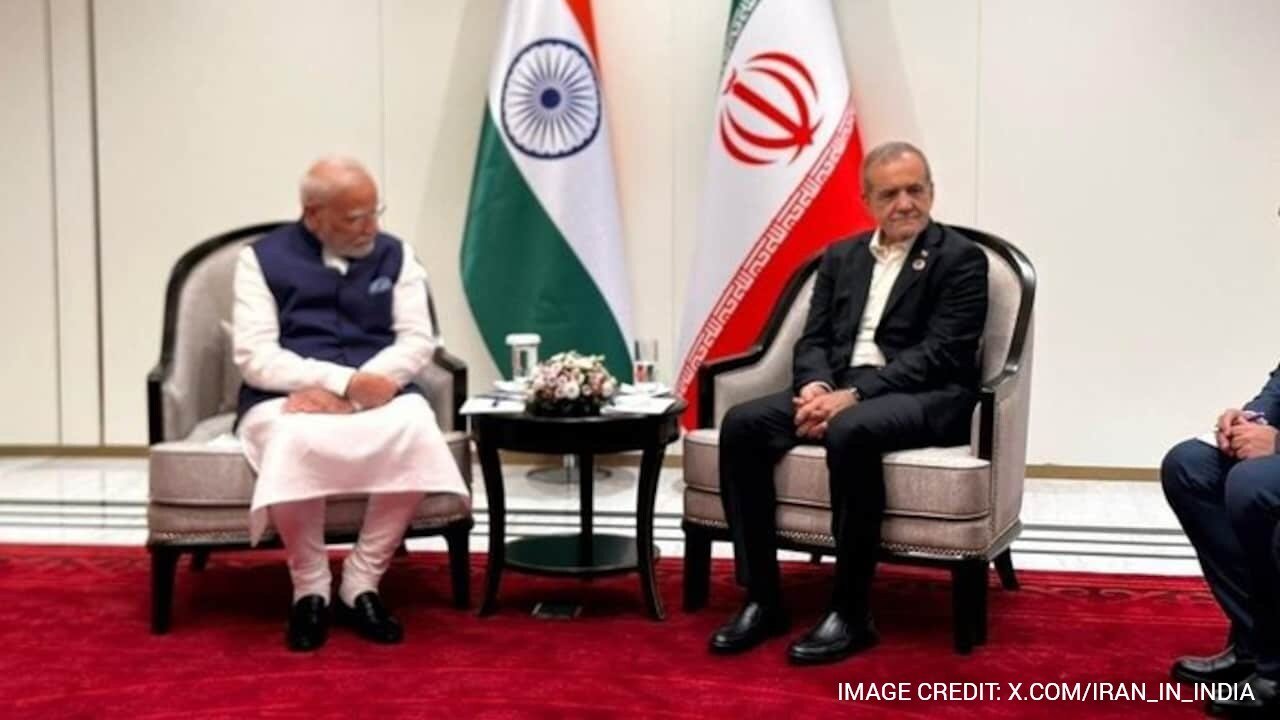
PM Miodi and President Masoud Pezeshkian discussed bilateral ties and connectivity, including the strategically important Chabahar Port, as India seeks to protect its energy and trade interests amid mounting regional uncertainty.
BY PC Bureau
August 31: Prime Minister Narendra Modi on Monday met Iranian President Masoud Pezeshkian on the sidelines of the Shanghai Cooperation Organisation (SCO) summit here, with the West Asia crisis, energy security, the safety of Indians in the region and connectivity projects such as Chabahar Port featuring prominently in the talks.
The meeting was their first face-to-face interaction since the outbreak of the West Asia conflict earlier this year. The two leaders had remained in contact by telephone during the crisis, including a conversation in June in which Modi stressed the importance of peace, stability and freedom of navigation.
The talks in Bishkek came against a backdrop of continuing tensions involving Iran, the United States and Israel, with disruptions to shipping through the Strait of Hormuz raising concerns over global energy supplies and the safety of commercial vessels and seafarers.
Modi reiterated India’s preference for dialogue and diplomacy in resolving conflicts and stressed the need for de-escalation and regional stability.
❗️PM Modi Meets Iranian President Pezeshkian Ahead Of SCO Opening Ceremony In Bishkek
It is the first in-person meeting between the two since the Iran war began in February. #SCO pic.twitter.com/zhnpAHZSWe
— RT_India (@RT_India_news) August 31, 2026
The discussions also covered bilateral ties, particularly India’s energy interests and the safety and welfare of Indian nationals in Iran.
Chabahar Port was another important area of interest. India regards the Iranian port as a crucial gateway to Afghanistan and Central Asia and as an important component of its wider connectivity strategy, including the International North-South Transport Corridor.
The project has faced difficulties because of sanctions and regional instability. The latest high-level interaction provided an opportunity for the two sides to review connectivity cooperation at a time when the security situation around Iran remains uncertain.
The Modi-Pezeshkian meeting took place as leaders gathered for the 26th SCO summit in Bishkek. The summit has brought together leaders including Chinese President Xi Jinping, Russian President Vladimir Putin, Pakistan Prime Minister Shehbaz Sharif and the heads of Central Asian states.
Iran, which became a full member of the SCO in 2023, has increasingly used the grouping as a platform for engagement amid its confrontation with Western powers.
READ: Manipur: Toll Rises To Three In Attack On Kuki-Zo Village In Kangpokpi
For India, the meeting reflects New Delhi’s effort to maintain engagement with all major regional players while protecting its own strategic and economic interests.
The Iranian president had said before his departure for the summit that Tehran did not seek war but would respond to aggression. Against this backdrop, India’s message of dialogue and diplomacy assumes particular significance.
The West Asia conflict has direct implications for India because of its dependence on the region for energy supplies, the presence of a large Indian community in the Gulf and the importance of maritime routes connecting India with Europe and other markets.
US-Iran Tensions Flare Again As Iran Heads Into High-Stakes SCO Talks
🇺🇸 and Iran exchanged fresh fire on Sunday, with Washington confirming strikes on Iranian forces and Tehran retaliating against U.S. targets in Jordan.
The escalation comes as Iranian President Masoud… https://t.co/I77SS7fIYC pic.twitter.com/5vdDzj1sKt
— RT_India (@RT_India_news) August 31, 2026
Any prolonged disruption around the Strait of Hormuz could affect oil and gas prices, shipping costs and the movement of Indian seafarers.
The two leaders’ meeting also comes at an important moment for India-Iran relations. New Delhi has sought to preserve its longstanding relationship with Tehran while simultaneously maintaining close strategic ties with the United States, Israel and the Gulf countries.
The Chabahar project illustrates this balancing act. India sees the port as an alternative route to Central Asia that reduces its dependence on routes passing through Pakistan. But sanctions and instability have repeatedly complicated the expansion of trade and connectivity through the facility.
The Bishkek meeting therefore offered Modi and Pezeshkian an opportunity to reaffirm the importance of bilateral cooperation despite the geopolitical turbulence surrounding Iran.
Modi is also scheduled to hold talks with Russian President Vladimir Putin on the sidelines of the SCO summit, while there is no formal bilateral meeting scheduled with Chinese President Xi Jinping in Bishkek, although an informal interaction remains possible.
The SCO summit itself comes at a time of heightened geopolitical competition, with its members seeking greater cooperation on security, connectivity and economic issues while navigating conflicts involving Russia, Iran and the wider West Asia region.
For New Delhi, the Modi-Pezeshkian talks underline its policy of maintaining strategic autonomy and keeping channels open with countries on opposing sides of major geopolitical disputes.
The meeting also sends a broader message: despite the continuing conflict in West Asia, India intends to protect its economic interests, maintain diplomatic engagement with Tehran and push for stability along vital trade and energy routes.