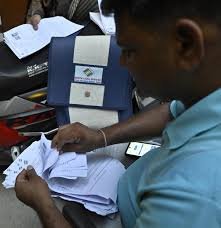
The exclusions are not final. Voters whose names are missing can file claims for inclusion by September 30, with the final revised electoral roll scheduled to be published on November 4.
BY PC Bureau
NEW DELHI/ August 31: Nearly one in every three voters in Delhi has been left out of the draft electoral roll published after the Election Commission’s Special Intensive Revision (SIR), with around 47.6 lakh names missing from the list released on Monday.
Delhi had 1.45 crore registered electors before the revision. The draft roll contains around 97.5 lakh voters, whose enumeration forms were collected, verified and digitised during the exercise. The remaining electors have been classified under the ASDDO category — Absent, Shifted, Dead, Duplicate or Others.
The exclusion from the draft list, however, does not amount to a final deletion. Voters whose names are missing can file claims for inclusion between August 31 and September 30. The final electoral roll is scheduled to be published on November 4.
The SIR was undertaken to identify ineligible or outdated entries while ensuring that genuine voters are not denied their right to vote. Around 13,000 Booth Level Officers conducted door-to-door verification across the capital between June 30 and August 17, distributing pre-printed enumeration forms and collecting completed forms. Voters were also allowed to submit the forms online.
The exercise sought to verify present voter details against earlier electoral records, including the 2002 SIR roll.
Officials had anticipated that between 20% and 40% of names could potentially fall out of the draft roll because of Delhi’s highly mobile population. People frequently move between rented accommodation, government housing and private residences, while demolitions, redevelopment and migration can make addresses difficult to verify.
SIR के तहत दिल्ली की ड्राफ्ट वोटर लिस्ट आ गई है। 1.5 करोड़ में से 47 लाख वोटर के नाम नहीं हैं।
भारत सरकार नाहक ही जनसंख्या को लेकर परेशान हो रही है। SIR के ज़रिए चुनाव आयोग हमारे देश की जनसंख्या 140 करोड़ से घटाकर 50 करोड़ कर देगा।
— Arvind Kejriwal (@ArvindKejriwal) August 31, 2026
The final figure of around 33% therefore reflects the scale of the verification challenge.
A substantial number of voters classified as uncollectable are understood to have shifted either within Delhi or outside the capital. Deaths, duplicate registrations and failure to respond to enumeration also account for some of the missing entries.
The impact has varied sharply across Delhi’s 70 Assembly constituencies.
Rohini recorded one of the highest rates of form digitisation, exceeding 83%, while constituencies such as Tughlakabad recorded much lower rates, at around 52%. Okhla also recorded a particularly high proportion of uncollectable forms.
The draft roll and the corresponding ASDDO information are being made available so voters can determine whether their names have been retained and, where they have been excluded, understand the possible reason.
What voters need to do
Voters who cannot find their names should not assume that they have permanently lost their registration.
The claims and objections period began on Monday and will continue until September 30. Officials will examine applications and conduct field verification where necessary before the final roll is prepared.
A voter whose name has been omitted can submit Form 6 to seek inclusion, along with the required declaration and supporting documents establishing identity and ordinary residence.
Form 8 can be used to seek corrections to existing electoral details, including a name, address or photograph.
Form 7 can be used to object to the inclusion of another person’s name, including where the person is believed to be dead or has permanently shifted.
Applications can be filed online through the Election Commission’s voter services portal or the ECINET application. They can also be submitted offline to the Booth Level Officer, Electoral Registration Officer or a Voter Service Centre.
Voters should retain the acknowledgement number after submitting an application so that they can track its progress.
The authorities may issue notices to voters whose names have been flagged for verification, while Booth Level Officers will conduct field checks of claims submitted during the revision process.
Why the numbers matter
The scale of the draft-roll exclusions makes the claims process particularly significant.
With roughly 47.6 lakh names absent from the draft, even a relatively small error rate could affect a substantial number of genuine voters. At the same time, the exercise is intended to remove names belonging to people who have died, shifted permanently or are registered more than once.
The challenge for election officials is therefore to distinguish between genuine changes in the electorate and voters who remain eligible but could not be verified during the door-to-door exercise.
Delhi’s unusually mobile population makes that task more complicated. A voter who has moved from one part of the city to another may no longer be found at the address recorded on the electoral roll. Similarly, people who have temporarily moved outside Delhi may still retain their ordinary residence in the capital and remain eligible to vote.
READ: Conman Sukesh Gets 8 Years For Posing As Supreme Court Judge
The draft roll should therefore be viewed as an intermediate stage rather than the final electoral register.
Officials have stressed that eligible voters can seek restoration during the claims period. The final roll will incorporate names that are found eligible following scrutiny and verification.
The disposal of claims is scheduled to continue until October 29, ahead of publication of the final electoral roll on November 4.
For Delhi voters, the immediate priority is therefore to check their status rather than wait until the final roll is published.
The Election Commission’s voter search facility allows electors to look up their registration using their EPIC number, personal details or registered mobile number.
Those who find their names missing should file a claim as soon as possible rather than assume that the omission will automatically be corrected.
The SIR has produced one of the largest exercises in voter-roll verification Delhi has seen in recent years. Its final impact will depend not simply on how many names were left out of the draft but on how many genuine voters successfully establish their eligibility during the claims process.
Until that process is completed, the figure of nearly 48 lakh should be understood as the number of electors absent from the draft roll, not the number permanently deleted from Delhi’s electoral register.