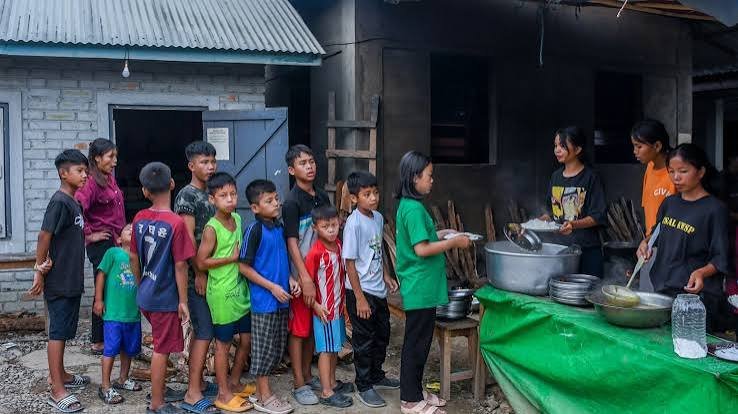
New Delhi/ September 17: The Supreme Court on Thursday turned its attention from the long-running investigation into sexual violence during the 2023 Manipur conflict to a more immediate and disturbing issue — the deaths of internally displaced people inside relief camps and the State’s response to them.
A bench headed by Chief Justice of India Surya Kant, comprising Justices Joymalya Bagchi and V. Mohana, directed the Manipur Chief Secretary to submit a comprehensive report on the circumstances surrounding unnatural deaths in the camps and the measures taken to protect the safety and dignity of those living there.
The direction followed concerns flagged in reports submitted by the committee headed by former Jammu and Kashmir High Court Chief Justice Gita Mittal. The committee had raised questions relating to compensation and referred to reports of deaths in relief camps, including an alleged incident of sexual assault.
The Court directed the State to provide details of 25 unnatural deaths referred to in the reports, along with post-mortem reports and other relevant documents establishing the causes of death. It also sought details of remedial and safety measures taken by the government.
The bench further directed the State to ensure adequate medical facilities and essential day-to-day necessities for people living in the camps.
640 deaths reported in relief camps
The hearing also brought into focus a much larger figure: 640 deaths reportedly occurred in relief camps across eight districts.
According to the material placed before the Court, post-mortems had been conducted in only 20 cases, despite criminal cases being registered in connection with the deaths. Compensation in the reported cases was stated to have ranged between just ₹20,000 and ₹30,000.
The Court sought an explanation from the State on both the limited number of post-mortems and the compensation paid to affected families.
The Manipur Legal Services Authority was directed to take immediate steps to ensure that FIRs are registered in every unnatural death, the causes of death are properly established and investigations already initiated are completed expeditiously.
The Court also stressed that the safety and dignity of internally displaced persons in the camps must be protected.
During the hearing, the Chief Justice pressed the Manipur Advocate General on information sought by the committee on July 4 regarding the 25 deaths.
“Tell your Chief Secretary not to invite orders. Tell us what measures you have taken,” the Chief Justice said, according to the proceedings.
Sexual-violence cases still pending
The hearing was part of the Supreme Court’s continuing monitoring of investigations and trials arising from sexual violence during the Manipur conflict.
Additional Solicitor General Aishwarya Bhati told the bench that 42 SITs across eight districts were investigating 3,020 cases. Charge-sheets had been filed in 302 cases, closure reports in 1,583, while 1,135 cases remained under investigation.
Trials had begun in 33 cases.
The Supreme Court has previously directed that several trials be transferred outside Manipur and has put mechanisms in place to monitor investigations and provide support to survivors. The Court’s 2023 framework also assigned the Gita Mittal committee a mandate covering survivors’ needs, rehabilitation, medical and psychological care and relief measures.
READ: Disha Salian’s Father Serves ₹500 Cr Defamation Notice on Aaditya, Deshmukh
CBI cases and slow trial progress
The CBI is investigating 31 cases. According to the status placed before the bench, charge-sheets have been filed in 28 cases, closure reports in six and three cases remain under investigation.
Proceedings have begun in cases where charge-sheets have been filed. But the pace of witness examination remains a concern.
Of the 978 witnesses cited in the CBI cases, only six had been examined, while 38 people had been arrested.
The bench discussed ways to accelerate trials, particularly those being heard before a Special Court in Guwahati.
Advocate Nizam Pasha, appearing for victims, said cross-examination was under way but the court was sitting only two days a week. The Chief Justice observed that even twice-weekly hearings could help ensure progress and suggested exploring the possibility of setting up another court for CBI cases.
The Additional Solicitor General was directed to coordinate with the Gauhati High Court on the requirement for two courts to handle cases investigated by the NIA.
The hearing thus placed two unresolved dimensions of the Manipur crisis side by side: the slow progress of prosecutions arising from the 2023 violence and the Court’s fresh concern over the safety, health and unexplained deaths of people who remain displaced in relief camps years after the conflict began.