The tapes allegedly implicate former Chief Minister N. Biren Singh in the Manipur ethnic violence that left over 250 dead and thousands displaced.
BY PC Bureau
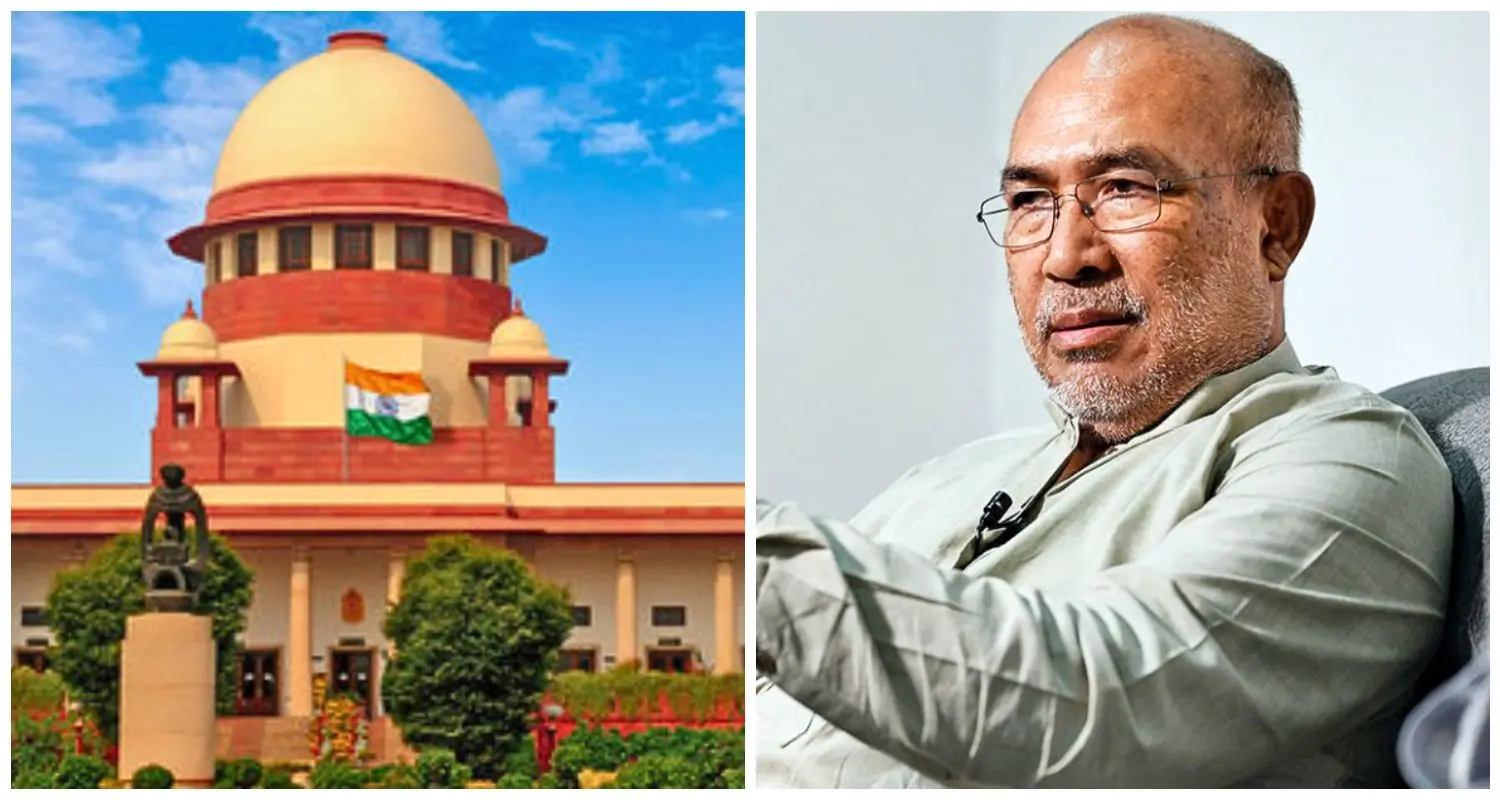
New Delhi, April 30, 2026: In a crucial development in the ongoing legal scrutiny of the Manipur ethnic violence, the Supreme Court of India on Thursday directed the Kuki Organisation for Human Rights to submit the “first-generation copy” of the controversial leaked audio tapes to a national forensic laboratory for detailed examination.
The tapes—widely referred to as the “Manipur tapes”—allegedly implicate former Chief Minister N. Biren Singh in orchestrating or inciting the ethnic clashes between the Meitei and Kuki-Zo communities that erupted in May 2023 and continued into 2024.
A bench led by Justice Sanjay Kumar expressed dissatisfaction with previously submitted materials, noting that repeated duplication had significantly reduced evidentiary value. “A copy of a copy of a copy is of no use,” the court observed, underscoring that only the original or earliest available recording would allow for credible forensic authentication.
The Manipur violence began on May 3, 2023, following tensions over the Meitei community’s demand for Scheduled Tribe status. The unrest quickly escalated into widespread ethnic clashes between the valley-based Meiteis and the hill-based Kuki-Zo groups. The conflict has since claimed over 250 lives, displaced thousands, and fractured the state along deep communal lines.
The leaked audio recordings surfaced in 2024, purportedly capturing conversations that suggest complicity or knowledge of the violence at the highest levels of the state government. These claims have intensified demands for accountability and an independent probe.
Legal Battle and Forensic Hurdles
The petition was filed by KOHUR, seeking a court-monitored investigation. Senior advocate Prashant Bhushan, representing the organisation, submitted a 48-minute transcript along with corresponding audio recordings during the hearings. Known for his activism in public interest litigation, Bhushan has been at the forefront of several high-profile cases involving governance and accountability.
However, the forensic process has faced significant obstacles. Earlier analyses by the National Forensic Sciences University indicated that the submitted clips were edited and unsuitable for reliable voice comparison. KOHUR alleged that only partial, edited recordings were initially forwarded by Manipur Police, raising concerns about possible evidence suppression.
The court had previously questioned why the complete recording was not submitted earlier. Representing the Centre, Additional Solicitor General Aishwarya Bhati stated that authorities received the full clip only after earlier hearings, complicating the timeline of analysis.
READ: Khamenei Vows New Hormuz Rules, Warns US to Stay Out of Gulf
Renewed Push for Authentic Evidence
In January 2026, the Supreme Court directed a comprehensive forensic review of the full recording, including voice comparison with admitted samples of N. Biren Singh. However, during the latest hearing, it was revealed that the available audio still appeared edited, prompting the court to insist on a first-generation version.
Bhushan informed the bench that efforts are underway to secure such a copy but clarified that the original recording device cannot be handed over, as it could expose the identity of the whistleblower.
The government indicated that once a suitable version is submitted, the forensic lab would require approximately six weeks to complete its analysis and submit a report.
The case has further heightened tensions in Manipur, where Kuki groups continue to demand transparency and justice. Civil society organisations, including women’s groups, have also appealed to Prime Minister Narendra Modi to intervene in the matter.
For N. Biren Singh, who is no longer in office, the stakes remain high. The outcome of the forensic examination could carry significant legal and political consequences, potentially triggering deeper investigations into the handling of the violence.
The Supreme Court’s latest directive underscores its emphasis on procedural integrity and scientific evidence, particularly in cases involving serious allegations against public officials. By insisting on a tamper-free, first-generation recording, the court aims to ensure that conclusions are based on verifiable and credible data.
As the case moves forward, the forensic findings—expected in the coming weeks—will be critical in determining the authenticity of the tapes and shaping the next phase of legal proceedings. For now, the spotlight remains firmly on the intersection of justice, technology, and one of India’s most protracted and sensitive conflicts.