The Jantar Mantar movement has crossed international borders, with solidarity demonstrations erupting across Europe and North America after the July 20 lathicharge on students. Protesters called for justice, transparency in examinations, and accountability.
BY PC Bureau
New Delhi: The youth-led Cockroach Janta Party (CJP) movement has rapidly evolved into an international campaign, with demonstrations taking place across Europe and North America in solidarity with protesters camped at Delhi’s Jantar Mantar.
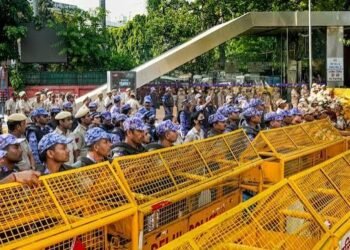
The overseas protests gathered momentum after the violent police crackdown on the CJP’s “Sansad Chalo” march on July 20, in which security personnel used batons and tear gas to disperse thousands of demonstrators attempting to march towards Parliament. Images of students with bloodied heads, injured protesters, and the subsequent detention of several activists spread rapidly across social media, prompting members of the Indian diaspora to organise solidarity demonstrations in several countries.
London Leads UK Solidarity Campaign
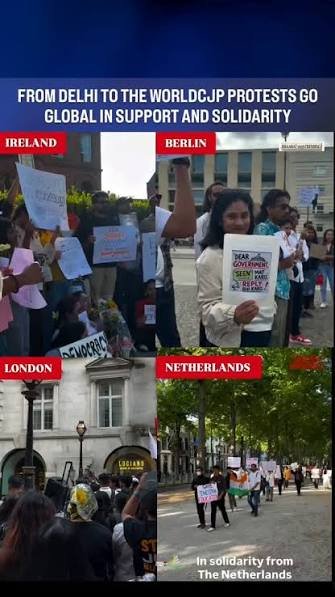
The largest overseas demonstration took place outside the Indian High Commission in London, where members of the Indian diaspora assembled carrying the Tricolour alongside placards reading “Stand With India’s Students,” “Justice for NEET Aspirants,” and “We Stand With Sonam Wangchuk.” Protesters demanded accountability for alleged examination paper leaks, condemned the police action in Delhi, and called for the resignation of Union Education Minister Dharmendra Pradhan.
The demonstrations quickly spread across the United Kingdom. Similar gatherings were reported in Manchester, Glasgow, and Edinburgh, where students, academics, and members of civil society expressed support for the movement. In Edinburgh, members of the Students’ Federation of India (SFI-UK) organised a demonstration backing the hunger strike and calling for greater transparency in India’s examination system.
READ: Police Crackdown on Students: Mystery Men, Batons, and Brutality
CJP Protesters In London!😼🪧✊🏻😱🥀#cjp_पार्टी#जनरल_कायर #छत्रसालस्टेडियम #NEETIssue #AkheshYadav #RahulGandhi pic.twitter.com/49HCazgFN8
— Mohit SY (@imohitray_) July 21, 2026
Demonstrations Across Europe
In Dublin, members of the Indian community organised peaceful protests highlighting concerns over alleged examination irregularities, unemployment, and what they described as excessive police force against peaceful demonstrators in Delhi.
The movement also reached the Netherlands, where members of the Indian diaspora organised a solidarity march in The Hague, walking from the Dutch Parliament (Tweede Kamer) to the International Court of Justice. Carrying Indian flags and placards supporting the Jantar Mantar protesters, participants condemned the police action in Delhi and demanded greater transparency and accountability in India’s education system. The demonstration remained peaceful and formed part of a wider wave of overseas solidarity actions following the July 20 crackdown on student protesters
In Berlin, demonstrators assembled near the Brandenburg Gate, displaying placards reading “We Stand With Sonam Wangchuk” and “Education Is a Right, Not a Privilege.” Speakers at the gathering criticised what they described as the shrinking democratic space for peaceful protests in India and urged the government to engage in dialogue with students.
Global CJP 🪳 Protest of Indian Students Studying Abroad. pic.twitter.com/N1Aj3VZnhB
— Dr Ranjan (@DocRGM_) July 21, 2026
North American Support
Solidarity demonstrations were also reported in the United States and Canada, particularly in cities with large Indian diaspora populations. Community groups organised peaceful gatherings where participants echoed the demands raised at Jantar Mantar, including reforms in the examination system, justice for students allegedly affected by paper leaks, and greater transparency in recruitment processes.
While attendance varied from city to city, organisers said the objective was to ensure that concerns raised by students in India received international attention. Several events also included candlelight vigils for students allegedly injured during the Delhi police action.
Common Themes Across Countries
Despite being organised independently, the demonstrations across different countries carried remarkably similar messages.
The principal demand remained the resignation of Union Education Minister Dharmendra Pradhan over alleged failures in safeguarding the integrity of competitive examinations. Protesters also voiced support for environmental activist Sonam Wangchuk and other hunger strikers, calling for the protection of democratic rights and peaceful dissent.
Slogans such as “Dharmendra Pradhan, Istifa Do,” “Justice for Students,” “Education, Not Repression,” and “Inquilab Zindabad” were heard at several gatherings. Protesters criticised what they described as the government’s handling of student grievances and alleged police excesses during the Parliament march.
Social Media Amplifies Movement
Although physical demonstrations were concentrated in the United Kingdom, Ireland, Germany, the Netherlands, the United States, and Canada, the movement gained significant traction online. Thousands of users shared photographs, videos, and messages of support under hashtags backing the CJP movement, turning the Jantar Mantar protests into a global conversation among Indian students and diaspora communities.
Several academics, professionals, alumni associations, and student organisations also released statements expressing concern over the alleged examination irregularities, police action against protesters, and the broader challenges facing India’s youth.
From Satire to a Global Youth Movement
The CJP itself emerged from a satirical response to judicial remarks comparing unemployed youth to “cockroaches.” What began as an online protest soon transformed into a nationwide movement demanding educational reforms, transparency in competitive examinations, action against paper leaks, employment opportunities, and greater government accountability.
With demonstrations now extending beyond India’s borders, the movement has acquired an international dimension rarely witnessed in recent student-led protests. Organisers maintain that the campaign remains peaceful and insist their demands centre on educational justice, democratic rights, and accountability rather than partisan politics.