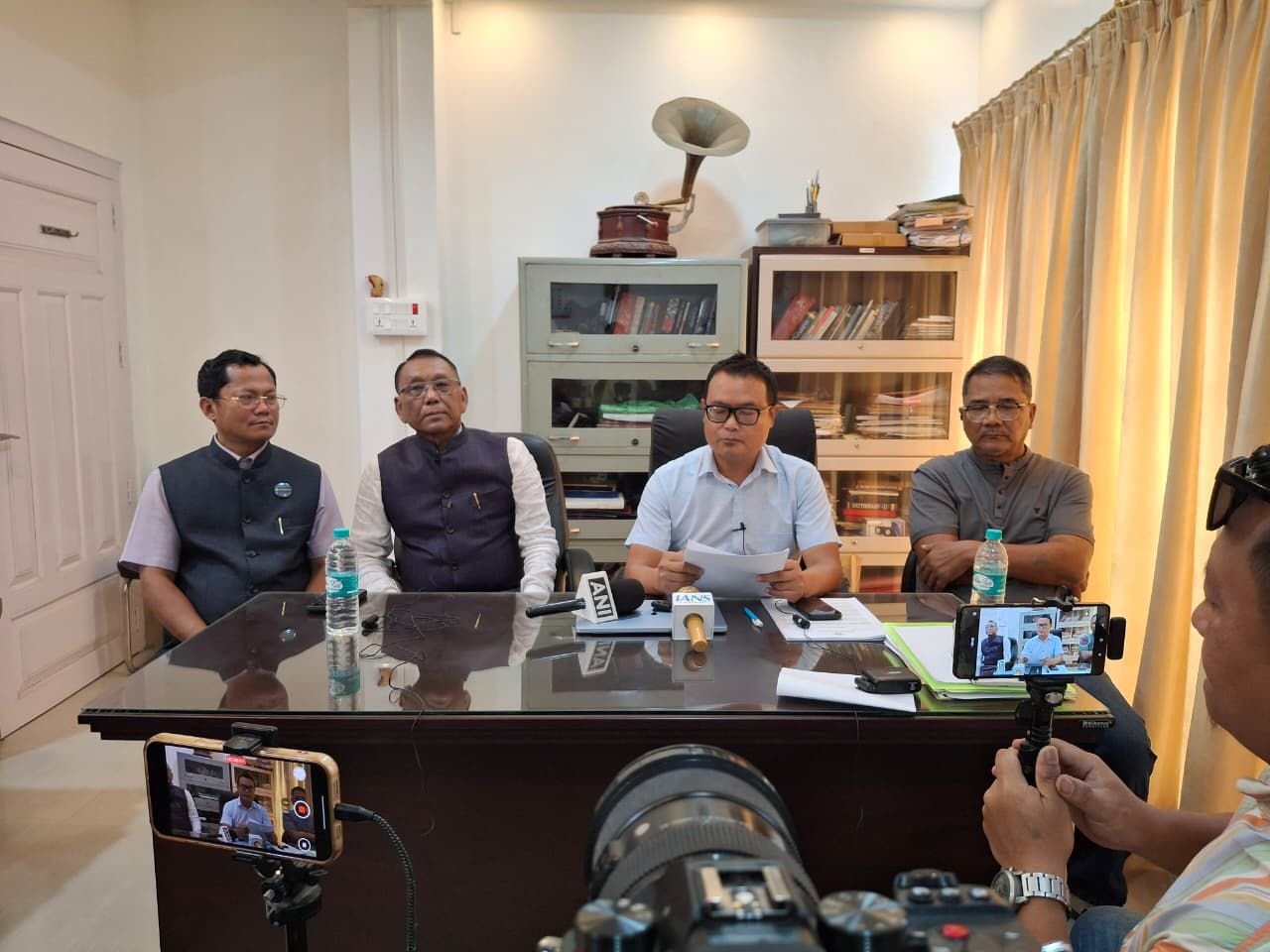
The Kuki-Zo Council alleged bias in security operations and questioned the lack of action against militant groups accused of carrying out attacks on Kuki-Zo civilians since March 2026.
BY PC Bureau
June 25, 2026 — The Kuki-Zo Council (KZC) has issued a detailed seven-page press statement (Ref. No. KZC/SIP/PR/056) slammed the Government of India, the Government of Manipur, security agencies, and district administrations for what it describes as “selective security actions, unequal justice, and the continued plight of the Kuki-Zo people.”
The document, dated June 25, 2026, and signed by Ginza Vualzong, Secretary (Information & Publicity) of the Kuki-Zo Council, outlines a series of grievances, presents a chronology of 14 alleged civilian killings, and sets out five key demands. The statement comes amid continuing ethnic tensions and security concerns in Manipur.
Concern Over Equal Justice and Accountability
The KZC began by condemning the killing of six Naga hostages, describing the incident as tragic and unacceptable.
“The Kuki-Zo Council unequivocally condemns the killing of the six Naga hostages. The incident was tragic, unacceptable, and was neither authorised nor approved by any Kuki-Zo political or community leadership. Those responsible must be identified and brought to justice through a fair, transparent, and impartial investigation,” the handout stated.
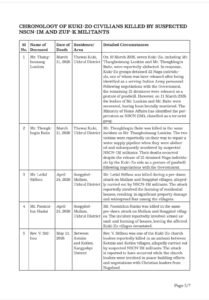
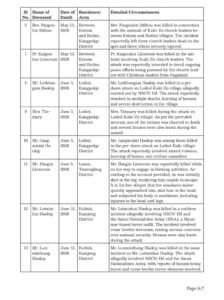
At the same time, the Council expressed concern that the killing of 14 Kuki-Zo civilians, including three pastors, allegedly by NSCN-IM and ZUF-K militants since March 11, 2026, had not received a similar level of attention from the authorities.
According to the handout, more than 45 houses in eight Kuki-Zo villages were also reportedly burnt during attacks attributed to the same militant groups.
The Council further highlighted what it described as gestures of goodwill made by both communities during the crisis. It recalled that following the abduction of seven Kuki-Zo individuals on March 10, twenty-one Naga hostages held by Kuki-Zo groups were released as a goodwill measure. The Council also welcomed the recent release of fourteen Kuki-Zo hostages by the United Naga Council.
“These incidents demonstrate that both communities have shown restraint and goodwill at critical moments,” the statement noted.
The Council concluded the section by emphasising that justice must be applied equally to all victims regardless of ethnicity or community, warning that selective investigations and selective outrage would only deepen mistrust and hinder reconciliation efforts.
READ: Bill Gates Admits 3 Affairs, Accuses Epstein of Blackmail
Allegations of Selective Security Operations
The KZC strongly criticised what it described as continued harassment, intimidation, and fear experienced by innocent villagers during search and cordon operations conducted by security forces.
Particular concern was raised over reports that personnel from the CRPF, CoBRA units, and other paramilitary forces carried out operations in sensitive areas such as Ebenezer Camp and Leilon Vaiphei without prior coordination with the concerned Suspension of Operations (SoO) groups or local village authorities.
According to the Council, such actions undermine existing confidence-building mechanisms and generate unnecessary tension on the ground.
The handout further alleged that, following the killing of the six Naga hostages, extensive security operations were concentrated in Kuki-Zo areas, while little visible action appeared to have been taken against Naga militant groups such as NSCN-IM and ZUF-K despite repeated attacks on Kuki-Zo civilians and villages since March.
“This has created a growing perception of unequal treatment and selective enforcement,” the Council stated.
Questions Raised Over Administrative Accountability
The Council also expressed concern over continued attacks on Kuki-Zo villages in Kangpokpi district and what it described as the apparent lack of effective preventive measures by the district administration.
In particular, the statement raised questions regarding the role of Kangpokpi Superintendent of Police Shri Rahul Gupta, alleging that he was not stationed in the district despite the prevailing security situation.
“At a time when villages continue to face threats and attacks, strong leadership and constant engagement from the district’s senior-most police officer are essential,” the Council said.
The reported absence of the district police chief, it added, had raised concerns among residents regarding accountability and confidence in the administration.
Medical Access and Humanitarian Concerns
The handout highlighted a specific incident that occurred on June 15, 2026, when three Kuki-Zo youths aged between 18 and 20 were seriously injured during an attack allegedly carried out by NSCN-IM and ZUF-K militants at Leilon Munlui village in Kangpokpi district.
One of the injured youths, Paogoulal Chongloi, identified as a member of Mohun Bagan Super Giant, reportedly requires advanced medical treatment at a higher healthcare facility because of the severity of his injuries.
According to the Council, the injured youths were initially admitted to the Regional Institute of Medical Sciences (RIMS), Imphal. However, protests allegedly arose within the hospital premises against their treatment, forcing authorities to transfer them to Churachandpur District Hospital in the early hours of the following day to ensure continuity of care.
The Council said the incident raised serious concerns regarding equal access to healthcare and whether Kuki-Zo citizens could safely obtain medical treatment in public institutions during the ongoing crisis.
Economic Hardships and Supply Restrictions
The KZC also drew attention to what it described as worsening economic and humanitarian hardships faced by Kuki-Zo communities, particularly in Kangpokpi, Ukhrul, and Kamjong districts.
According to the handout, villages such as Chassad and Aishi in Kamjong district have reportedly been prevented from purchasing essential commodities by members of the Tangkhul Naga community.
The Council further alleged that supplies of food and other necessities to the Kotlen and Leilon areas of Kangpokpi district had been disrupted, placing residents under increasing hardship.
“The uninterrupted availability of essential supplies is fundamental to the right to life,” the statement said. “Any deliberate denial, restriction, or obstruction of such supplies amounts to a serious violation of the fundamental rights enshrined in the Constitution of India.”
The Council also contrasted the current situation with previous instances when Kuki-Zo groups organised highway blockades, noting that authorities had acted swiftly to clear roads and restore movement.
It questioned why similar measures had not been taken to ensure free and unhindered movement through routes affected in Senapati and Namdilong.
Five Key Demands
The Kuki-Zo Council outlined five principal demands:
- An impartial investigation and prosecution of all incidents of violence, including the killing of six Naga hostages, fourteen Kuki-Zo civilians, and the burning of Kuki-Zo villages.
- Firm and decisive action against militant groups accused of attacks on civilians, including NSCN-IM and ZUF-K, along with comprehensive investigations into locations allegedly sheltering perpetrators, including Ireng Naga, Konsakhlul, Sikibung, Sareikhong, and other identified areas.
- An end to selective security operations and the implementation of law-enforcement measures that are fair, professional, and unbiased.
- Immediate opening of all blocked routes in Naga-dominated areas and unhindered access to healthcare, food supplies, medicines, fuel, and other essential commodities.
- Measures to restore public confidence through accountability within the administrative and security apparatus and the protection of all vulnerable villages regardless of ethnicity.
Call for Political Resolution
In its concluding remarks, the Council stated that the Kuki-Zo people had faced repeated attacks over the past three years from both Meitei and Naga groups in Manipur.
“Our people have been killed, our homes looted and burned, our places of worship desecrated, and tens of thousands displaced from their ancestral lands,” the statement said.
The Council maintained that these experiences had severely eroded the community’s sense of security and confidence in the existing administrative arrangement.
According to the handout, these developments have reinforced the conviction that the Kuki-Zo people can no longer continue under a system that has consistently failed to protect their lives, rights, and dignity.
“The demand for a Separate Administration in the form of a Union Territory with Legislature is therefore not merely a political aspiration, but a necessity born out of lived experience and continued suffering,” the statement asserted.
The Council concluded by urging the Government of India to address both the immediate security concerns and the broader political issues underlying the ongoing crisis.
Annexure Details 14 Civilian Killings
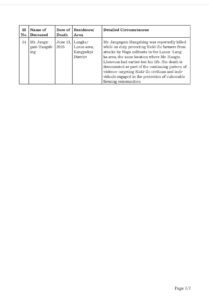
The annexure attached to the handout provides a chronology of fourteen Kuki-Zo civilian deaths between March and June 2026.
Among the cases listed are the abduction and killing of two villagers from Thawai Kuki in Ukhrul district on March 11; attacks on Songphel-Mullam village in April involving the burning of homes; the ambush killing of three church leaders engaged in peace-building efforts near Kotzim and Kotlen on May 13; multiple fatalities and destruction of property in Loibol village on June 5; and a series of killings in Tamenglong, Kamjong, and Kangpokpi districts during June.
The Council alleged that several of these incidents involved NSCN-IM, ZUF-K, and other armed groups, including the Myanmar-based Sanni Nationalities Army (SNA), and called for comprehensive investigations into all cases.
The press handout was issued by Ginza Vualzong, Secretary (Information & Publicity), Kuki-Zo Council.