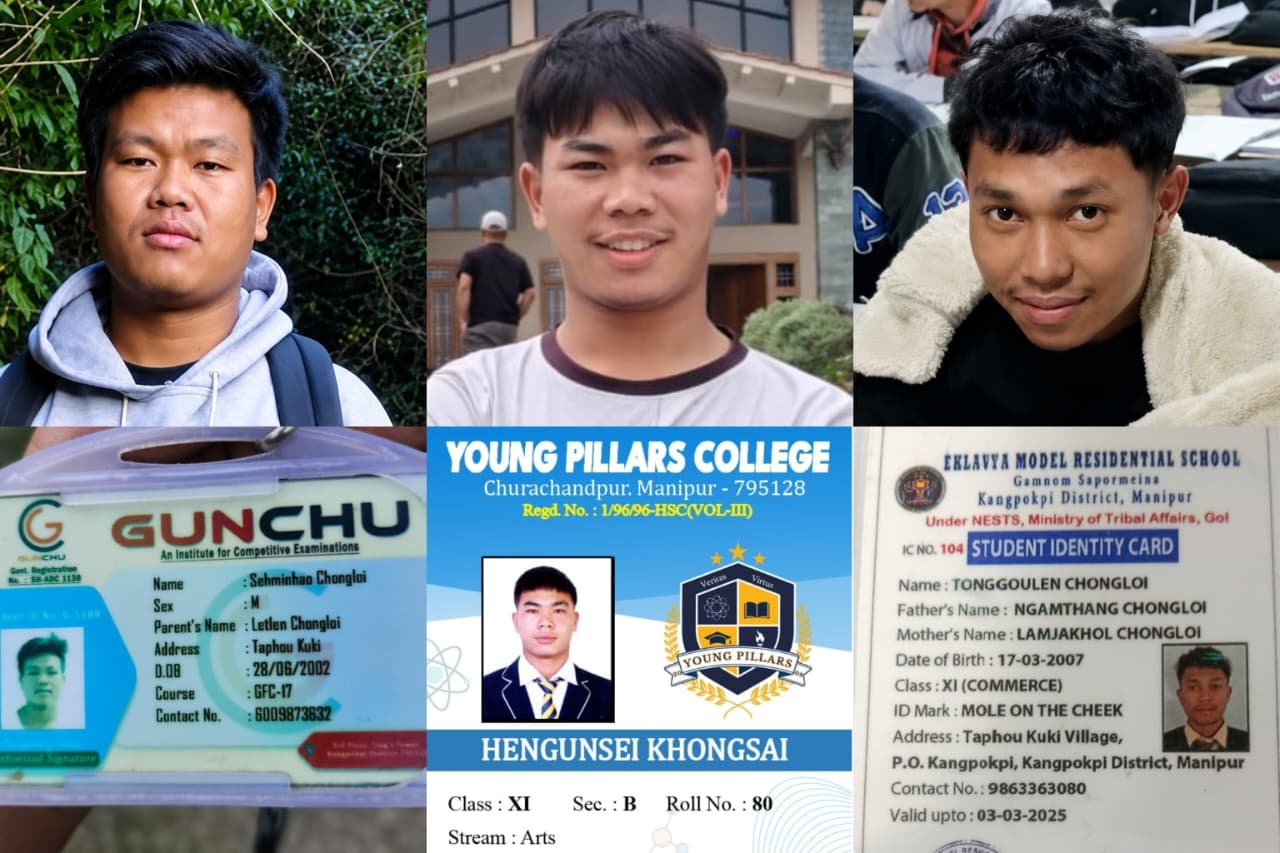
Community organisations say three Kuki students, including Class XI student Hengunsei Khongsai, remain missing days after they were allegedly taken along with other civilians while under police escort.
BY PC Bureau
May 17, 2026: The ongoing hostage crisis in Manipur has taken an even more troubling turn with reports that three Kuki students — Sehminhao, Hengunsei Khongsai, and Tonggoulen — remain missing days after they were allegedly abducted along with 11 other Kuki civilians in Senapati district.
The alleged abduction, which reportedly occurred on May 13, 2026, has sparked widespread concern among Kuki organizations, student bodies, and community leaders, particularly due to the presence of a physically disabled orphaned minor among those still unaccounted for.
According to community sources and statements issued by Kuki organizations, the students were allegedly taken near Mt. Everest School in Senapati while travelling under police escort. Reports claim the group was intercepted and abducted in broad daylight by members linked to the Senapati District Students’ Association (SDSA). As of May 17, families and community representatives say there has been no confirmed communication regarding the whereabouts or condition of the missing individuals.
Vulnerable Minor Among the Missing
Among the reported hostages, the case of Hengunsei Khongsai has drawn particular attention and concern.
Hengunsei, a Class XI student of Young Pillars College in Churachandpur, is a minor living with muscular dystrophy, a progressive neuromuscular condition that significantly limits physical mobility and strength. He reportedly possesses a Unique Disability Identity Card certifying 38 per cent permanent disability.
His circumstances, family members and community leaders say, make his disappearance especially alarming.
According to statements issued by community organizations, Hengunsei had recently lost his father and had become the primary source of financial support for his family. Despite his physical condition and personal loss, he reportedly undertook daily-wage labour during school holidays to support household expenses and continue his education.
🚨 MANIPUR HOSTAGE CRISIS
❗It has come to light that amongst the 14 Kuki hostages still held captives by tangkhul led NSCN-IM operatives in collusion with Senapati District Students’ Association (SDSA) Volunteers are 3 STUDENTS –
1. Hengunsei Khongsai – Age 17 ,
A student of… pic.twitter.com/nsWiIZt8DS— Official KSO Shillong (@kso_shillong) May 17, 2026
READ: Manipur Hostage Crisis: Let Commandos And Guns Do The Talking
For many in the community, his story has become emblematic of the vulnerability and hardship experienced by students caught in Manipur’s prolonged ethnic conflict.
College Principal Appeals for Release
The principal of Young Pillars College, Samuel Haokip, issued a statement expressing anguish over the student’s disappearance and appealed for his safe return.
“Hengunsei has recently lost his father and is now the sole breadwinner of his grieving family. This young boy was working tirelessly to support his family and fund his own education when he was brutally kidnapped,” the statement said.
The college administration also called for the immediate and unconditional release of all hostages and urged all sides to reject violence in favour of dialogue and humanitarian consideration.
Ethnic Conflict and Educational Disruption
The reported abduction comes against the backdrop of the continuing ethnic conflict that has gripped Manipur since May 2023.
Thousands of families have been displaced, educational institutions disrupted, and inter-community movement severely restricted. Many Kuki students relocated to districts considered safer in an effort to continue their studies, often amid significant financial hardship and psychological distress.
Community groups argue that the latest hostage crisis reflects a dangerous deterioration in the security environment, where students and civilians are increasingly vulnerable to retaliatory violence.
Allegations and Previous Tensions
The Young Kuki organization has alleged that the Senapati District Students’ Association was involved in the forcible detention of the missing individuals.
The group further pointed to earlier tensions involving the SDSA, claiming that the student body had previously issued statements perceived as hostile toward the Kuki community and had allegedly participated in actions restricting the movement of goods and vehicles into Kuki-majority areas, particularly in Kangpokpi district.
These allegations remain politically sensitive and further deepen mistrust between communities already divided by years of conflict and competing territorial and political claims.
Growing Anxiety Over Missing Hostages
Several days after the alleged abduction, uncertainty continues to surround the fate of those still missing.
Families and community leaders say the absence of verified information regarding their location or physical condition has intensified anxiety and fear. The reported presence of a minor with certified disability among the captives has added urgency to calls for immediate intervention by state and central authorities.
Rights groups and civil society members warn that prolonged captivity could place vulnerable individuals, particularly minors and those with medical conditions, at heightened risk.
Calls for Immediate Action
Community organizations and local leaders have renewed demands for urgent government intervention and are calling for:
Immediate tracing and safe release of all remaining hostages
Security protection for students and civilians irrespective of ethnicity
Investigation into allegations involving student bodies or civilian groups in abductions
Peaceful conflict resolution through dialogue and lawful intervention
The crisis has become more than a security issue; for many families, it is now a humanitarian emergency.
The fate of the missing students — particularly Hengunsei Khongsai, a disabled orphan struggling to continue his education amid conflict — has emerged as a powerful test of the authorities’ ability and willingness to protect vulnerable citizens in a deeply fractured state.
As appeals intensify across communities and civil society, one demand is growing louder: ensure the safe return of all hostages before the crisis claims yet more live