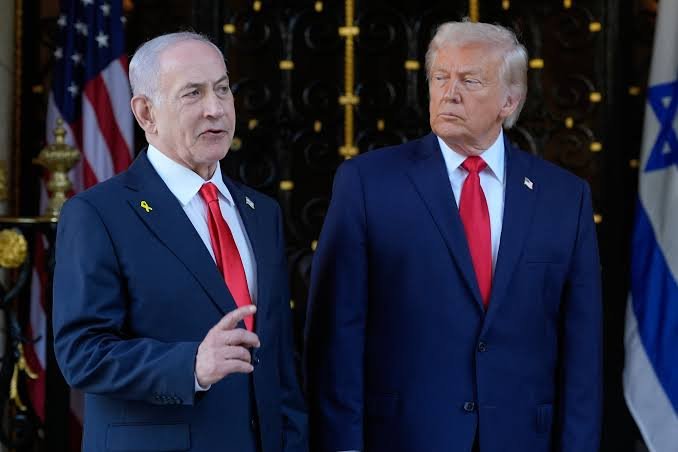
Neither Benjamin Netanyahu’s right-wing bloc nor the opposition led by centrist Gadi Eisenkot appears likely to secure a majority in Israel 120-seat Knesset
BY PC Bureau
October 26: Israel October 27 election could reshape the country’s approach to Gaza, its confrontation with Iran and its relations with Washington, but final pre-election polls point to another political deadlock, with neither major bloc projected to win a parliamentary majority.
The contest in Israel’s 120-seat Knesset is about far more than Benjamin Netanyahu’s political survival. It is also a test of whether voters want continuity in his security-first leadership or a change in strategy under centrist challenger Gadi Eisenkot.
Neither Netanyahu’s right-wing bloc nor the opposition’s change camp appears close to the 61 seats required to form a government. The result could leave smaller parties, including Arab-majority political groups, holding the balance of power. If coalition negotiations fail, Israel could face another prolonged political impasse, with Netanyahu remaining caretaker prime minister.
The stakes extend well beyond domestic politics. The election could influence the implementation of the Gaza ceasefire framework, the future of reconstruction and governance in the Palestinian territory, and the scope of Israel’s military campaign against Iran. Yet a change of government would not necessarily mean a fundamental reversal of Israeli policy on security.
🚨 BREAKING via CNN: President Trump has reportedly refused Netanyahu’s request for a joint U.S.-Israeli strike on Iran before Tuesday’s election.
The key details from U.S. and Israeli sources:
🛑 The Refusal: Netanyahu pushed heavily for an immediate joint strike on Iran, but Trump withheld the green light.
⚠️ IDF Pushback: IDF Chief of Staff Eyal Zamir warned U.S. Joint Chiefs Chairman Gen. Dan Caine that a new conflict would force the Israeli election to be postponed.
⏱️ 96-Hour Standby: U.S. forces are ready to launch major operations against Iran within 96 hours of an order. Sources indicate plans are ready and awaiting Trump’s approval, potentially after the midterms.
🔥 Internal Clash: Channel 12 reports an “unprecedented clash” after Netanyahu allegedly ordered pre-election military action. Netanyahu and Defense Minister Israel Katz have denied this, calling the reports “baseless nonsense.”
— JOHN .F. KENNEDY Jr (@johnfrkennedy) October 26, 2026
The Polls Point to Another Deadlock
Final pre-election surveys published before the polling blackout showed neither major camp securing a clear majority.
Channel 13 projected 54 seats for the anti-Netanyahu change bloc and 50 for parties aligned with the prime minister, with Arab-majority parties accounting for the remaining 16. Channel 12 put the change bloc at 56 seats and Netanyahu’s coalition at 50, while Maariv projected 54 seats for the opposition and 48 for Netanyahu’s bloc.
The surveys differed in their estimates, but their central message was consistent: forming a stable government would be difficult.
Eisenkot’s centrist Yashar party was projected to emerge as one of the leading forces, with around 22–23 seats in several polls. Netanyahu’s Likud was projected to win approximately 19–21, while Naftali Bennett’s B’Yachad, or Together, was polling in the mid-teens.
Eisenkot also frequently matched or led Netanyahu in surveys asking voters who would be better suited to serve as prime minister. Many Israelis reportedly preferred a unity government to another election if no bloc could command a majority.
Arab-majority parties could prove decisive in several coalition scenarios, although political commitments against partnering with certain factions complicate the arithmetic. If negotiations fail, Israel could remain under a caretaker administration while the prospect of another election in 2027 looms.
READ: ECI Tells SC All SIR Decisions Unanimous, Form 6 Unchanged
Gaza: Different Routes, Similar Security Goals
The Israel lection is unlikely to produce an immediate consensus on the future of Gaza. Both major camps oppose near- or medium-term Palestinian statehood and insist that Hamas must lose its military and governing capabilities.
Netanyahu has argued that reconstruction cannot proceed without full disarmament. He has also resisted elements of US President Donald Trump’s proposed frameworks that he considers insufficiently stringent on Israeli security requirements.
Eisenkot has offered a different route, pledging to end Hamas rule within 18 months. His approach would rely on arrangements involving Trump’s proposed Board of Peace and technocratic governance, or renewed military action if those mechanisms fail. He has also insisted on maintaining Israeli security corridors and conditioning reconstruction on demilitarisation.
Eisenkot has accused Netanyahu of failing to translate military gains into lasting strategic results, arguing that Hamas has effectively remained in power despite Israel’s military operations.
An opposition-led government could be more willing to engage with international mechanisms and negotiate the sequencing of disarmament, Israeli withdrawals, reconstruction and a new governing arrangement. Such flexibility could help revive a stalled ceasefire roadmap, although it would not guarantee a breakthrough.
A renewed Netanyahu coalition dependent on hardline right-wing partners could instead maintain maximalist conditions, making progress more difficult. A prolonged political deadlock would create its own risks, potentially delaying major decisions on Gaza while a caretaker government remains in office.
Iran: The Main Strategic Threat, but Different Objectives
Iran remains a central security concern for both Netanyahu and Eisenkot. Their disagreement lies less in whether Israel should confront Tehran than in how far that confrontation should extend and what it should seek to achieve.
Netanyahu has framed the Iranian regime as an existential threat and presented himself as the leader best placed to work with Trump to neutralise it. His campaign has kept open the prospect of further escalation against Iran’s nuclear and military capabilities.
Eisenkot has also prioritised the destruction of Iran’s nuclear and missile programmes and the weakening of its regional proxies. But he has rejected regime change as an explicit military objective, favouring more narrowly defined goals.
He has floated proposals including a US-declared “kill zone” around sites containing highly enriched uranium to prevent Iran from advancing its nuclear capabilities without committing to a broader, open-ended military campaign.
A Netanyahu victory, or an extended caretaker government under his leadership, would likely preserve the existing emphasis on maximum pressure and close military coordination with Washington.
An Eisenkot-led government would still regard Iran as Israel’s principal strategic adversary and retain military options. Its approach, however, could place greater emphasis on achievable objectives and coordination with Washington over the timing and scope of any action.
The distinction matters because disagreements between Israel and the United States over war aims could complicate efforts to contain the conflict. A change in leadership might alter the intensity and diplomatic management of the confrontation without fundamentally changing Israel’s assessment of the Iranian threat.
West Bank, Accountability and Regional Relations
The election could also influence Israel’s policies in the occupied West Bank, its relations with Arab states and its standing among international partners.
Eisenkot has pledged to curb violence by extremist settlers, setting him apart from elements of the hard-right camp. He has also indicated greater willingness to work through Trump’s proposed multilateral arrangements for Gaza.
Domestic accountability is another dividing line. The question of whether to establish a state inquiry into the failures surrounding the October 7, 2023, Hamas-led attacks remains politically significant. The issue carries implications for public trust, the conduct of the security establishment and Netanyahu’s political legacy.
Yet the scope for a major policy reversal remains limited. Israeli public opinion has hardened on security since October 7, and both leading camps continue to reject Palestinian statehood in the foreseeable future. Buffer zones, restrictions on Hamas and efforts to contain Iran are likely to remain central elements of Israeli policy regardless of who forms the next government.
These constraints could limit the ability of a new administration to make sweeping changes, even if it adopts a different diplomatic style.
Israel Coalition Arithmetic Will Decide What Comes Next
The election’s consequences will depend not only on the distribution of seats but also on the alliances that emerge during coalition negotiations.
A narrow right-wing government could leave Netanyahu dependent on hardline partners who favour uncompromising positions on Gaza and regional security. A centrist coalition or national-unity arrangement could offer greater scope for institutional accountability and selective diplomatic engagement, although it would still face deep divisions over security and Palestinian rights.
If neither camp can assemble a majority, political paralysis could continue, delaying decisions on Gaza’s reconstruction, the future of the ceasefire framework and Israel’s next steps against Iran.
The election is therefore a referendum on leadership and strategy as much as on Netanyahu personally. The choice is not simply between confrontation and compromise: both camps advocate a hard line on Israel’s core security concerns, but differ over military objectives, international engagement and the political arrangements needed to translate battlefield gains into lasting outcomes.
For Gaza, the result could determine whether reconstruction and governance arrangements move forward or remain stalled. For Iran, it could influence the scale and timing of future military action. For Washington and regional capitals, it will test whether a new Israeli leadership can offer a more coordinated approach to diplomacy without abandoning the country’s security priorities.
With no clear majority forecast, the most consequential question may be not who wins the most seats, but who can form a government—and what compromises that government will be willing to make