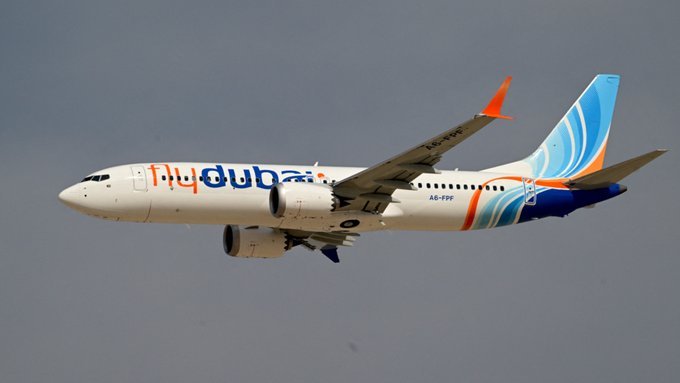
The flydubai incident has renewed questions over aviation security after the co-pilot allegedly attacked the captain. Indian authorities are examining whether existing screening procedures need further tightening.
BY PC Bureau
October 1, 2026: India is moving to expand the use of full-body scanners at airports as authorities review aviation security following an alleged cockpit attack on a flydubai flight bound for Tel Aviv.
The Ministry of Civil Aviation is examining security procedures after the incident involving flight FZ1073, in which the co-pilot allegedly attacked the captain and attempted to take control of the aircraft. Captain Smit Machchhar, an Indian national, fought off the attacker despite suffering multiple stab wounds. The aircraft was later diverted to Tabuk in Saudi Arabia and landed safely. The co-pilot was arrested and is under investigation.
Important details of the incident remain unclear, including how the alleged weapon entered the cockpit. Investigators have yet to establish publicly whether the co-pilot carried a knife on board or used the aircraft’s emergency fire axe.
If a knife was brought through an airport security checkpoint, it would raise questions about the effectiveness of existing screening procedures. Knives are among the items prohibited from being carried on the person or in hand baggage on flights operating from Indian civil airports. BCAS also lists axes and hatchets among prohibited articles.
Civil Aviation Minister Ram Mohan Naidu said the government would examine the findings of the investigation before deciding on further measures. “We will act as per the outcome of the probe. After the preliminary report from flydubai, India will also act to further tighten the security aspect,” he told India Today.
Ministry Secretary Samir Kumar Sinha said full-body scanners would initially be deployed at eight airports. Machines have already been delivered to three, with the remaining five expected to receive them subsequently. The ministry is also collecting and analysing data generated during the trials.
India has traditionally relied heavily on walk-through metal detectors, hand-held detectors and manual frisking at passenger security checkpoints. BCAS has been directing the phased installation of full-body scanners, with sensitive and hyper-sensitive airports to receive priority. Government documents have previously identified Delhi, Mumbai, Bengaluru, Hyderabad, Chennai, Kolkata and Ahmedabad for first-phase deployment.
Full-body scanners are designed to detect objects concealed beneath clothing, including some non-metallic materials that conventional metal detectors may not identify. Unlike X-ray machines, the millimetre-wave scanners use low-energy, non-ionising radio waves.
READ: ‘Stage-Managed’: Allahabad HC Judge Flags Full Court Functioning
How millimetre-wave scanners work
The scanner sends millimetre-length radio waves towards the body. Clothing allows much of the energy to pass through, while the waves are reflected differently by the skin and by objects concealed underneath clothing. Sensors analyse those reflections and identify areas that may require additional inspection.
The technology does not produce the kind of detailed X-ray image that can expose a person’s body. Modern systems can instead generate a generic outline or avatar and mark the location of a suspected concealed object. The passenger can then undergo a targeted physical check if required.
That is also intended to address one of the principal objections to earlier generations of body scanners: privacy.
Indian authorities have said the scanners being introduced at airports will be “picture agnostic”, meaning the operator will see a generic representation of the body rather than a detailed image of the passenger. Sinha said the system would display only the location of a suspected concealed object.
BCAS has been moving towards the technology for several years. In 2023, the government told Parliament that the Bureau had directed airports to install full-body scanners in phases, giving priority to hyper-sensitive and sensitive airports.
In April 2026, BCAS and Rashtriya Raksha University also signed an agreement to establish an indigenous testing centre for full-body scanners and other aviation-security equipment, including performance evaluation and certification of such systems.
What BCAS rules say about pilots and crew
The publicly available BCAS security framework does not exempt flight crew from airport security screening.
The National Civil Aviation Security Programme says all staff, including crew, and the items they carry must be screened before they are allowed into security-restricted areas. It further states that the screening procedure must ensure that prohibited articles are not carried and that the methodology is the same as that used for passengers and hand baggage.
BCAS therefore treats crew access to secure airport areas as a controlled-security process. Crew members also require authorised access credentials and are subject to background-check and access-control requirements. BCAS’s published material says that screening personnel must be certified and that security controls apply to persons entering security-restricted areas.