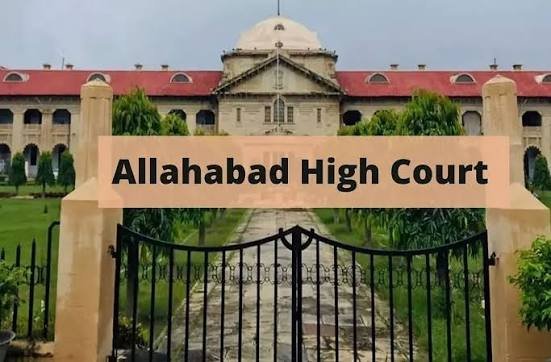
Allahabad High Court Justice Vinod Diwakar has sharply questioned the court’s administrative functioning, saying recent Full Court meetings appeared “stage-managed” and raising concerns over the recording of judges’ views.
BY PC Bureau
October 1: A sitting judge of the Allahabad High Court has delivered an unusually sharp critique of the institution’s administrative functioning, questioning the way Full Court meetings are conducted, the recording of judges’ views and the failure to address prolonged vacancies and delays in Uttar Pradesh’s subordinate judiciary.
Justice Vinod Diwakar made the observations in a judgment delivered on September 28, 2026, while dealing with four petitions under Article 227 concerning prolonged delays in trial courts. He said the problem could not be attributed solely to individual judges or district courts, but also reflected what he described as shortcomings in the High Court’s administrative culture.
Referring to the last two Full Court meetings, Justice Diwakar said they had given the impression of being “stage-managed in the manner of a government whipping its members through a confidence vote”, adding that such a situation “affronts the dignity of a Judge’s office.”
He further questioned the absence of records showing how individual judges viewed matters discussed by the collegiate body. Where a collective decision is taken without recording members’ views, he said, “the deliberation which the forum exists to secure is not evidenced on its record.”
READ: Back Home, Israeli Passengers Recount Ordeal on Flydubai Flight
The judgment also raised questions about compliance with the High Court Rules, which require matters of general policy, issues affecting the powers and status of the Court and the annual report on the administration of justice to be placed before the Full Court at least once every quarter.
According to Justice Diwakar, only 16 Full Court meetings had been held over the previous decade. He said no general policy matter concerning the Court’s powers and status had been placed before those meetings during that period. Annual reports on the administration of justice, he added, had neither been placed before the Full Court nor forwarded to the government as required.
“This fact alone is sufficient to indicate the prevailing state of functioning, working, and administrative culture in the High Court,” the judge observed.
The judgment also questioned the functioning of administrative committees constituted by the Chief Justice. Justice Diwakar said minutes of important committee meetings had not been circulated to the Full Court, creating an impression that such committees were operating independently of the High Court itself.
In his view, the absence of an effective institutional forum for raising such concerns left judges with two choices: raise administrative issues through judicial orders or “endure and lead a frustrating professional life in an environment that is neither conducive to judicial work nor reflective of the dignity of this great institution.”
The judge linked these administrative concerns to the severe shortage of judicial and support staff in Uttar Pradesh.
As of September 2026, the judgment recorded 10,352 vacancies across the High Court registry and district judiciary — 1,122 among judicial officers, 7,834 among district court staff and 1,396 in the High Court registry.
The state had 2,603 judicial officers against a sanctioned strength of 4,625, according to the judgment. It noted that 900 additional posts had been sanctioned only in September.
Recruitment had also remained slow. The written examination for 83 posts in the Higher Judicial Service, advertised in December 2023, was conducted in August 2026, but its results were still awaited. The judgment noted that no appointments to the Higher Judicial Service had been made since September 2022.
Recruitment to the Civil Judge (Junior Division) cadre was similarly delayed. The last notification, issued on December 10, 2022, was for 303 posts, with results declared on August 30, 2023. No subsequent recruitment had been conducted for the cadre, according to the judgment.
The consequences of such delays were illustrated by the cases before the court. One criminal case registered at Naini police station in Prayagraj in 2009 had reportedly been listed more than 178 times over nearly 16 years without charges being framed. Other cases had remained pending for decades.
Justice Diwakar said such delays should not automatically be viewed as the result of individual judicial lapses, arguing that they could also reflect broader institutional and administrative patterns.
The judge directed that the judgment be placed before the Chief Justice for consideration and appropriate action. A copy was also directed to be sent to the Secretary of the Union Department of Justice for placing before the Minister of State (Independent Charge) for Law and Justice. A note setting out the issues was also ordered to be forwarded to the Union Cabinet Secretary.
The judgment does not itself alter the High Court’s administrative structure or order the convening of a Full Court. But its observations place on the judicial record an unusually direct critique of the functioning of the country’s largest High Court — at a time when thousands of vacancies and cases pending for years continue to burden Uttar Pradesh’s trial courts.