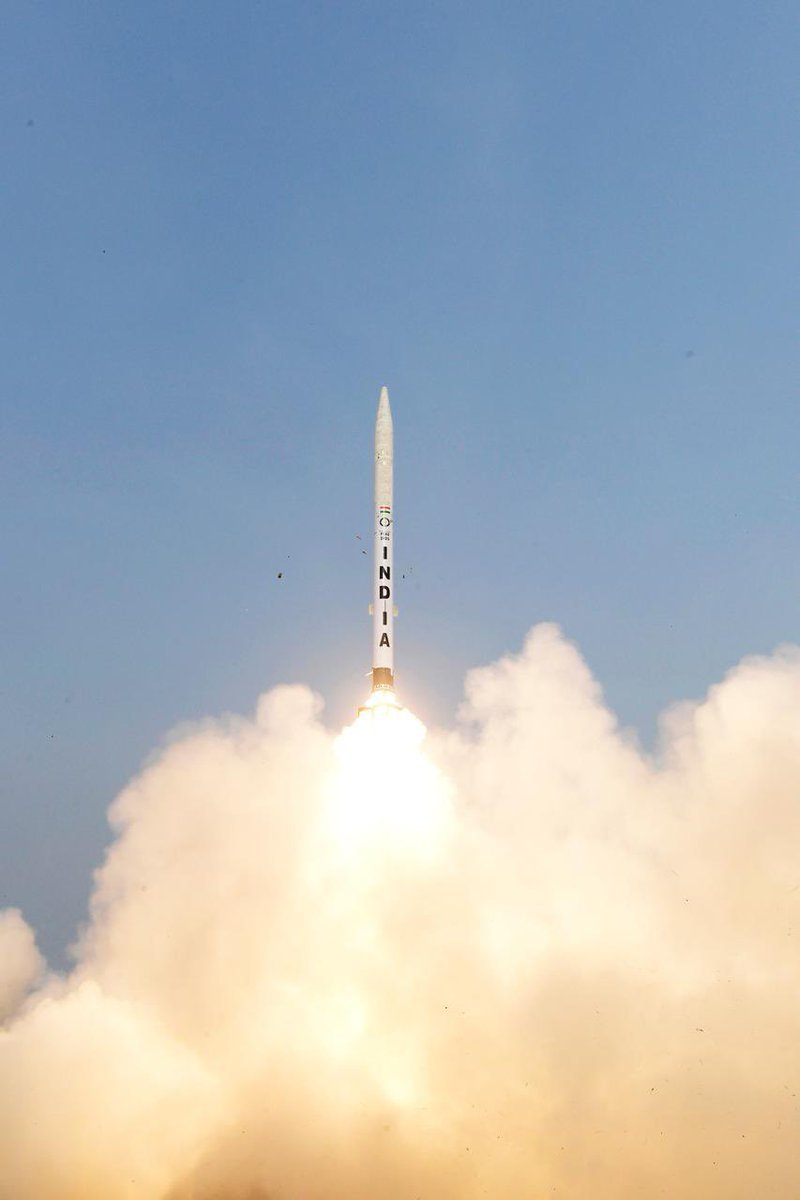
DRDO tested two interceptor missiles capable of neutralising intermediate-range ballistic threats, strengthening India’s ability to protect critical assets from hostile attacks.
BY PC Bureau
New Delhi
June 14, 2926: India has moved a step closer to building a robust shield against long-range missile threats after successfully demonstrating its multi-layered Ballistic Missile Defence (BMD) capability through a series of three flight tests conducted on June 10 and 11.
The Defence Ministry said the successful trials place India among a select group of countries with the technological capability to defend against sophisticated ballistic missile attacks, including those involving Intercontinental Ballistic Missiles (ICBMs). At present, only a handful of nations — the United States, Russia, China and Israel — are known to possess comparable multi-tiered missile defence systems.
The tests, carried out by the Defence Research and Development Organisation (DRDO), involved two advanced interceptor missiles designed to neutralise Intermediate-Range Ballistic Missiles (IRBMs). Conducted from the Integrated Test Range at Chandipur in Odisha, the interceptors are capable of detecting, tracking and destroying incoming ballistic missiles with ranges between 2,000 km and 5,000 km.
In a separate milestone, DRDO also successfully conducted the maiden flight trial of the Naval Anti-Ship Missile-Medium Range (NASM-MR). The missile demonstrated several advanced capabilities, including precision navigation, low-altitude sea-skimming flight and accurate terminal guidance against maritime targets.
Defence Minister Rajnath Singh hailed the achievement, describing it as a significant boost to India’s strategic defence preparedness.
“Multi-layered BMD capability was successfully demonstrated,” Singh said in a post on X.
What Is a Multi-Layered BMD System?
A Ballistic Missile Defence system is designed to detect, track and intercept enemy missiles before they can reach their targets. Unlike conventional air defence systems that primarily deal with aircraft or drones, BMD systems are built to counter ballistic missiles, which travel at extremely high speeds and can carry conventional or even nuclear warheads.
A multi-layered architecture provides multiple opportunities to destroy an incoming missile. The first layer attempts interception outside the Earth’s atmosphere during the missile’s mid-course phase, while subsequent layers engage the threat within the atmosphere if the earlier attempt fails.
This layered approach significantly increases the probability of a successful interception and reduces the chances of a hostile missile penetrating the country’s defences.
READ:
Toxic Jab Kills 3-year-old Cancer Patient at Bhopal AIIMS
Why Is It Significant?
The successful tests mark a major technological milestone for India. They demonstrate the country’s ability to build and integrate a complex network of long-range radars, command-and-control systems, tracking sensors and high-speed interceptor missiles capable of responding within seconds.
The capability is particularly important given the evolving missile landscape in India’s neighbourhood. Ballistic missiles have become a key component of strategic deterrence, and the ability to intercept them provides an additional layer of protection for critical infrastructure, military assets and major population centres.
While no missile defence system can guarantee a perfect shield, possessing a credible BMD capability strengthens deterrence by complicating an adversary’s attack plans and reducing the effectiveness of potential missile strikes.
🚨MASSIVE: India’s Nuclear Shield Is Ready, DRDO Places India in an Elite Global Club by Completing BMD Phase-2
With the successful testing of Phase-II of its Ballistic Missile Defence (BMD) system, India has demonstrated the ability to intercept and destroy long-range ballistic… pic.twitter.com/38NLwPSFVw
— Not Just Headlines (@Notjustheadline) June 13, 2026
What Are IRBMs and ICBMs?
Intermediate-Range Ballistic Missiles (IRBMs) typically have ranges between 2,000 km and 5,500 km and can strike targets across regions within minutes of launch.
Intercontinental Ballistic Missiles (ICBMs), meanwhile, have ranges exceeding 5,500 km and represent some of the most sophisticated strategic weapons in existence. Their high speeds and long trajectories make them extremely difficult to intercept, requiring advanced sensors and layered defensive systems.
The Defence Ministry’s statement that India has demonstrated the capability to counter such threats underlines the maturity of the country’s indigenous missile defence programme.
Beyond Missile Defence
The successful trial of the NASM-MR also highlights India’s growing emphasis on strengthening maritime strike capabilities. Designed for naval warfare, the missile can fly close to the sea surface to evade enemy radar before accurately engaging hostile ships.
Together, the BMD and NASM-MR tests reflect India’s broader effort to develop advanced indigenous defence technologies under its push for self-reliance in the strategic sector.
For India, the achievement is not merely about acquiring another missile system. It signals the emergence of a sophisticated defensive architecture capable of protecting national interests against an increasingly complex range of aerial and missile threats.