The Allahabad and Patna High Courts have flagged serious misuse of preventive laws in Uttar Pradesh and Bihar, with courts warning against turning crime-control measures into a “tool of oppression”.
BY Navin Upadhyay
September 17, 2026: Two neighbouring Hindi heartland states are facing an uncomfortable judicial question: how far can the administration go in restricting a person’s movement, forcing repeated police-station attendance and attaching a “habitual offender” or “goonda” label without a conviction for the conduct that supposedly justifies it?
In September 2026, the Allahabad and Patna High Courts, in separate cases, delivered a series of orders that exposed strikingly similar problems in the use of preventive laws in Uttar Pradesh and Bihar. The courts found instances of stale cases being revived, police recommendations being mechanically endorsed and district authorities imposing severe restrictions without demonstrating an immediate threat to public order.
The judgments do not establish that every such order is politically motivated or aimed at suppressing dissent. But they do point to a more basic institutional problem: preventive laws intended for exceptional circumstances can become instruments of routine administrative control when magistrates fail to independently examine the material placed before them.
Bihar: Externment, elections and the “rubber stamp”
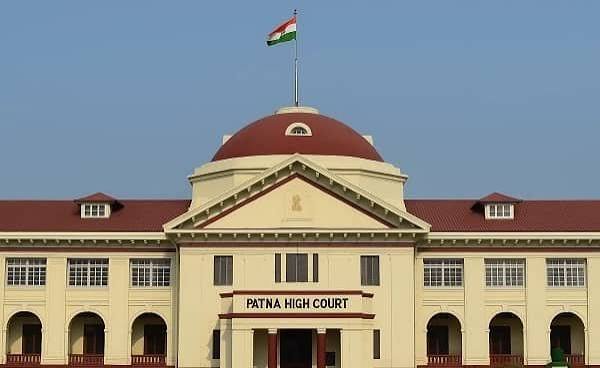
The Patna High Court’s division bench of Justices Rajeev Ranjan Prasad and Sunil Dutta Mishra delivered three orders on September 11, 2026, setting aside externment or restrictive orders passed under Bihar’s crime-control legislation. The court imposed a combined cost of Rs 3.9 lakh on the State.
One of the cases involved Chandan Kumar, an elected panchayat representative from Giriyak in Nalanda district. The Nalanda district magistrate had ordered his externment in the run-up to the 2025 Bihar Assembly election, citing concerns that his movements could cause alarm.
The High Court quashed the order. It permitted Kumar to mark his attendance at Silao police station on Mondays, Wednesdays and Fridays, while awarding him Rs 60,000—Rs 50,000 as compensation and Rs 10,000 towards litigation costs.
The bench found that the district magistrate had failed to independently examine the police material and had effectively endorsed the police proposal. It also stressed that such drastic restrictions interfere with fundamental rights under Articles 19 and 21.
The court observed that if Kumar had violated bail conditions, the appropriate legal remedy would have been cancellation of bail rather than imposing a separate administrative form of exile.
Two other Nalanda residents, Shashi Kumar alias Fukan and Ajay Singh, also succeeded against an October 10, 2025 order of the district magistrate. The court awarded each of them Rs 1.1 lakh.
In those proceedings, the court criticised the role of the police and administration, with observations about authorities merely forwarding material and orders containing similar or “cut-and-paste” reasoning. The court said the statutory requirement of genuine subjective satisfaction could not be replaced by mechanical reliance on a police report.
In another case from Banka, Girdhari Yadav of Katoria had been ordered to report daily at Barahat police station, around 40 km from his home. The High Court quashed the direction and awarded him Rs 1.1 lakh in compensation.
The State was directed to pay the amounts and examine whether they should be recovered from officials found responsible.
The Patna High Court has previously warned district magistrates against using preventive provisions as routine law-and-order measures. Its earlier judgments have stressed that an “anti-social element” must satisfy the statutory definition and that ordinary disputes or isolated allegations cannot automatically be converted into a public-order threat.
Uttar Pradesh: “tool of oppression”
Uttar Pradesh has its own, older preventive framework—the Uttar Pradesh Control of Goondas Act, 1970.
The law permits a district magistrate to declare a person a “goonda” and order his removal from the district. But the statutory definition rests on habitual or persistent conduct; the mere existence of an FIR is not enough.
On September 10, Justice Subhash Vidyarthi of the Allahabad High Court’s Lucknow Bench quashed an order declaring Zahid Ali a goonda and externing him from Gonda district for six months. The court also set aside the commissioner’s subsequent confirmation.
The police case relied on a 2010 case, a 2020 case and a beat report. Ali had been acquitted in the 2010 case in 2017. That left the 2020 case as the principal live criminal matter, followed by a six-year gap before the 2026 externment order.
The court held that an acquittal could not subsequently be used to manufacture a record of habitual criminality. It also found that a beat inquiry, without proper consideration and hearing, could not fill the evidentiary gap.
More significantly, the court questioned the broader pattern in which such matters were reaching it. It observed that repeated cases indicated the State’s persistent use of the Goondas Act in a manner it described as a “tool of oppression” and called the particular case a “glaring example” of statutory abuse.
The same week, Justice Sandeep Jain quashed a goonda declaration against Abhishek Tyagi in Ghaziabad. The case rested on two criminal cases separated by about three years. The court awarded Rs 50,000 in damages and permitted recovery from the salaries of officials found responsible.
The judgment followed earlier warnings from the same court against arbitrary goonda proceedings. In April 2026, Justice Jain had held in the Satendra case that one or two criminal cases could not, by themselves, justify branding someone a goonda, particularly when the label carries consequences for the individual and family.
Other Allahabad High Court benches have also criticised notices issued through printed proformas and described misuse of the legislation as widespread, while seeking stronger guidelines for district authorities.
READ: Chinese Incursion: STSAMC Challenges Governor, Tagak Says PLA Presence Can’t Be Ruled Out
What the two states have in common
The Bihar and Uttar Pradesh laws are not identical. Their definitions, procedures and statutory histories differ.
But the cases reveal a similar administrative pattern.
In both states, preventive powers can result in restrictions that resemble punishment without a criminal conviction: a person may be ordered to leave a district, remain within a particular police-station jurisdiction or report repeatedly to the police.
The courts have repeatedly drawn the same legal distinctions.
A couple of FIRs do not automatically establish habitual criminality. An acquittal cannot simply be recycled as evidence of continuing criminal conduct. Old cases cannot, without more, establish an immediate threat. A local dispute is not necessarily a threat to public order.
And a district magistrate cannot demonstrate the “subjective satisfaction” required by law merely by reproducing the police version.
That last point is crucial. Preventive laws deliberately give considerable discretion to executive authorities. But that discretion carries a corresponding obligation to independently examine the material rather than mechanically approve a police recommendation.
Does this amount to suppression of dissent?
The broader allegation that preventive laws in Uttar Pradesh and Bihar are being used to silence dissent requires some qualification.
The Chandan Kumar case in Bihar is particularly notable because it involved an elected local representative and an externment order issued in the run-up to an election. The High Court’s criticism of the administrative reasoning makes the case relevant to questions about the use of preventive powers during politically sensitive periods.
But the other Bihar cases do not, on the face of the judgments, establish a political motive. They concern people whose cases appear to have been processed through the preventive machinery on the basis of criminal allegations and administrative files.
Similarly, the September 2026 Uttar Pradesh cases concern old or limited criminal records. The courts criticised the statutory process and the resulting restrictions, but did not hold that the Goondas Act had been deployed specifically to suppress political opponents, journalists or protesters.
There is, separately, a longer record of allegations by journalists, activists and local political actors that preventive proceedings have followed inconvenient reporting, protests or politically sensitive disputes. Such cases are relevant to the broader debate but should not be conflated with every instance in which a court quashes an externment order.
Governments, meanwhile, have a legitimate argument for retaining preventive laws. Organised criminals and local strongmen may pose risks before a conventional criminal trial is completed, and witnesses may be reluctant to testify. Preventive legislation exists partly because criminal prosecution alone may not always address an immediate public-order threat.
The constitutional difficulty arises when that exceptional power is used without demonstrating the statutory ingredients that justify it.
The constitutional line
Articles 19 and 21 place significant constraints on executive restrictions affecting movement, liberty and reputation. Preventive action is constitutionally permissible in defined circumstances, but it cannot become a substitute for ordinary criminal prosecution.
That distinction is at the heart of the recent judgments.
A person against whom there is sufficient evidence of a crime should ordinarily face the criminal justice system. A person who presents an immediate and demonstrable public-order threat may, subject to statutory safeguards, face preventive restrictions.
What the courts are rejecting is the space in between—where an old FIR, a police report or a handful of allegations becomes enough to impose restrictions that can profoundly affect a person’s liberty and reputation.
The significance of the September judgments therefore extends beyond the individual petitioners. Both High Courts are signalling that preventive powers come with procedural and constitutional responsibilities.
The financial penalties imposed on the States add another dimension. If compensation and recovery from responsible officials become routine consequences of mechanically issued orders, the cost of preventive overreach may no longer be borne entirely by the public exchequer.
The larger question now moves back to the two state administrations: whether these judgments will lead to tighter scrutiny of preventive orders at the district level—or whether the next batch of files will repeat the same errors that brought the earlier ones before the courts.