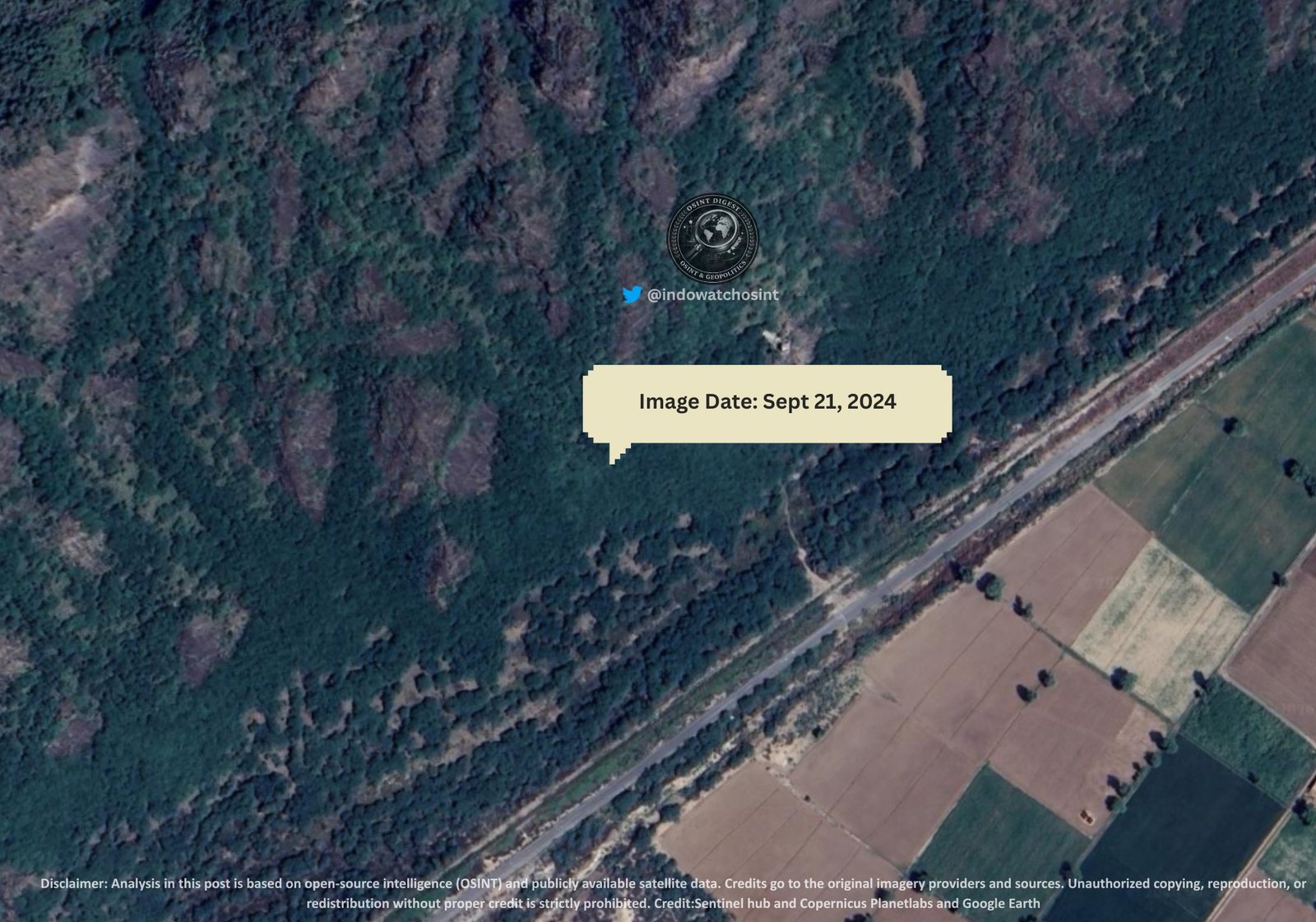
Gen Anil Chauhan says India did not deliberately target Pakistan’s sensitive Kirana Hills nuclear complex during Operation Sindoor—the loitering munition simply exhausted its endurance.
BY PC Bureau
A startling revelation by former Chief of Defence Staff General Anil Chauhan has shed new light on one of the most intriguing episodes of last year’s Operation Sindoor, explaining how an Indian loitering munition ended up crashing into Pakistan’s strategically sensitive Kirana Hills.
Speaking at New Delhi’s Vivekananda Centre, General Chauhan said the drone was not deliberately aimed at Kirana Hills, but had been deployed to search for enemy radar systems around the strategic Sargodha airbase. After loitering for nearly two hours without finding a target, the munition exhausted its endurance and ultimately struck the nearest high ground, around 10 km north of Sargodha.
Backing former Air Marshal A.K. Bharti, then Director General of Air Operations, Chauhan said India had sent several loitering munitions towards the Sargodha area. Such weapons are designed to remain airborne while searching for targets and, if none is located within their endurance window, eventually strike a designated or available point.
“Bharti had rightly clarified that we did not target Kirana Hills,” Chauhan said. The drone, he explained, had apparently exhausted its loitering time and “must have come and hit one of those hills.”
The disclosure is significant because Kirana Hills has long been associated with Pakistan’s strategic and nuclear infrastructure. The episode had therefore triggered considerable speculation about whether India had deliberately targeted the sensitive site during Operation Sindoor.
⚡️🇮🇳 Former CDS Gen. Anil Chauhan on the Kirana Hills strike:
Kirana Hills, located around 10 km north of Sargodha, were reportedly targeted amid heavy use of loitering munitions. Gen. Chauhan suggested that some munitions, capable of remaining airborne for nearly two hours, may… pic.twitter.com/ZjV0SnSm6c
— War Flash (@WarFlash_2630) August 25, 2026
READ: Manipur: Kuki Villagers Trek 10 Hours for Essentials, Cong Seeks End to Blockade
Chauhan also revealed that the Indian Air Force had initially been authorised to strike Skardu, deep inside Pakistan-occupied Kashmir. The planned operation, however, was abandoned at the last moment because of adverse weather conditions. The IAF subsequently shifted its focus to the Bholari airbase.
The Bholari strike, carried out by the Gandhinagar-based South Western Air Command on May 10, produced some of the most dramatic imagery of the operation. Satellite photographs showed extensive damage to a hangar, including a large rupture in its roof and debris scattered across the surrounding aircraft apron.
Taken together, the revelations offer a striking glimpse into the rapidly shifting calculations of the air campaign. A mission launched to hunt Pakistani radars around Sargodha ended with a loitering munition striking Kirana Hills after exhausting its endurance, while a separate planned strike on Skardu was abandoned because of weather and replaced by an attack on Bholari.
The disclosures add a new layer to the still-unfolding account of Operation Sindoor, highlighting how battlefield decisions, weather and the endurance limits of unmanned weapons could dramatically alter the course of an air operation.