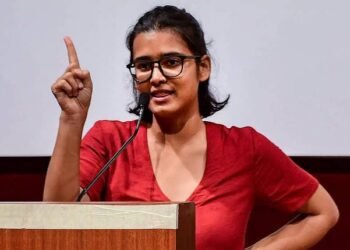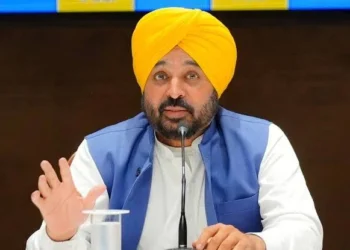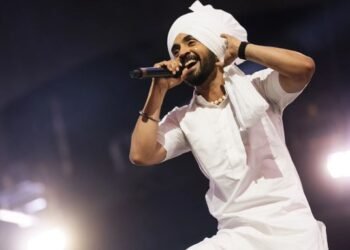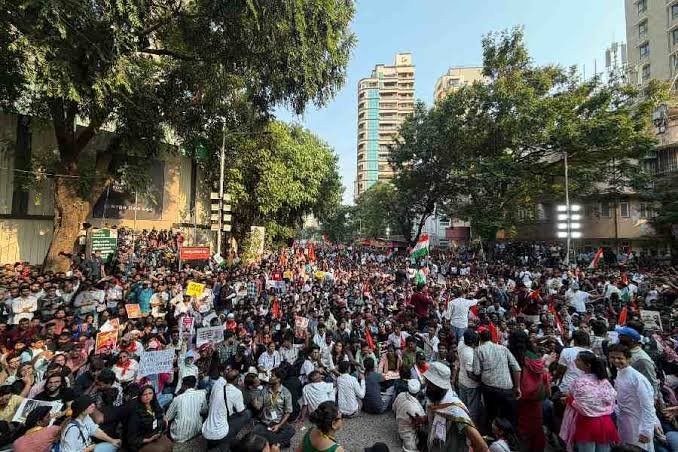
The Cockroach Janta Party launched its nationwide “Jail Bharo Andolan” in Mumbai despite police denying permission for the Shivaji Park gathering. CJP founder Abhijeet Dipke addressed protesters, while actor Naseeruddin Shah and singer-composer Vishal Dadlani backed the mobilisation.
BY PC Bureau
NEW DELHI/MUMBAI, October 2: Protests demanding the resignation of Chief Election Commissioner Gyanesh Kumar spread across the country on Gandhi Jayanti, with more than 1,000 people detained in the national capital and a major mobilisation at Mumbai’s Shivaji Park, where the youth-led Cockroach Janta Party (CJP) launched its nationwide campaign against the Election Commission.
The protests, involving student organisations, civil society groups and political activists, were directed at the Election Commission’s Special Intensive Revision (SIR) of electoral rolls and allegations of large-scale voter deletions. The Election Commission has rejected the allegations, maintaining that the SIR decisions were taken unanimously by its three-member panel and that the exercise is intended to remove duplicate, deceased and ineligible entries.
Mumbai: CJP launches ‘Jail Bharo’ campaign
Am I dreaming or what? pic.twitter.com/NAA7ZdVPjz
— Abhijeet Dipke (@abhijeet_dipke) October 2, 2026
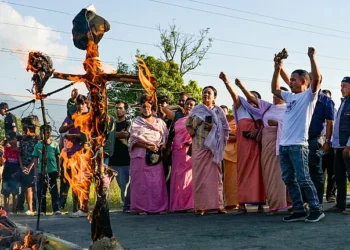
At Mumbai’s Shivaji Park, the CJP went ahead with its “Jail Bharo Andolan” despite the police denying permission for the gathering. The protest was scheduled near Gate No. 6 from 4 pm, with the organisers describing it as the opening of a nationwide campaign that will move to Goa, Bengaluru, Kolkata and Ranchi before culminating in a demonstration at Jantar Mantar in Delhi.
A sizeable crowd began gathering at Shivaji Park as heavy police deployment was put in place around the venue. The latest reports did not provide an independently verified final headcount, although police had anticipated a turnout of several thousand. A no-parking zone was imposed around the area and security was tightened around the park and Dadar.
CJP Protest Going on Next Level !!!!
Insane CrowdLong Live Mumbai Spirit 👉🏻👈🏻 pic.twitter.com/Snam5m4Yyu
— CJP Gems 💎 (@GameonNewbie) October 2, 2026
CJP founder Abhijeet Dipke said the organisation’s three principal demands were Kumar’s resignation, freezing the electoral roll prepared in 2025 and conducting elections on that basis, and creating a transparent and independent mechanism for appointing the next Election Commissioner with civil-society participation. He said the agitation would continue until Kumar resigned.
Dipke deliberately chose Mumbai and Gandhi Jayanti to launch the campaign. Explaining the decision, he pointed to the sharp change in Maharashtra’s electoral results between the 2024 Lok Sabha and subsequent Assembly elections and asked how the change had occurred. “It is in this context that we have chosen to start the agitation from Mumbai,” he said. He also invoked Gandhi’s history of civil resistance, asking: “We are fighting against those in power…We all remember Mahatma Gandhi, who fought against the Britishers. Did the British ever permit him to agitate?”
Dipke said arrests would not stop the campaign. “Even jail will not stop this agitation,” he said, adding that the CJP would remain an independent movement rather than become part of any political party or alliance. He also urged protesters to avoid party flags and banners and instead carry the national flag.
Vishal Dadlani came to CJP protest Mumbai pic.twitter.com/xpba37d0Ql
— Against Corruption (@akashuchani08) October 2, 2026
He alleged that public faith in the electoral process had eroded and questioned the SIR exercise. Referring to the large number of names left out of draft rolls, he claimed that around 13 crore voters had been deleted and said: “There is only an illusion of democracy right now. No actual democracy exists.” Those claims are disputed by the Election Commission, which says the roll revision is aimed at identifying and removing ineligible entries.
The CJP’s campaign also received support from prominent figures in Mumbai’s cultural world. Singer-composer Vishal Dadlani joined the protest and had publicly announced his participation, while veteran actor Naseeruddin Shah met Dipke ahead of the demonstration and expressed support for his work. Dadlani, in a video backing the protest, called for Kumar’s resignation and urged Mumbaikars to attend the demonstration.
The choice of Shivaji Park had itself become a point of confrontation. Mumbai Police said it was not empowered to grant permission for a public gathering at the ground under existing court orders and government guidelines. Authorities also cited the absence of BMC clearance, Shivaji Park’s silence-zone status, potential traffic congestion and possible obstruction to emergency and hospital access. Police had suggested an alternative venue.
The CJP, however, refused to shift the venue and turned the denial of permission into part of its protest campaign. Dipke had earlier announced the “Jail Bharo Andolan” after the police decision, saying that denying the group a venue would not end the agitation.
READ: Police Crack Down on Jantar Mantar Protest, Hundreds Detained
Delhi: More than 1,000 detained
जंतर मंतर से आ रही प्रदर्शन की तस्वीर… pic.twitter.com/rd94V7kOuF
— Umashankar Singh उमाशंकर सिंह (@umashankarsingh) October 2, 2026
In Delhi, the protest produced a far larger police response. Section 163 of the BNSS was imposed across the New Delhi district, the proposed Jantar Mantar gathering was denied permission and thousands of police and paramilitary personnel were deployed around the protest zone.
Entry and exit at at least 11 Metro stations in central Delhi were closed, while barricades were erected on roads leading towards Jantar Mantar. Mobile internet services were also suspended around the protest site.
More than 500 people had been detained by the afternoon, including former Delhi chief minister Atishi, AAP leaders Saurabh Bharadwaj, Sanjay Singh and Sanjeev Jha, AISA president Neha Bora, activist Yogendra Yadav and Left leader Brinda Karat. Hundreds of SFI and other student activists were intercepted at different points while attempting to reach Jantar Mantar.
Police initially put the number of detainees at about 150 before revising it to more than 500. The action came after police had erected multiple layers of barricades around the protest site and repeatedly warned demonstrators to disperse.
Police said the restrictions were imposed because the gathering had not been authorised and Section 163 prohibited unauthorised assemblies and related protest activity in New Delhi. Protesters challenged the requirement for permission to demonstrate at a designated protest venue and accused the authorities of restricting their right to peaceful assembly.
The protests mark a significant escalation in the dispute over the Election Commission’s handling of electoral-roll revision. The immediate trigger for the CJP campaign was an Indian Express investigation reporting that Election Commissioners Sukhbir Singh Sandhu and Vivek Joshi had formally raised objections on at least 14 occasions over 10 months concerning electoral-roll revisions, registration procedures and digital systems. The Election Commission has disputed the interpretation of the objections and maintained that major decisions, including the SIR, received unanimous approval.
The CJP has announced further protests in several cities, while opposition parties and student organisations have planned separate mobilisations. The competing campaigns are likely to keep the SIR, the functioning of the Election Commission and the integrity of electoral rolls at the centre of political debate in the weeks ahead.