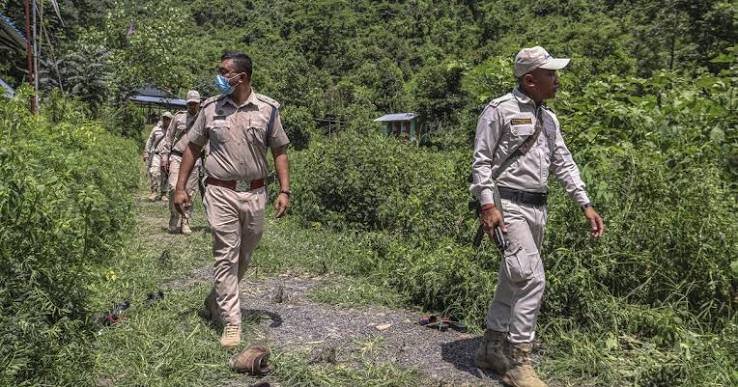
Community voices blamed the killing on the ZUF-K and claimed it was the latest in a series of attacks targeting Kuki-Zo civilians, while demanding swift action against those responsible.
By PC Bureau
July 11: A Kuki farmer was allegedly shot dead by suspected cadres of the Zeliangrong United Front-Kamson (ZUF-K), a Naga insurgent outfit, while working in his paddy field in Govajang village in Manipur’s Kangpokpi district on Saturday. His wife, who was with him at the time of the attack, survived.
According to community sources, the attack took place at around 2 p.m. when Haolal and his wife were tending to their farmland. The assailants allegedly opened fire before fleeing the area.
Villagers initially believed the couple had escaped the attack. However, when Haolal failed to return home by evening, residents launched a search of the surrounding fields. His body was recovered at around 7 p.m., while his wife was found alive. Her condition was not immediately known.
Kuki-Zo civilians condemned the killing and alleged that it was carried out by cadres of the ZUF-K. They claimed the incident was part of a continuing pattern of attacks targeting Kuki civilians in the hill districts of Manipur.
READ: Datia Erupts as Narottam Mishra Loyalists Clash With Police, Block Highway
Fifteen members of the Kuki-Zo community have been killed in attacks allegedly carried out by Naga militant groups, including ZUF-K factions, in recent months. Shockingly, no arrests have been made in connection with these killings.
Community leaders also alleged that many of the attacks occurred after security forces conducted search operations in Kuki villages and seized licensed and illegal weapons, leaving residents vulnerable to attacks by armed groups. Kuki Civil Society organisations have repeatedly accused sections of the state police of failing to protect Kuki settlements and alleged collusion between security personnel and Naga militants.
The latest incident comes amid continuing tensions between the Kuki-Zo and Naga communities in Manipur’s hill districts, where disputes over territory, village boundaries, security arrangements and the presence of armed groups have periodically resulted in violence.