




With tens of thousands of security personnel deployed, metro stations shut, train services disrupted and mobile internet suspended in parts of central Delhi, the detention of the YouTuber Dhruv Rathi from his Gurugram residence intensifies questions over the government’s response to a planned protest against the Chief Election Commissioner.
BY PC Bureau
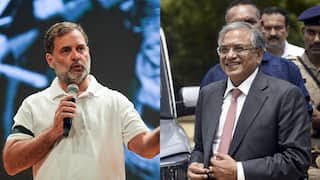
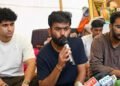
NEW DELHI, October 10: In a dramatic escalation of the crackdown on the Cockroach Janata Party’s (CJP) planned protest against Chief Election Commissioner Gyanesh Kumar, YouTuber and social media influencer Dhruv Rathee was reportedly taken into custody by Delhi Police from his family’s residence in Gurugram early on Saturday, hours before the demonstration was scheduled to begin at Jantar Mantar.
News reports, citing sources, said around 50 police personnel had assembled outside Rathee’s residence in Central Park Vihar, Sector 56, late on Friday night. A police team reportedly entered the house at approximately 7.48 am after his mother opened the door and took him into custody.
The precise legal grounds for the reported detention remained unclear. Delhi Police had not issued an official statement specifically confirming the action against Rathee at the time of reporting.
His reported detention came amid an extraordinary security operation aimed at preventing CJP supporters and other demonstrators from assembling in the capital. The protest seeks Kumar’s resignation over alleged irregularities in the Special Intensive Revision (SIR) of electoral rolls and demands greater transparency and accountability from the Election Commission.
The scale of the restrictions has transformed the run-up to a political demonstration into a major confrontation over the right to protest. The authorities have cited law-and-order concerns and the lack of formal permission, while the organisers have accused the government of attempting to silence dissent.
Dhruv Rathee has been detained.
The Dictator is TERRIFIED of young people who question its wrongdoings and refuse to stay silent!
— Cockroach Janta Party – CJP (@Cockroachisback) October 10, 2026
READ: Trump Hits ICC With Sanctions After Navi Pillay’s Nobel Peace Prize
Delhi under an unprecedented security blanket
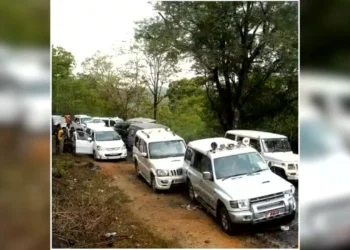
The capital was placed under an extensive security cordon, with reports putting the deployment of police and paramilitary personnel at more than 35,000, while some estimates went higher. Police established checkpoints, intensified vehicle searches at Delhi’s borders and prepared designated detention centres to deal with those attempting to join the mobilisation.
At least 45 Delhi Metro stations were ordered to suspend entry and exit, while railway services into the capital were disrupted through cancellations and rescheduling. Mobile internet services were suspended for a limited period within a four-kilometre radius of the Janpath–Kartavya Path crossing.
The measures went beyond securing the immediate protest venue. Police also monitored hotels, guest houses, railway stations, bus operators and other transport points to identify groups travelling to Delhi for the demonstration. Officials said the arrangements were intended to prevent a breach of peace and avoid a repeat of disorder during an earlier CJP protest.
The restrictions, however, threatened to affect ordinary commuters and residents with no connection to the demonstration. The Supreme Court questioned blanket restrictions on public transport, observing that authorities should not use a sledgehammer to kill a fly, according to reports on the proceedings.
From Bengaluru protest to reported detention
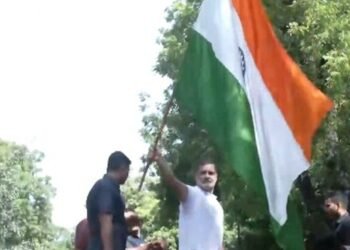
Rathee had emerged as a prominent public face of the campaign after joining CJP founder Abhijeet Dipke and actor-activist Prakash Raj at a protest in Bengaluru on October 8. He criticised what he described as a lack of transparency and accountability in the Election Commission’s handling of the SIR exercise.
On Friday, after arriving in Delhi, Rathee also questioned the extensive security arrangements, describing the restrictions as an attempt to put the capital under an “almost lockdown”. He had urged people to participate in the planned gathering.
His reported detention in Gurugram therefore came as police stepped up efforts to prevent demonstrators from reaching Jantar Mantar. The action also raised questions about the use of preventive police powers against a prominent public figure associated with a political mobilisation.
The controversy surrounding Rathee had already intensified after former Bengaluru police commissioner Bhaskar Rao called on the Union Home Ministry to examine the YouTuber’s citizenship and immigration status following his participation in the Bengaluru protest. There was no indication that this request itself constituted a formal criminal case against Rathee or established any wrongdoing.
CJP alleges mass preventive detentions
The crackdown has extended beyond Delhi. The CJP has claimed that more than 10,000 of its members and supporters, along with people associated with allied groups, had been detained across the country ahead of Saturday’s protest. That figure is the party’s claim and has not been independently verified in full.
Reports from different locations have described preventive detentions of activists and students attempting to travel to Delhi. Opposition leaders have also faced police action during protests connected to the dispute over electoral rolls.
The CJP is demanding Kumar’s resignation, alleging that the SIR exercise has resulted in large-scale voter deletions that threaten electoral fairness. The allegations have become the focus of a wider political dispute. The government and the Election Commission’s position on the exercise must be distinguished from the claims made by protesters; the allegations of deliberate political manipulation remain contested.
Police, meanwhile, have defended the restrictions by pointing to the absence of permission for the Jantar Mantar gathering, the short notice given by organisers and concerns about previous demonstrations. The Union Home Ministry also flagged potential law-and-order risks and directed state authorities to coordinate with Delhi Police.
A test of the right to dissent
The central question is whether the response to the proposed demonstration has remained proportionate to the threat authorities say they anticipated. The denial of permission for a gathering does not, by itself, settle the wider question of how the state should treat peaceful political dissent or whether sweeping restrictions on movement and communication are necessary.
The reported detention of Rathee has added a high-profile dimension to that debate. His legal status, the precise grounds for taking him into custody and whether he was subsequently released require official confirmation.
For the CJP, the campaign against the SIR has become a test of electoral accountability. For the authorities, the immediate argument is public order. But the deployment of tens of thousands of personnel, disruption to transport, restrictions on mobile internet and preventive action against would-be participants have made the state’s response almost as consequential as the protest itself.
As the planned demonstration approached, Delhi was left confronting a question that goes beyond one party or one election official: how can authorities manage public order without imposing restrictions so sweeping that they undermine the very democratic freedoms citizens are seeking to defend?




Comments 1