



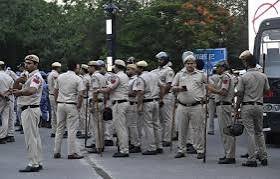
CJP founder Abhijeet Dipke and fellow leaders Saurav Das and Ashutosh Ranka detained inside aircraft at Delhi airport; Dhruv Rathee taken from Gurugram home; 35,000-plus security personnel deployed, metro stations shut, trains cancelled and mobile internet suspended ahead of Jantar Mantar demonstration against CEC Gyanesh Kumar.
BY PC Bureau
NEW DELHI, October 10: Armed police, barricades, mass preventive detentions and sweeping restrictions on public transport and communications: Delhi’s response to the Cockroach Janata Party’s (CJP) planned protest against Chief Election Commissioner Gyanesh Kumar has turned the national capital into a security zone, raising serious questions about the state’s approach to citizen’s right to peaceful political.
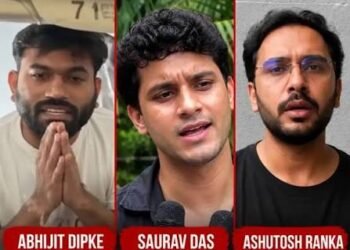
CJP founder Abhijeet Dipke and fellow leaders Saurav Das and Ashutosh Ranka were detained inside their aircraft after it landed at Terminal 3 of Indira Gandhi International Airport, before they could emerge into the terminal and proceed towards Jantar Mantar. The three had flown in from Mumbai to lead the demonstration demanding Kumar’s resignation over alleged irregularities in the Special Intensive Revision (SIR) of electoral rolls.
Their detention came hours after YouTuber Dhruv Rathee was taken into custody from his family’s residence in Gurugram. Rathee had publicly backed the protest and announced his intention to participate.
The sequence of detentions, combined with the extraordinary scale of the security arrangements, has transformed a planned demonstration into a wider confrontation over the right of citizens to assemble, express dissent and question institutions responsible for conducting elections.
Right to protest cannot be reduced to a permission slip
The right to peaceful assembly is protected by Article 19(1)(b) of the Constitution, subject to reasonable restrictions in the interests of public order and the sovereignty and integrity of India. Freedom of speech and expression is protected by Article 19(1)(a), also subject to constitutionally permitted restrictions.
These guarantees do not confer an unrestricted right to occupy any public space, ignore lawful directions or disrupt essential services. Governments and police authorities can regulate the location, timing and conduct of demonstrations.
But those powers are not a blank cheque. Restrictions must be grounded in law and proportionate to the legitimate public-order objective. A blanket prohibition, indiscriminate preventive action or restrictions extending far beyond the site of a proposed gathering can raise serious constitutional concerns, depending on the facts and legal basis.
The detention of the CJP leaders inside their aircraft is particularly significant because it occurred before they could reach the proposed protest venue. The authorities should explain the legal basis for the action and whether the leaders were given the grounds for their detention.
The same questions apply to Rathee and the hundreds of other people reportedly held. Were they detained because of specific conduct or a credible threat, or simply because they intended to join a demonstration that the police had not authorised? The answer matters both for the individuals concerned and for the future exercise of the right to dissent.
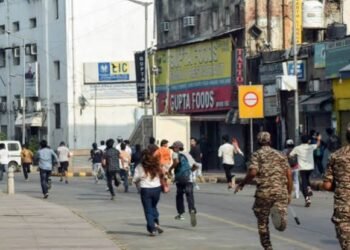
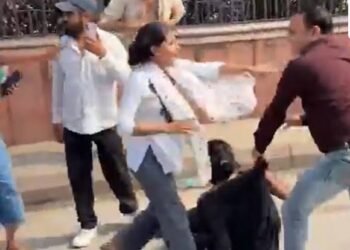
Delhi Police not giving any chance, detain protesters near Connaught Place ahead of the CJP protest demanding the resignation of Chief Election Commissioner Gyanesh Kumar https://t.co/pjhQDItYVS
— Oxomiya Jiyori 🇮🇳 (@SouleFacts) October 10, 2026
Hundreds detained before the demonstration
The preventive action began before Saturday morning. The Times of India reported that at least 600 people had been detained under Section 65 of the Delhi Police Act as security was tightened ahead of the protest. Other reports cited lower figures at particular stages of the operation, illustrating the difficulty of establishing a consolidated total across locations and time periods.
The CJP and allied groups also reported that supporters travelling from several states had been intercepted. Accounts from organisers and activists described students and protesters being removed from trains, questioned or prevented from continuing towards Delhi. Claims included incidents involving travellers from Maharashtra, Telangana and Andhra Pradesh, as well as alleged police action in West Bengal and Rajasthan.
These accounts require independent verification, and the total number of people detained nationwide remains unclear. Nevertheless, the reported pattern suggests that the operation extended beyond managing a crowd at Jantar Mantar to disrupting the mobilisation of people seeking to participate.
The distinction between detention and arrest is also important. Preventive detention or custody does not, by itself, establish that a person has committed an offence. Authorities should identify the legal basis for each action and clarify whether those detained are free to leave, have been formally arrested or are being held under a specific statutory power.
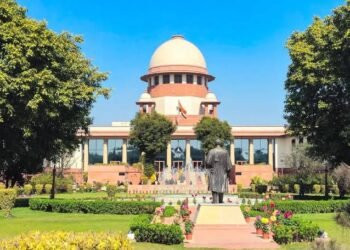
OCT 10 | DELHI POLICE DETAIN LAWYERS MARCHING FROM THE SUPREME COURT TO JANTAR MANTAR!
Modi-Shah’s colonial crackdown cannot silence the people’s democratic voice demanding resignation of Vote Chor Gyanesh Kumar! https://t.co/o7Gx7OTlLI
— CPIML Liberation (@cpimlliberation) October 10, 2026
A security operation that has become the story
The CJP set out to make the SIR exercise and the conduct of the Election Commission the focus of Saturday’s demonstration. Instead, the scale of the security operation and the detention of the protest organisers have become central to the public debate.
The authorities insist that they are acting to preserve order. The organisers argue that the measures are designed to intimidate supporters and prevent peaceful dissent. Establishing the facts requires scrutiny of the legal orders, detention records, police explanations and the treatment of demonstrators on the ground.
The test of a democracy is not whether its authorities can deploy thousands of personnel, close transport networks or prevent a crowd from assembling. It is whether they can maintain public order while respecting the rights of those who criticise institutions and demand accountability.
Delhi’s extensive preparations may have been intended to prevent disorder. But when organisers are detained before reaching the protest site, supporters are intercepted on their journeys and large parts of the city experience restrictions, the government owes the public a clear explanation of why such measures were necessary.
The question is not whether the state has the power to maintain order. It is whether that power is being exercised in a manner consistent with the constitutional freedoms it is obliged to protect.
The police have denied permission for the gathering, citing procedural shortcomings, previous law-and-order incidents and public safety concerns. But the scale of the operation raises a fundamental question: could the authorities have managed the anticipated gathering through proportionate policing and clearly defined restrictions, rather than an operation affecting large parts of the capital and people with no connection to the protest?
Leaders detained before they could reach protest site
Dipke, Das and Ranka had publicly announced their plans to travel to Delhi and lead the CJP mobilisation. They had also said they were prepared to face arrest rather than abandon their demand for accountability from the Election Commission.
A defiant Dipke reportedly told police after the aircraft landed that he was ready to be arrested but would not surrender his right to protest.
The detention inside the aircraft prevented the three leaders from even reaching the public area of the airport before being taken into custody. The precise legal grounds for their detention, the provisions invoked and the arrangements made for their subsequent custody require official clarification.
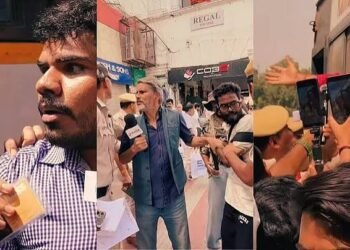
Rathee’s detention in Gurugram followed a similar pattern of pre-emptive action. Media reports citing police sources said around 50 personnel had assembled outside his residence late on Friday night. Officers reportedly entered the house at approximately 7.48 am after his mother opened the door and took him into custody.
Rathee had criticised the security restrictions in Delhi, describing the arrangements as resembling an “almost lockdown”. He had joined Dipke and actor-activist Prakash Raj at a protest in Bengaluru on October 8 and subsequently urged people to attend the Delhi demonstration.
The reported detention of a prominent digital creator, alongside the airport detentions of the protest organisers, has brought the police operation under sharper public scrutiny.
READ: Abhijeet Dipke, Saurav Das and Ashutosh Ranka Detained at Delhi Airport
35,000-plus personnel and a city-wide security dragnet
Delhi Police prepared a massive security operation in anticipation of the demonstration. Reports put the combined deployment of police and paramilitary personnel at more than 35,000, with some reports estimating the force at around 40,000. The precise total varies across accounts. The scale of the deployment reflects the authorities’ determination to prevent a repeat of the disorder that accompanied an earlier CJP mobilisation.
According to reports on the police plan, authorities established 37 blocking points across the New Delhi district and arranged detention centres across the capital’s 15 police districts. India Today separately reported a plan involving approximately 25,000 police and paramilitary personnel, 300 cameras and 12 detention centres. <Cite refs={[“turn628518search0″,”turn628518search1″,”turn628518search3”]}/>
Barricades were erected around Jantar Mantar and on approach roads, while police intensified checks at Delhi’s borders, railway stations and bus terminals. Rapid Action Force personnel, anti-riot vehicles and police buses were deployed at strategic locations. Officers wearing body cameras were positioned at sensitive points to record confrontations and document police action. <Cite refs={[“turn628518search11″,”turn628518search13”]}/>
The arrangements were not confined to the immediate protest venue. The police sought to prevent groups from assembling elsewhere in central Delhi and moving towards Jantar Mantar. The resulting restrictions affected movement across a far wider area than the proposed demonstration itself.
The distinction matters. Securing a designated protest site and preventing violence are legitimate public-order responsibilities. Preventing would-be demonstrators from reaching the capital, detaining organisers before they can assemble and restricting movement across multiple districts raise broader questions about the proportionality of the response.
Metro restrictions, cancelled trains and internet suspension
The security operation has had a substantial impact on ordinary life in Delhi.
Authorities imposed entry and exit restrictions at dozens of Metro stations. Police had initially sought restrictions covering 57 stations, while reports on Saturday morning said around 45 stations had been affected by closures or access curbs. The measures were intended to prevent crowds from using Metro stations as gathering points or routes towards sensitive locations. <Cite refs={[“turn628518search2″,”turn628518search4″,”turn628518search7”]}/>
More than 250 trains were reported cancelled or disrupted in preparations for the protest, affecting passengers travelling to and from the capital. Mobile internet services were suspended within a four-kilometre radius of the Janpath–Kartavya Path crossing for a limited period, according to reports. Traffic restrictions and diversions were also imposed around Connaught Place, Mandi House, Patel Chowk and other central Delhi locations. <Cite refs={[“turn628518search7″,”turn628518search11″,”turn628518search12”]}/>
The Connaught Place market was also reported to be shut as a precaution.
These measures have imposed costs on commuters, travellers, traders and residents who may have no intention of participating in the protest. Their justification therefore cannot rest solely on the possibility that demonstrators might gather. Authorities must also explain why the scale and geographical reach of the restrictions were necessary, whether less intrusive alternatives were considered and how the disruption to ordinary life was assessed.


Comments 1