As fear spreads across Manipur’s hill districts after the murder of three pastors and retaliatory abductions, questions are growing over the absence of urgent intervention from New Delhi and the lack of sustained national attention.
Navin Upadhyay
May 16, 2026: Manipur’s long and painful crisis has once again exposed an uncomfortable reality: some tragedies in India receive national outrage, while others fade into silence almost as quickly as they occur.
The recent killing of three tribal church leaders in Kangpokpi district — followed by a tense hostage crisis involving civilians from rival communities — should have triggered urgent political attention and sustained national debate. Instead, the violence has been met largely with muted responses from the country’s top leadership and only limited engagement from much of the mainstream media.
President Droupadi Murmu — herself India’s first tribal President — has not issued any public statement mourning the slain pastors or addressing the hostage crisis that has further destabilised Manipur’s already volatile hill districts. Neither Prime Minister Narendra Modi, Home Minister Amit Shah, nor Leader of Opposition Rahul Gandhi has publicly commented on the killings or the worsening security situation in the state.
There has been no high-level intervention announced from New Delhi, no official expression of solidarity with the grieving families, and no indication of urgent central engagement despite the seriousness of the violence and the dangerous communal tensions that followed.
This silence stands in sharp contrast to the intense national attention and political mobilisation witnessed in other high-profile incidents of violence elsewhere in India. Once again, Manipur — and particularly its tribal populations — appears to have been pushed to the margins of national consciousness even as fear, insecurity, and distrust continue to spread across the state.
Media Indifference: A Tale of Unequal Attention
The response from much of India’s national media has been equally muted. While several mainstream publications and television networks reported the incident, there has been little sustained coverage, no prolonged prime-time focus, and no nationwide outrage comparable to the attention devoted to other tragedies in recent years.
The contrast is difficult to ignore. Cases such as the RG Kar Hospital rape and murder in West Bengal in 2024 generated months of relentless television coverage, political confrontation, investigative scrutiny, and nationwide mobilisation. In comparison, the murder of three unarmed tribal pastors and the subsequent hostage crisis in Manipur have received only fleeting attention outside the Northeast.
This selective silence is not merely an editorial oversight. It reflects a deeper fatigue — or perhaps indifference — toward Manipur’s continuing cycle of violence, which since 2023 has claimed hundreds of lives, displaced thousands of people, and fractured relations between communities, yet rarely commands sustained national attention or empathy.
The tragedy unfolding in Manipur is not just another isolated law-and-order incident. It is taking place in a state that has remained deeply polarised since ethnic clashes erupted between the Meitei and Kuki-Zo communities in May 2023. Large parts of the hill districts continue to function under an atmosphere of fear, sporadic violence, armed mobilisation, and mutual suspicion. In such a fragile environment, the absence of visible political urgency from the country’s top leadership sends a troubling message to those already feeling abandoned by the Indian state.
A State on the Brink: Why the Forgetting Matters
Manipur remains dangerously volatile. The ethnic clashes that erupted in 2023 between the valley-dominant Meitei community and the hill-based Kuki-Zo tribes exposed deep fault lines over land, identity, political representation, and constitutional protections. This latest episode — involving tensions between tribal groups themselves, with allegations and suspicions circulating between Kuki and Naga factions and some claims even hinting at the involvement of valley-based insurgents — threatens to further fragment an already traumatised society.
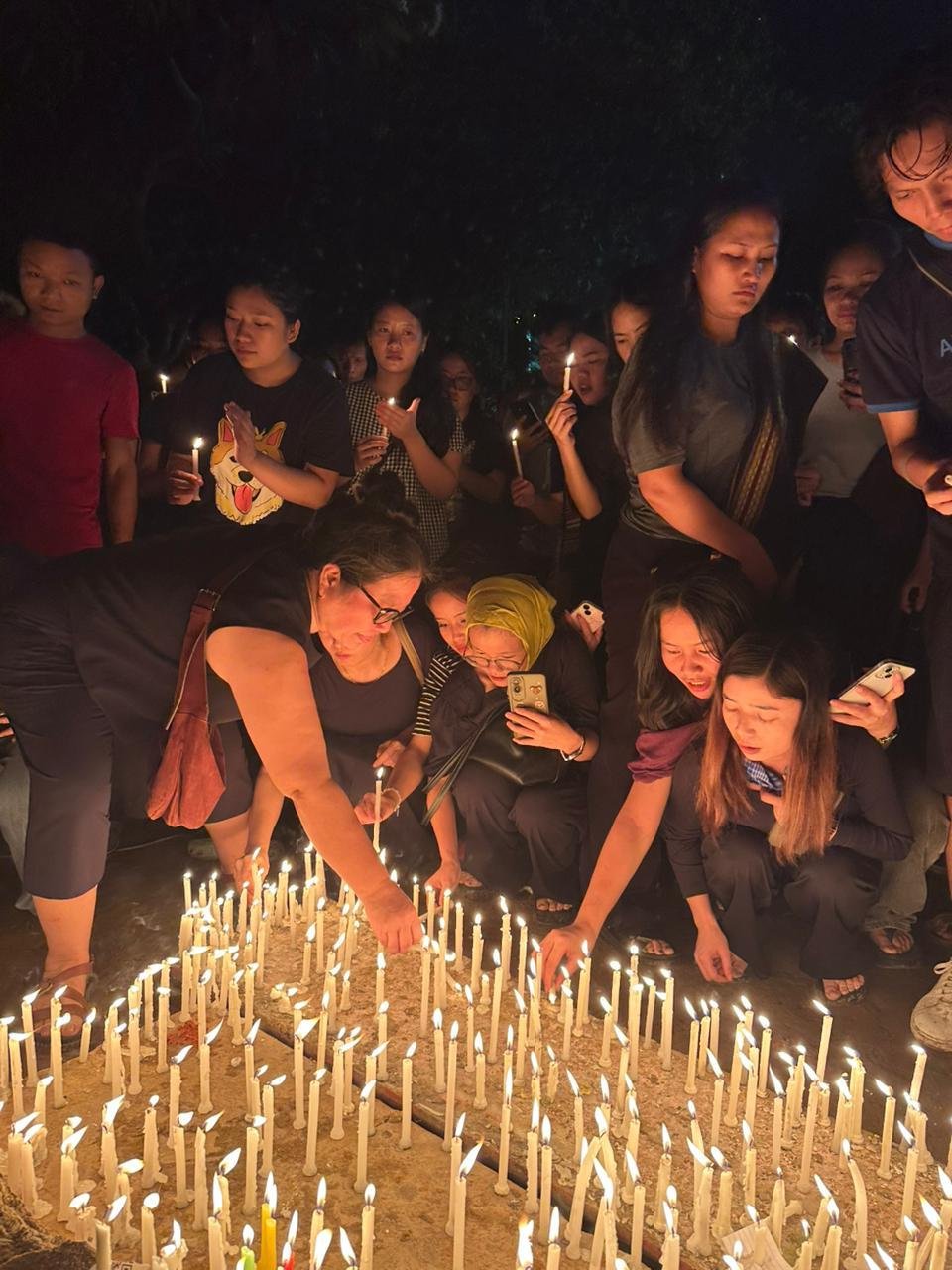
The sense of neglect has become even more acute because the victims in this case were not insurgents, political actors, or armed militants, but respected church leaders associated with peace and reconciliation initiatives. Their killings struck at the moral and spiritual centre of Manipur’s tribal Christian society and deeply shocked communities already exhausted by years of conflict. Yet outside the Northeast, the tragedy barely disrupted the national conversation.
The killings are especially devastating because the victims were not combatants or political actors, but church leaders engaged in peace and reconciliation efforts. Their deaths strike at the moral and spiritual centre of Christian tribal society in Manipur.
Only later did the full gravity of the situation become apparent. On May 13, 2026, suspected armed militants ambushed two vehicles carrying leaders of the Thadou Baptist Association of India (TBAI) and the United Baptist Council along Tiger Road in Kangpokpi district. The attackers opened fire in broad daylight, killing Reverend Dr. Vumthang Sitlhou, Reverend Kaigoulun Lhouvum, and Pastor Paogoulen Sitlhou, while injuring four others. The victims had reportedly been returning from a Baptist convention and peace conference in Churachandpur focused on reconciliation efforts among tribal communities.
The killings triggered a dangerous chain reaction. In the days that followed, Kuki-Zo and Naga groups in Kangpokpi and Senapati districts allegedly abducted civilians from rival communities, leading to a tense hostage crisis involving women, minors, and labourers. Reports suggested that dozens of civilians were held captive during the standoff before partial releases were negotiated through the intervention of civil society groups, local leaders, police, and security forces. Shutdowns, protests, and road blockades paralysed several hill districts as panic spread through local communities.
READ: Slain Pastor’s Son Forgives Killers, Call for Grace and Hostage Release in Manipur
Speech of Mr Henminlen Sitlhou, the only son of (Late) Rev. Dr. V Sitlhou, one among the three #Kuki Pastors that were shot dead in an ambush by ZUF-K (NSCN-IM) armed militants in Kangpokpi Dist.@Neiphiu_Rio @Lal_Duhoma @Kezo_IPS @SangmaConrad @derekobrienmp @BaptistWorld pic.twitter.com/rIZD0OyN0d
— KAPTHANG KUKI (@KapthangHaokip) May 16, 2026
In a powerful gesture that captured the spirit of the pastors’ mission, the son of one of the slain leaders publicly forgave the killers and appealed for the safe release of the remaining hostages. It was an extraordinary call for restraint at a moment when anger and grief could easily have fuelled further retaliation. Yet without a swift, credible, and transparent investigation, such appeals for peace risk being drowned out by growing distrust and bitterness.
Despite the gravity of the killings and the hostage crisis, no major breakthrough in the investigation has been announced, no arrests have been publicly confirmed, and demands for an independent National Investigation Agency (NIA) probe continue to grow. For many in Manipur’s hill communities, the silence from the national political establishment and the limited media focus have only reinforced the perception that their suffering remains peripheral to India’s larger political and media priorities.
In a democracy as vast and diverse as India, no region can be allowed to fade into collective amnesia. The brutal murder of three unarmed tribal pastors and the hostage crisis that followed demand more than routine condemnations and symbolic gestures. They require sustained national attention, urgent central intervention, and credible accountability.
Until India’s political leadership and mainstream media begin treating Manipur’s pain with the seriousness and urgency it deserves, fear and violence will continue to fester in the shadows. The silence surrounding these killings sends a dangerous message — that some tragedies matter less, some communities are more expendable, and some states remain permanently peripheral to the national conscience.
Justice delayed is not merely justice denied. In Manipur, it becomes a signal of abandonment. Even now, India’s political class should show some humanity toward the remaining hostages and their families — people living through unbearable fear, uncertainty, and grief. At the very least, the nation must acknowledge their pain, identify with their suffering, and take urgent, concrete steps to secure the safe release of those still held captive.