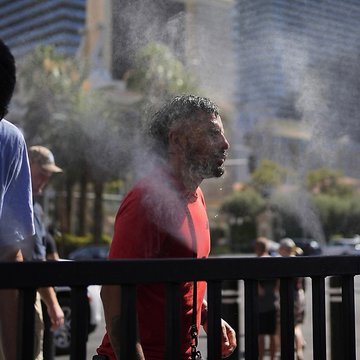
Three major heat-dome episodes helped lock extreme temperatures across the US in July, while record-warm nights provided little relief and wildfires sent smoke across large parts of North America.
By PC Bureau
New Delhi | August 11, 2026: The United States has just experienced its hottest month since modern records began, with July 2026 narrowly surpassing a temperature record set at the height of the Dust Bowl nearly nine decades ago.
According to the latest data from the National Oceanic and Atmospheric Administration (NOAA), the contiguous United States—the 48 states excluding Alaska and Hawaii—recorded an average temperature of 76.89°F (24.94°C) in July. The figure was 3.3°F (1.8°C) above the 20th-century average and edged past the previous national record of 76.77°F set in July 1936.
The margin was small, but the significance was considerable. The 1936 record was established during one of the most punishing heat and drought periods in American history. July 2026, by contrast, unfolded against a backdrop of a steadily warming climate, with extreme heat occurring across large parts of the country.
The record also extended a remarkable run of oppressive weather. Repeated heat waves, unusually warm nights and widespread wildfire conditions combined to push temperatures to exceptional levels across much of the country.
Heat domes locked in the heat
Meteorologists point to a succession of large, persistent high-pressure systems, commonly described as heat domes, as a major immediate cause of July’s extraordinary temperatures.
Under a heat dome, high pressure causes air to sink and warm while also suppressing cloud formation and rainfall. The resulting clear skies allow the land surface to absorb intense solar radiation. Because the high-pressure system can remain almost stationary for days, the heat accumulates rather than being quickly displaced by cooler air.
Several such episodes affected different parts of the country during July, with severe heat spreading across the West, Rocky Mountain region, Upper Midwest, Gulf Coast and Southeast.
The result was an unusually broad national temperature anomaly. Every one of the 48 contiguous states finished July at least 1°F (0.6°C) above its long-term average, NOAA data showed.
Wyoming experienced one of the most extraordinary departures from normal conditions, recording its hottest July as well as its hottest month of any kind in the state’s historical record. Temperatures there averaged 5.1°F above normal.
Hot nights made the heat more dangerous
One of the most important features of the July heat was not simply how high daytime temperatures climbed, but how little relief many areas received after sunset.
Average overnight minimum temperatures across the contiguous United States broke the previous record by 0.7°F.
That matters because the human body relies heavily on cooler nighttime conditions to recover from daytime heat exposure. When temperatures remain elevated overnight, accumulated heat stress can become considerably more dangerous, particularly for older people, outdoor workers and those without reliable access to air conditioning.
Meteorologist Jeff Masters of Yale Climate Connections highlighted the importance of nighttime temperatures, noting that the overnight low is critical in determining overall heat stress because the body needs an opportunity to cool and recover.
The July record therefore cannot be understood simply as a succession of exceptionally hot afternoons. In many places, the heat became a round-the-clock phenomenon.
A different climate from the Dust Bowl era
Breaking the 1936 record carries particular historical significance.
The Dust Bowl years were marked by severe drought, extreme heat, powerful dust storms and devastating agricultural losses. Poor land-management practices intensified the environmental crisis, while persistent drought helped produce extraordinary temperatures.
Today’s record heat has occurred in a fundamentally different climate.
Human-driven global warming has raised the baseline temperature from which individual heat waves develop. As a result, naturally occurring atmospheric patterns such as persistent high pressure can now produce more extreme temperatures than they would have in a cooler climate.
Scientists have increasingly linked the growing frequency and intensity of extreme heat to emissions from the burning of coal, oil and natural gas.
That does not mean climate change caused every individual heat dome. Rather, warming increases the likelihood that a naturally occurring weather pattern will produce exceptionally high temperatures.
July 2026 just set a record as the warmest month ever for the contiguous U.S. (76.9°F)! 🌡️ From widespread heat to intense regional flooding, it was a wild weather month. Get the full scoop here: https://t.co/5AhUfoJkHW pic.twitter.com/YTAiNXOKM8
— NOAA NCEI (@NOAANCEI) August 10, 2026
Wildfires added another dimension
The extreme heat also coincided with widespread wildfire activity in the Pacific Northwest and Canada.
Smoke from major fires spread across large areas of North America, degrading air quality far from the locations where the fires were burning. Hot and dry conditions can rapidly dry vegetation and soils, creating conditions in which fires ignite more easily and spread faster.
The relationship between heat, drought and wildfire is increasingly important in a warming climate. Higher temperatures increase evaporation and atmospheric demand for moisture, while prolonged dry periods can leave vegetation highly flammable.
READ: 22 Dead as Deadly 7.4-Magnitude Earthquake Strikes Colombia
Heat disrupted everyday American life
The consequences extended well beyond weather stations.
An AP-NORC survey found that almost half of Americans questioned experienced significant financial pressure from higher electricity bills as households increased their use of air conditioning. Around 40% reported disruptions to travel plans, while roughly two-thirds said the heat affected family outdoor activities. About half reported changing their exercise routines.
The findings illustrate how extreme heat increasingly affects ordinary decisions—from whether families can spend time outdoors to how much households must spend simply to remain comfortable and safe.
July’s record may not be an isolated event
NOAA’s July figures add another marker to the growing list of extreme-temperature records being established in a warming world.
The record was not created by one spectacular temperature spike. Instead, it emerged from the cumulative effect of persistent warmth across a vast area, repeated heat episodes and exceptionally warm nights.
That distinction is important. A single extreme afternoon can be produced by a short-lived weather event. A record monthly average requires sustained warmth over weeks and across a large geographical area.
July 2026 delivered precisely that.
The narrow defeat of the Dust Bowl-era record may therefore be less important than the broader trend behind it: temperatures that once required an extraordinary combination of drought and atmospheric conditions are becoming easier to reach in a warmer climate.
For Americans, the July record is both a historical statistic and a warning about the changing character of summer itself.