From tribal communities in Jharkhand to supporters in Himachal Pradesh, Punjab, Haryana and Rajasthan, the INDIA bloc rally brought together people representing different regions and traditions. Drums, turhi horns, colourful attire and traditional headgear transformed the march into a vibrant display of India’s cultural diversity.
BY PC Bureau
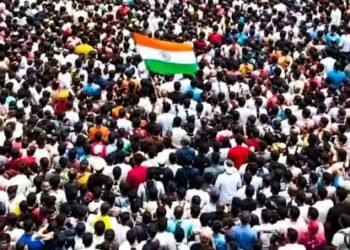
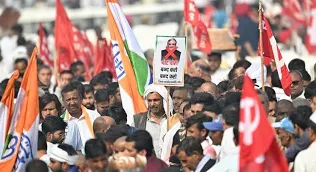
New Delhi, November 1, 2026: The streets leading to Delhi’s historic Ramlila Maidan turned into a spectacular showcase of India’s cultural diversity on Sunday, as thousands of people from different states converged for the INDIA bloc’s rally. Yellow turbans from Haryana and Rajasthan, colourful pagdis from Punjab, traditional tribal attire from Jharkhand, folk drums, brass bands and the distinctive sound of turhi horns combined to create a procession that was as much a celebration of India’s cultural identities as a political mobilisation.
Among the most striking sights was a large contingent from Jharkhand. Hundreds of women marched through the streets towards Ramlila Maidan, each balancing a kalash on her head. Moving in coordinated steps, they formed a long procession, their traditional attire and tribal jewellery reflecting the cultural heritage of their communities.
The earthen pots, some adorned with leaves, flowers and vermilion, rose above the crowd in an almost unbroken line. Beaded necklaces, metal ornaments, anklets and traditional hair decorations added to the spectacle. Walking alongside and behind the women, men beat large traditional drums, their deep, rhythmic sounds announcing the contingent’s arrival well before it reached the venue.
The group included representatives of Jharkhand’s tribal communities, including the Tana Bhagat community, whose members were among those mobilised for the rally. Their presence brought indigenous cultural traditions into the heart of the national capital.
VIDEO | Delhi: Tribal communities from across country perform cultural dance in Connaught Place ahead of INDIA bloc rally at Ramlila Ground.
(Full video available on PTI Videos – https://t.co/d8jp61yd2p) https://t.co/wdVNwGayhy
— Press Trust of India (@PTI_News) November 1, 2026
Yellow pagdis and a colourful northern Indian presence at Ramlila Maidan
Haryana’s contingent stood out at Ramlila Maidan with its distinctive yellow pagdis, a striking sight among the thousands making their way towards the venue. Supporters from Rajasthan also sported yellow turbans, creating a bright splash of colour along the procession. The traditional headgear, worn with pride, gave the gathering a distinctly regional character.
From Punjab came groups sporting colourful turbans and traditional attire. The different styles of pagdis, varying in colour, folds and ways of tying them, reflected regional customs and identities. Alongside them were contingents from Himachal Pradesh, Uttarakhand and Jammu and Kashmir, adding to the diversity of the gathering.
Himachal Pradesh had announced the participation of around 15,000 people, while party organisations in Jammu and Kashmir had also mobilised workers for the Delhi demonstration.
The diversity was not confined to clothing. Traditional instruments, including drums, turhi horns and brass bands, accompanied different groups, producing a rich mix of sounds. The rhythmic beats of the drums often drew the attention of passers-by, while the bands added a festive dimension to the march.
READ: Massive Turnout at Ramlila Maidan for ‘Vote Chori’ Rally
Farmers, veterans, tribal groups and saints
INDIA गठबंधन की महारैली में दिखा लोकसंस्कृति का रंग! रामलीला मैदान में कलाकारों ने लोकनृत्य की शानदार प्रस्तुति से बांधा समां।
#INDIABlocRally #RamlilaMaidan #FolkDance #CulturalPerformance #DelhiNews #tnpnews
INDIA Alliance Rally, Folk Dance, Ramlila Maidan, Cultural Performance, Delhi Rally, Ground Report, TNP News— TNP NEWS (@TNPNEWS1) November 1, 2026
The gathering brought together people from different walks of life. Farmers who had travelled from rural areas marched alongside former soldiers, some wearing berets and displaying medals from their years of service.
A large group of saints and religious figures also marched towards the venue, accompanied by supporters. Their procession added another dimension to the gathering, which included political workers, students, women,
What made the scene particularly striking was the coming together of communities that spoke different languages, followed different customs and dressed in markedly different styles, yet shared the same destination.
The women from Jharkhand with their kalash, Haryana’s yellow pagdis, Rajasthan’s colourful turbans, Punjab’s traditional headgear and the tribal ornaments and musical traditions of eastern India created a vivid mosaic of regional identities.
Ramlila Maidan has hosted some of India’s most consequential political gatherings, but Sunday’s procession offered a spectacle beyond the familiar imagery of party flags, banners and political slogans. It brought the country’s cultural diversity onto the streets of the capital in a form that could be seen and heard.
For a few hours, the roads leading to the historic ground became a moving portrait of India — its tribal heritage, rural traditions, regional identities, music and colours, all converging at one destination.
The political purpose of the gathering may have been to protest alleged electoral irregularities, but its most striking visual message was the extraordinary diversity of the people who came together.