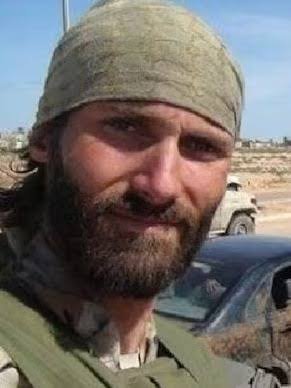
he NIA initially invoked UAPA against US national Matthew Van Dyke and six Ukrainians, but its first chargesheet invoked only immigration offences. The agency says the UAPA investigation remains open.
BY Navin Upadhya
NEW DELHI/ September 26 — The Van Dyke case has thrown up an uncomfortable question about the application of India’s toughest anti-terror law: why do people accused under the Unlawful Activities (Prevention) Act spend five, eight or even 12 years in jail awaiting trial, while the National Investigation Agency, after initially invoking UAPA against an American national and six Ukrainians, filed its first chargesheet without the anti-terror provisions?
The contrast is striking.
In 2023, 2,914 people were arrested under UAPA across India, but only 118 were convicted, according to figures cited by the Supreme Court. That represented a conviction rate of about 4.05 per cent that year. The figures do not establish that those arrested were innocent, but they underline the enormous gap between arrest and final adjudication in UAPA cases.
For many accused, that gap translates into years behind bars.
Two UAPA accused in a 2014 Delhi case, Mohd Saquib Ansari and Waqar Azhar, spent about 12 years in custody before the Supreme Court granted them bail in 2026. British national Jagtar Singh Johal, arrested in 2017, spent more than eight years in custody before the Delhi High Court granted him bail in seven NIA cases in September 2026. In Gadchiroli, Maharashtra, dozens of UAPA cases have remained pending for years, with prolonged trials contributing to continued incarceration.
The issue is not whether every UAPA accused is innocent. It is whether an anti-terror investigation can effectively become a years-long punishment before a court determines guilt.
Against that background, the Van Dyke case stands out.
READ: Mamata Dials Rahul, INDIA Bloc to Meet on Sept 30 Over Gyanesh Kumar
READ: ECI in Damage-control Mode: From Goa’s 97 Voters to Gen Z Camps
From UAPA terror case to immigration offences
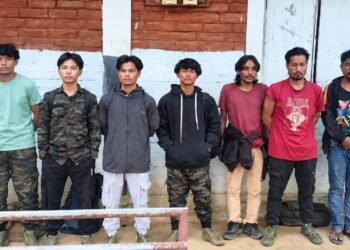
Van Dyke and six Ukrainian nationals were arrested on March 13 in a case initially registered under Section 18 of UAPA, which deals with conspiracy, attempt, advocacy, abetment or incitement relating to a terrorist act.
The NIA alleged that the group had travelled from India into Myanmar and reached Victoria Camp, where they were allegedly involved in a planned programme of drone-warfare training, including drone operations, assembly and jamming technology. The agency also investigated possible links between Myanmar-based armed groups and insurgent organisations operating in India’s Northeast.
But when the NIA filed its chargesheet on September 8, it invoked Sections 21 and 23 of the Immigration and Foreigners Act, 2025, dealing with illegal entry and violation of visa conditions. The UAPA provisions were not included in the chargesheet.
The NIA says this does not mean that the terror investigation has been abandoned. Its chargesheet says further investigation is required to ascertain the complete facts concerning possible UAPA offences, and government sources have maintained that a supplementary chargesheet remains possible.
But the NIA reportedly so far found no conclusive evidence that the seven were acting against India, although investigators had established links with Myanmar-based ethnic armed groups and had not ruled out further anti-terror findings.
The Chellaney intervention
The development has now drawn a sharp public critique from Brahma Chellaney, the former diplomat and prominent author and strategic-affairs commentator.
In a September 25 post, Chellaney described India as a “perennial soft state” and argued that the decision to allow Van Dyke and the six Ukrainians to leave India was not merely an isolated legal development but part of what he called a recurring pattern in which New Delhi invokes stringent laws and subsequently retreats when geopolitical pressure mounts.
Chellaney alleged that US Secretary of State Marco Rubio personally raised Van Dyke’s detention with the Indian government and that the subsequent removal of UAPA provisions represented a “dramatic climbdown.”
Chellaney again argued that India had yielded to external pressure and compared the episode with earlier controversies including the Bhopal gas disaster, the Purulia arms-drop case and the Italian Marines dispute. He said the Van Dyke case was effectively finished and that the seven men would not return to India.
Chellaney’s intervention gives the Van Dyke episode a wider political and strategic dimension: does India’s willingness to invoke its toughest laws depend on the identity of the accused and the geopolitical stakes surrounding the case?
That question cannot be answered merely from the chronology.
India the Perennial Soft State
The decision to let American covert operative Matthew VanDyke and six Ukrainian drone specialists quietly leave India is more than an isolated legal reversal. It belongs to a long and uncomfortable tradition in which New Delhi invokes its tough…
— Dr. Brahma Chellaney (@Chellaney) September 25, 2026
The diplomatic-pressure question
There is nevertheless a chronology that merits scrutiny.
March 13: Van Dyke and six Ukrainians are arrested; the case is registered under UAPA Section 18.
May: Reports subsequently emerged that US officials had raised Van Dyke’s detention with Indian officials.
September 8: The NIA files its first chargesheet, but under the Immigration and Foreigners Act rather than UAPA.
September 18: Van Dyke obtains default bail after the statutory period for filing the chargesheet expires.
September 22: He pays ₹5.5 lakh to compound the immigration offences and indicates plans to seek discharge.
The sequence does not by itself prove that diplomatic pressure caused the NIA’s decision. There is no publicly produced document establishing that the MHA instructed the agency to abandon the UAPA allegations.
But it raises a legitimate question: what changed between the initial UAPA case and the chargesheet ultimately filed by the NIA?
A very different experience for Indian UAPA accused
That question becomes sharper when placed alongside the experience of Indians facing UAPA charges.
The Supreme Court has repeatedly confronted the problem of prolonged incarceration in UAPA cases. In extreme cases, accused have spent a decade or more behind bars before obtaining bail because the stringent bail regime under Section 43D(5), combined with slow trials, makes release particularly difficult.
Congress Attacks Modi Govt Over VanDyke Reprieve, Alleges US Pressure https://t.co/0MoqJGTB0v #MatthewVanDyke #Congress #VanDykeCase #NIA #UAPA #IndiaUSRelations #TerrorCase #INCIndia @Jairam_Ramesh
— Navin Upadhyay (@Navinupadhya) September 25, 2026
That is the central paradox.
For Indian UAPA accused, the allegation itself can mean years of incarceration before the case reaches its conclusion. In the Van Dyke case, the NIA did not put the UAPA allegations into its first chargesheet even after the agency had been given additional time to investigate.
Again, this does not establish that Van Dyke was innocent or that the Indian accused were falsely charged.
Nor is it correct to say that the NIA has definitively “dropped” the UAPA case: the agency says the investigation remains open.
But the distinction is significant. In many Indian cases, courts have eventually intervened after years of incarceration. In Van Dyke’s case, the investigating agency itself stopped short of placing the UAPA allegations in its first chargesheet.
That is why the case has raised questions extending beyond the seven accused.
The larger question
The issue is ultimately one of consistency.
If UAPA is sufficiently serious to keep an accused behind bars for five, eight or 12 years while a trial crawls forward, what evidentiary threshold should the NIA meet before invoking the law — and should that threshold be applied identically to Indian citizens and foreign nationals?
Van Dyke’s case does not, by itself, answer that question.
But it has brought the question into unusually sharp focus.
And Chellaney’s intervention has added another: if geopolitical pressure was indeed brought to bear, did it influence the manner in which the case was ultimately prosecuted?
That remains an allegation requiring evidence, not an established fact.
What is established is simpler and harder to ignore: the NIA arrested Van Dyke under a case initially invoking UAPA, but its first chargesheet proceeded only under immigration law, while thousands of people arrested under UAPA continue to face the consequences of India’s exceptionally stringent anti-terror regime.