The flydubai attack has raised questions over Israel’s screening of foreign airline crews, after an Omani pilot reportedly flagged by authorities in his home country reached the cockpit carrying mostly Israeli passengers.
BY PC Bureau
Israel prides itself on having one of the world’s most extensive aviation-security systems. Yet on September 30, an Omani co-pilot who had reportedly been grounded in his own country over concerns about extremist views was sitting in the cockpit of a Dubai–Tel Aviv flight carrying 174 people, mostly Israelis.
He was not stopped by Israeli security screening. He was stopped only after the crisis had begun — when Indian Captain Smit Machchhar, already wounded, managed to open the cockpit door and passengers and other crew members rushed in to restrain him.
That raises the central question: how did a pilot reportedly regarded as a security risk in Oman end up in the cockpit of an Israel-bound passenger aircraft?
The answer is still being investigated. But the emerging evidence points to a chain of failures involving airline recruitment, information-sharing and Israel’s own pre-flight screening procedures.
The nationality question
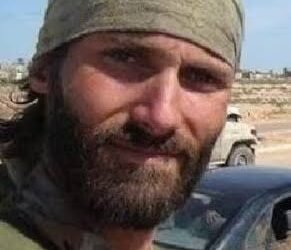
The suspect has been identified as Omani national Hamam al-Hammami. According to reports, he was previously barred from flying in Oman after security concerns were raised about his extremist views. The Wall Street Journal reported that Omani authorities had grounded him, although it remains unclear whether those concerns were communicated to flydubai or other authorities.
His presence on an Israel-bound flight also exposed a dispute over how Israel screens foreign airline crews.
After the incident, Transportation Minister Miri Regev called for flydubai flights to Israel to be halted and for the Shin Bet and Civil Aviation Authority to examine whether the airline had violated operating conditions. An initial report in The Jerusalem Post said the agreement allowing flydubai to operate in Israel required pilots to come from countries that had normalised relations with Israel — which would exclude Oman.
But that interpretation was subsequently challenged.
Sources familiar with the investigation told the Post that the UAE-Israel aviation agreement did not impose such a nationality requirement and that al-Hammami held no second nationality.
That distinction matters. It means the question is not simply whether Israel failed to enforce a clear ban. It is whether a screening system that was supposed to identify foreign crew members adequately assessed the individual who was actually sitting in the cockpit.
Reuters reported that Israel is now increasing identity and security checks on pilots flying into the country, regardless of airline.
The warning that came from Oman
The more troubling question concerns what was already known about al-Hammami.
The Wall Street Journal reported that Omani authorities had previously prohibited him from flying because of concerns about radical views. Other reports said he had been removed from pilot training at Oman Air in 2024 after extremist material was allegedly found or concerns were raised about his activities. He subsequently worked outside the cockpit before moving through other aviation jobs and eventually joining flydubai.
The key issue is not whether every allegation about his ideology will ultimately be substantiated. It is whether the information that prompted Oman to remove him from flying was available to the organisations that later allowed him back into a cockpit.
That remains unclear.
The Wall Street Journal reported that it could not establish whether Oman had shared its concerns with the UAE or flydubai. Neither Oman nor flydubai has publicly provided a full account of what it knew when he was hired.
That gap is now at the centre of the investigation.
What happened in the cockpit
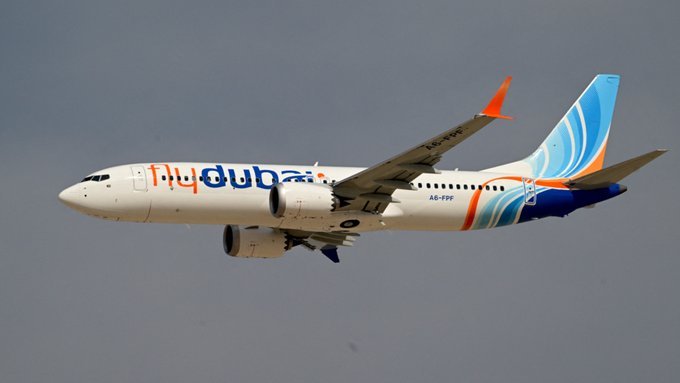
Flight FZ1073 departed Dubai for Tel Aviv on September 30 with 174 people aboard. At about 34,000 feet, the aircraft suffered a dramatic loss of altitude. Reuters reported that it plunged more than 16,000 feet in roughly 30 seconds before recovering, with further altitude fluctuations following.
Israeli officials and Prime Minister Benjamin Netanyahu said the co-pilot stabbed Machchhar and apparently attempted to bring down the aircraft. Those allegations remain part of an ongoing investigation.
Machchhar, despite being injured, managed to open the cockpit door. Passengers and crew entered, overpowered the attacker and restrained him. Two reserve pilots then took control and diverted the aircraft to Tabuk, Saudi Arabia, where it landed safely.
The original aircraft never reached Israel. The passengers were subsequently brought to Israel on a rescue flight whose crew was approved by Israeli security authorities.
READ: Flydubai Co-Pilot Was Barred From Cockpit in Oman Over Extremism Concerns
The screening system now under scrutiny
The most important question is therefore not why Israeli fighter jets did not intercept the aircraft. Nor is it simply why passengers had to intervene.
It is why a man reportedly considered sufficiently risky by authorities in Oman to be removed from flying duties was later employed as a commercial co-pilot and assigned to a flight carrying Israelis into Israel.
That question crosses several jurisdictions.
Oman may have known about the earlier security concerns. Flydubai may or may not have known them when it hired him. The UAE regulates the airline and its operations. And Israel is now examining how its own security procedures handled foreign flight crews.
Reuters has reported that Israeli authorities are tightening checks on all pilots entering the country following the incident.
The investigation must establish whether the failure was one of information-sharing, airline recruitment, Israeli screening, or some combination of the three.
What is already clear is that the final line of defence was not a database check, a security agency or a pre-flight prohibition.
It was an injured captain opening the cockpit door — followed by passengers and crew physically stopping the attack.