From India’s CJP campaign to France’s student protests, a new generation is putting the condition of schools at the centre of public debate — demanding that governments fix classrooms before talking about the future
BY PC Bureau
October 3, 2026: The anger over education is no longer confined to classrooms.
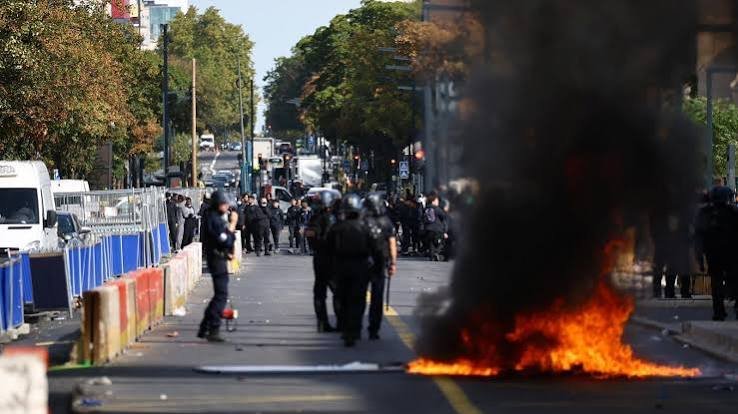
Across France, thousands of teenagers have taken to the streets, blockading schools and confronting the authorities over overcrowded classrooms, teacher shortages, crumbling buildings, overloaded schedules and what they see as a deteriorating quality of education. More than 1,000 high schools were affected by protests or strikes on October 1, according to France’s Education Ministry, with 222 blockades reported.
What began around Paris has spread across the country. University students have also joined the mobilisation, while clashes between protesters and police have escalated in some places. Hundreds of young people have been detained, schools have been damaged and fires have been reported. Reuters reported more than 1,000 arrests over two days earlier in the week, while later reports put the number of arrests at nearly 2,000.
But beneath the violence and political controversy is a straightforward demand: students want better schools.
They complain of classes that are too crowded, too few teachers, dilapidated buildings and long school days. Students have also raised concerns about the university admissions system and the unequal impact of social background on educational opportunities.
🇫🇷 – France’s school unrest is no longer a classroom dispute. It has turned into urban violence, and the official refusal to say who is in the streets is part of the problem.
Blockades that began over overcrowded classes, missing teachers and decaying buildings have spread… pic.twitter.com/oaZm2ATV4p
— 🔥🗞The Informant (@theinformant_x) October 2, 2026
That makes the French unrest strikingly similar in its central demand to India’s CJP School Thik Karo campaign, which has sought to put the condition of government schools and the quality of education at the centre of public debate.
The methods and political contexts are different. So is the scale. But the underlying message is remarkably similar: young people are asking why governments talk about the future while allowing the institutions that educate that future to deteriorate.
READ: Why Did Israel Allow a Barred Co-Pilot to Fly a Plane to Tel Aviv?
When students stop waiting
The French protests are particularly significant because the participants are largely teenagers, many between 15 and 18. Their complaints are not limited to examinations or admission policies. They concern the physical environment in which they spend much of their lives.
Students have spoken about overcrowded classrooms, inadequate staffing, uncomfortable temperatures and buildings in poor condition. Le Monde reported that the protests have exposed a broader sense among students that their learning conditions are worsening and that their concerns are not being heard.
The movement has also moved beyond individual schools. On October 1, around 30 universities were reported to have experienced student mobilisation, while hundreds of schools were disrupted or closed.
The French government has acknowledged that students have legitimate grievances while condemning violence, attacks and destruction. Education Minister Édouard Geffray has announced consultations with students, teachers and parents.
That distinction matters.
The demand for better education and the violence accompanying parts of the protests are two separate questions. One can condemn attacks on teachers, police or school property without dismissing the underlying grievances that brought students onto the streets.
The CJP parallel
India has seen a similar attempt to turn school conditions into a public issue through the CJP campaign.
Its basic proposition is simple: school infrastructure is not a minor administrative issue. It is a question of what kind of future a country is prepared to provide its children.
The French protests demonstrate how quickly that question can become politically impossible to ignore when students themselves take ownership of it.
There is also a generational dimension.
Gen Z has grown up in an environment in which young people can instantly compare their circumstances with those of students elsewhere. A leaking classroom, an absent teacher or an overcrowded school is no longer experienced only as a local problem. It becomes part of a wider question about whether governments are delivering the education they promise.
France’s streets are now carrying that question.
India’s CJP campaign has been carrying it through another route.
Different countries. Different education systems. Different forms of protest.
But the message from a new generation is increasingly difficult to miss:
Don’t tell us that we are the future. Fix the schools in which we are supposed to build it.