The Eiffel Tower’s top executive will step down after an internal probe found that female employees were excluded during a September visit by a BAPS delegation, calling the episode “unacceptable.”
BY PC Bureau
September 30: The head of the company operating the Eiffel Tower, Patrick Branco Ruivo, will step down at the end of 2026 after an internal investigation found “operational flaws and shortcomings” that resulted in female employees being excluded during a September visit by a delegation from the Hindu organisation BAPS. The operating company, Société d’Exploitation de la Tour Eiffel (SETE), described the exclusion as an “unacceptable situation.”
Ruivo, who has headed SETE since 2018, announced his departure on Tuesday following the controversy surrounding the September 5 visit. The findings came after Eiffel Tower employees protested that female colleagues had been moved away from their workstations, replaced by male colleagues or instructed not to enter certain areas while the delegation was present.
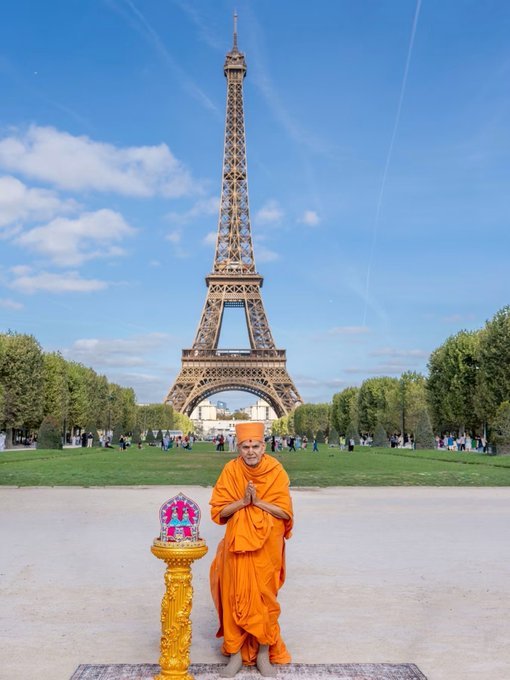
The controversy involved around 100 people associated with the Bochasanwasi Akshar Purushottam Swaminarayan Sanstha, commonly known as BAPS, who were visiting Paris in connection with the inauguration of the organisation’s first traditional Hindu temple in France.
SETE had earlier acknowledged that the delegation had requested that the visit be organised to limit “interactions with women”, but said such conditions should not have been accepted.
READ: ‘Disband UP Police, Give All Cases to CBI’: SC Raps UP Cops Over ‘Blank’ FIR
The episode prompted a staff walkout that closed the Eiffel Tower to visitors on September 7. Workers said they had been subjected to instructions that left female employees “sidelined” and effectively invisible because of their sex, describing the treatment as contrary to principles of equality and non-discrimination.
BAPS subsequently apologised for “any pain or inconvenience caused” but disputed the characterisation that it had sought the removal or concealment of female employees. The organisation said the arrangements were made for logistical reasons connected with a large delegation and that its religious practices had been explained beforehand.
The dispute centred in part on the presence of BAPS sadhus, or monks, whose religious vows include restrictions concerning contact with women. However, the controversy escalated because the reported accommodation involved the treatment of employees in their workplace rather than merely the organisation of the delegation’s movements.
French political figures and Paris authorities condemned the episode, citing the country’s commitment to equality and non-discrimination. Paris City Hall, which oversees the Eiffel Tower’s operation, also apologised over the failure to uphold those principles.
Ruivo said in his resignation that he had not personally authorised instructions to exclude or replace female employees. However, he acknowledged that women had been excluded during the visit and said he accepted responsibility for the functioning of the company.
The investigation has now put management responsibility at the centre of the controversy. SETE chair Ariel Weil said the company would use the transition period to strengthen procedures for official visits, establish a dedicated protocol department and introduce measures and training focused on gender equality.
The case has become a wider debate in France over where the line should be drawn between accommodating religious practices and ensuring that public institutions and workplaces comply with the country’s equality principles.
For BAPS, however, the organisation has maintained that the arrangements were not intended as a request to discriminate against women. That distinction is likely to remain central to the controversy as responsibility for the decision to exclude female staff is examined.