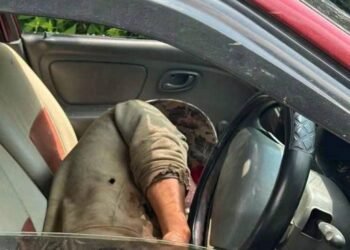
The 50-year-old tribal man said bank officials asked him to bring the account holder in person, prompting him to present the skeleton as proof of death after weeks of failed attempts.
BY PC Bureau
April 28, 2026 — In a disturbing incident that has sparked outrage and reflection, a 50-year-old tribal man in Odisha’s Keonjhar district exhumed his deceased sister’s skeleton and carried it to a bank in a desperate attempt to access her savings of about ₹20,000.
The man, identified as Jeetu Munda, is a resident of a remote village in Patana block and is reported to be illiterate. His sister, Kalra Munda, 56, had died on January 26 after an illness. She had deposited the modest sum in a savings account at a local branch of Odisha Grameen Bank, reportedly earned through the sale of livestock.
According to Jeetu, repeated visits to the bank yielded no result. He claimed that officials asked him to bring the account holder in person to process the withdrawal. Despite informing them multiple times of her death, he said he was unable to make them understand his situation.
Frustrated and running out of options, Jeetu exhumed his sister’s remains from the village burial ground on April 27, wrapped the skeleton in cloth, and walked several kilometres to the bank. He then staged a protest outside the branch, presenting the remains as proof of her death.
The shocking scene drew crowds and prompted bank staff to alert the police. Officers from the local station arrived and intervened. Inspector Kiran Prasad Sahu later said the issue stemmed from a lack of awareness and poor communication. He noted that Jeetu was unfamiliar with legal procedures such as obtaining a death certificate or legal heir documentation required to access a deceased person’s bank account.
Police persuaded Jeetu to rebury the remains, which was done respectfully under supervision, and assured him that authorities would help him navigate the process.
READ: Sisodia Joins Kejriwal in Boycotting Justcie Swarna Sharma
Local officials, including Block Development Officer Manas Dandpat, said they were unaware of the case earlier but have now stepped in. The administration has directed the bank to expedite the process and is facilitating necessary paperwork, including death and legal heir certificates. Officials also indicated that additional financial assistance may be extended.
A man in Odisha dug up his deceased sister’s grave and brought her skeleton to the bank Just to prove she had died.
He had been trying to withdraw ₹20,000 from her account, but bank officials kept insisting he bring the account holder in person. Despite repeatedly telling them… pic.twitter.com/hICEqwvPFu
— Woke Eminent (@WokePandemic) April 28, 2026
Bank representatives maintained that they were following standard procedures, which require proper documentation—especially since the account’s nominee had also passed away. However, the incident has triggered criticism over the lack of empathy and inadequate guidance provided to vulnerable customers in rural areas.
Beyond the immediate shock, the episode highlights deeper systemic issues: low financial literacy, bureaucratic rigidity, and the disconnect between formal banking rules and ground realities in India’s tribal regions. Authorities have chosen not to pursue legal action against Jeetu, instead focusing on resolving his case and preventing similar situations in the future.
As officials work to release the small sum owed to him, the incident stands as a stark reminder of the human cost of administrative gaps—and the urgent need for more accessible and compassionate systems in rural India.