Ladakh has sought Centre’s approval for 36 check dams costing over ₹56 crore, aiming to harness river and glacier meltwater and expand assured irrigation across more than 18,600 acres
BY PC Bureau
August 22, 2026: The Ladakh administration has approached the Union Ministry of Jal Shakti seeking approval for 36 check-dam projects costing more than ₹56 crore, aimed at capturing water from the region’s rivers, expanding irrigation and bringing thousands of additional acres under assured water supply.
The proposal, submitted on the directions of Lieutenant Governor Vinai Kumar Saxena, envisages seven Himalayan Rock Check Dams in Leh and 29 RCC check dams/weirs in Kargil. The projects have been proposed for inclusion under the Pradhan Mantri Krishi Sinchayee Yojana (PMKSY), with the UT administration seeking their early approval.
According to the Detailed Project Report submitted to the Ministry, the proposed structures could create irrigation potential for more than 18,600 acres of land.
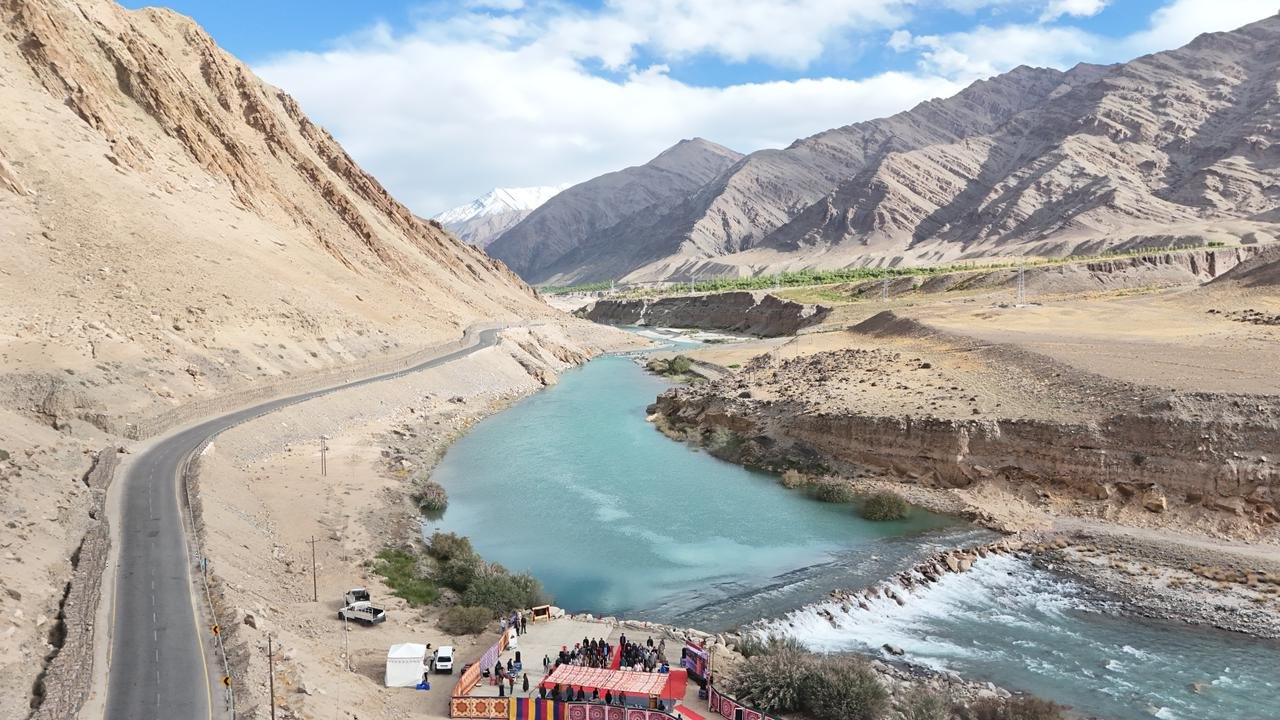
Projects planned along Indus and Suru
The proposed check dams are intended to capture and store water that currently flows through Ladakh’s river systems without being adequately utilised during the agricultural season.
In Leh, the Himalayan Rock Check Dams are planned along stretches of the Indus River, while the 29 RCC structures proposed for Kargil are intended to address local irrigation requirements, particularly in areas facing acute water shortages.
The Kargil projects were proposed after the Lieutenant Governor observed water-related difficulties during a recent visit and received representations from villagers seeking improved irrigation facilities.
The administration believes the structures could strengthen existing irrigation networks while allowing more cultivable land to be brought under assured irrigation.
Ladakh’s water paradox
The initiative seeks to address a striking contradiction in Ladakh’s water situation.
The Union Territory has vast reserves of snow and glaciers and receives substantial volumes of water from annual snow and glacial melt. Yet farmers often face acute shortages during the agricultural season, when water is most needed.
According to the administration, less than 1 per cent of Ladakh’s annual snow and glacial meltwater is currently being utilised.
The proposed check dams are therefore intended not merely as irrigation structures but as part of a broader strategy to retain water within the region and reduce dependence on increasingly stressed traditional water sources.
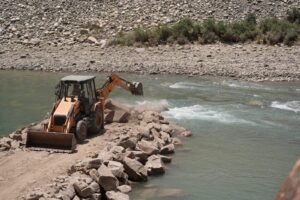
The administration has been promoting Himalayan Rock Check Dams as a locally appropriate alternative for capturing water in shallow river stretches.
Five such structures have already been completed, according to the UT administration.
The pilot projects have reportedly created an average storage capacity of 25–30 million litres of water and helped augment water availability in existing irrigation canals.
READ: Bay of Bengal Shipwreck: Nearly $7 Million Cargo Lost
The administration said the structures have also demonstrated considerable resilience against fluctuations in river discharge.
In the Indus, for example, water flow reportedly increased from around 25 cusecs in May to nearly 200 cusecs in August, with the completed rock check dams withstanding the increased flow.
Irrigation command area expanded
According to the project proposal, three of the pilot Rock Check Dams have increased water availability in existing irrigation canals and expanded their cultivable command areas by up to 30 per cent.
The administration says the results demonstrate that relatively simple and low-cost interventions can have a significant impact in Ladakh’s difficult terrain, where conventional large-scale water infrastructure can be expensive and technically challenging.
The proposed 36 projects are expected to build on these pilot interventions.
The administration has sought central support under the Pradhan Mantri Krishi Sinchayee Yojana, the Centre’s flagship irrigation and water-management programme.
The proposal will now have to be examined by the Union Ministry of Jal Shakti under the applicable scheme requirements before any funding or approval is granted.
The Ladakh administration has requested that the projects be considered at the earliest, citing the region’s pressing agricultural and water-security needs.
90 million litres diverted to canals
The check-dam programme forms part of a wider water-conservation push in Ladakh.
The administration has also highlighted the recent diversion of approximately 90 million litres of glacier water from Stok Nallah into the Igoo-Phey Canal and Shushot village canal.
The initiative is intended to increase water availability for agriculture and reduce the amount of meltwater that flows away unused.
The administration has linked these interventions to Prime Minister Narendra Modi’s broader emphasis on water conservation and long-term water security.
LG seeks Centre’s support
Saxena had discussed the Rock Check Dam initiative with Union Jal Shakti Minister C.R. Patil during a meeting in May.
According to the Ladakh administration, Patil appreciated the initiative and assured support for innovative water-management projects suited to the Union Territory’s challenging terrain and climatic conditions.
The administration is now seeking central approval for the larger programme covering 36 check dams.
The check-dam programme is part of a series of water-security initiatives undertaken in Ladakh since Saxena assumed office.
These include Project Him Sarovar, the Himalayan Rock Check Dam programme and the operationalisation of the Igoo-Phey and Mahey irrigation canals.
The administration says six Him Sarovars have been commissioned, while five Himalayan Rock Check Dams have been completed.
Together, the projects are intended to improve water storage, strengthen irrigation infrastructure and make Ladakh’s agriculture more resilient to climatic and hydrological uncertainty.
Building a water-secure Ladakh
The proposed 36 check dams represent an attempt to move Ladakh’s water policy from simply accessing scarce water supplies to capturing and retaining more of the water already generated by the region’s glaciers and snowfields.
For farmers dependent on short agricultural seasons, the difference could be significant.
As Saxena put it, Ladakh cannot afford to allow its glacier and snowmelt water to flow away unused while farmers face shortages during the growing season.
If approved and implemented, the ₹56-crore-plus programme could provide irrigation support to more than 18,600 acres, while strengthening a wider effort to make the high-altitude Union Territory more water-secure, agriculturally productive and climate-resilient.