Newslaundry, Scroll, Navbharat Times, The Wire and Reporter TV journalists among those reportedly detained or prevented from covering events; allegations of rough handling and interference with media work raise concerns over press freedom
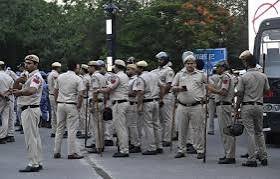
NEW DELHI, October 10: A series of detentions and alleged restrictions on journalists covering protests in the national capital on Friday has triggered fresh concerns over press freedom, with reporters from several media organisations reporting that they were detained, stopped from recording video or prevented from doing their jobs despite identifying themselves as members of the press.
Newslaundry said three of its reporters — Ashwin Singh, Savyasachi Astha and Anmol Pritam — had been detained by Delhi Police while covering the October 10 protest. The news organisation also reported that police had seized its official phones.
Scroll separately reported that its reporter, Ayush Tiwari, was detained ahead of a protest organised by the Campaign for Judicial Accountability and Reforms (CJP) against the Chief Election Commissioner (CEC). According to Scroll, Tiwari was not at the Jantar Mantar protest site and had prominently displayed his press card when he was detained.
Reports of police action against journalists also emerged from Navbharat Times, The Wire and Reporter TV, suggesting that the restrictions extended beyond a single newsroom or reporting team.
Navbharat Times journalists Hritik Joshi and Rahul Charas were reportedly detained while filming events in the capital. A post by Ashish on X said the two were carrying clearly visible media identity cards and alleged that police personnel misbehaved with Charas. The journalists were reportedly being taken towards the Daryaganj area.
The Wire said its reporter Ankit Raj was stopped by Delhi Police from reporting at Lodhi Road. Another journalist associated with the publication, Tarun, was reportedly prevented from recording video at Delhi airport. The Wire also said Tarun had earlier been asked not to film graffiti on posters of Prime Minister Narendra Modi near Jantar Mantar.
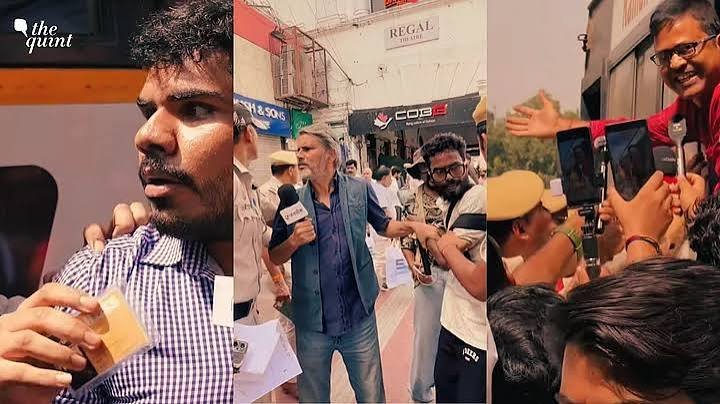
Ground Report | Journalists and Mediapersons show their Press cards as Police continue to detain them.
Follow @thequint for more updates.
#CockroachJantaParty #Protest #JantarMantar #Delhi #Politics https://t.co/TAPxD4Kd7Y
— The Quint (@TheQuint) October 10, 2026
Journalists Roshni Rajan and Farsa of Reporter TV were also reportedly detained by police while covering the protests. In a post on X, Korah Abraham alleged that the two were forcibly taken away in a police van despite displaying their identity cards and repeatedly explaining that they were present to report on the demonstration.
The incidents have prompted questions about whether journalists were being stopped because of their professional coverage of the protest and what grounds the police had for detaining them.
Journalist Tanushree Pandey, in a post on X, described an incident in which she said a Muslim man who was merely crossing the road was detained by Delhi Police and had his phone taken away.
A Muslim man was simply crossing the road when Delhi Police detained him and took his phone. When I objected to this, they tried to detain me too.
I’m incredibly grateful to the journalist friends on the ground who stepped in and came to my rescue.
HOW IS THIS BEHAVIOUR JUSTIFIED? BATAIYE MUJHE.
— Tanushree Pandey (@TanushreePande) October 10, 2026
Pandey said she objected to the police action and was herself threatened with detention. She expressed gratitude to fellow journalists at the scene who intervened and helped her.
“How is this behaviour justified?” she asked in her post, demanding an explanation for the police conduct.
Her account raises a separate concern about the treatment of ordinary citizens at protest sites, including the reported seizure of mobile phones. The circumstances surrounding the man’s detention and the basis for taking his phone were not independently established in the accounts available.
READ: Farmer Ambushed, Young Man Killed as Fresh Violence Rocks Manipur Hills
READ: Guns, Barricades, Detentions: Delhi’s Crackdown on CJP Protest Puts Right to Dissent on Trial
Opposition alleges wider attempt to restrict dissent
The Communist Party of India (Marxist), reacting to reports of journalists being detained, said reporters from Scroll and Newslaundry had been taken into custody and that a journalist from The Wire had reportedly been roughed up.
In a post on X, the CPI(M) accused the Narendra Modi government of attempting to silence institutions and individuals exposing what it described as a crackdown on citizens. It asked how many phones could be seized, microphones broken and voices silenced.
The party’s statement was a political reaction to the reported incidents. The individual allegations of detention, rough handling and equipment seizure require verification through police records, statements from the journalists concerned and the authorities’ account of the operations.
The reports nevertheless point to a significant question for law enforcement: whether journalists attempting to document a public demonstration were allowed to carry out their work, and whether any restrictions imposed on them were lawful, necessary and proportionate.
Press freedom and the right to report
Why’s Delhi Police picking up journalists with prominent PRESS ID card displayed on them?My colleagues @jahnavi_sen @antarabaruah__ & I almost got detained despite saying again&again we’re journalists
Only when large number of other journalists arrived,they let us go
@thewire_in— Sravasti Dasgupta (@SravastiDasgup2) October 10, 2026
Journalists covering protests perform a public-interest function by documenting police action, the conduct of demonstrators and events that might otherwise remain outside public scrutiny. Their presence does not exempt them from lawful police orders, but detention, confiscation of equipment or restrictions on recording should have a clear legal basis.
The reported seizure of Newslaundry’s official phones is particularly significant because mobile devices may contain recorded footage, notes, communications and other material gathered during reporting. The circumstances, legal authority and scope of any such seizure have not been established in the information available.
The reports also raise questions about the practical value of press identification cards if journalists displaying them can still be detained without a publicly explained reason.
As of the accounts cited above, no detailed response from Delhi Police explaining the individual detentions, the reported seizure of phones or the restrictions on filming had been included. The police version, the precise legal grounds for each action and whether the journalists were subsequently released remain important facts to establish.
The October 10 incidents have therefore placed the spotlight not only on the handling of the protest itself but also on the ability of the media to independently document the exercise of state power in the national capital.