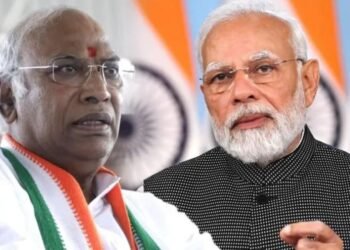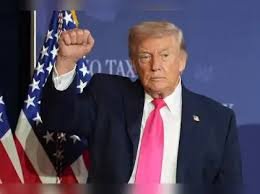
The proposed Sanctioning Russia Act seeks to tighten economic pressure on Moscow by targeting its largest energy customers. India, one of the biggest buyers of discounted Russian crude, could face significant trade repercussions if the bill becomes law.
BY PC Bureau
New Delhi, July 15: The White House has confirmed that US President Donald Trump supports a sweeping bipartisan sanctions bill that could impose tariffs of up to 500 per cent on imports from countries—including India and China—that continue to purchase Russian oil and other energy products.
The proposed legislation, known as the Sanctioning Russia Act, represents one of the toughest economic measures yet aimed at isolating Moscow over its war in Ukraine. If enacted, it would empower the US President to levy punitive secondary tariffs on nations maintaining significant trade in Russian energy, dramatically raising the stakes for countries that have relied on discounted Russian crude since the conflict began.
Responding to a query from ANI, a White House official confirmed the administration’s position, stating, “President Trump supports the bill.”
India Faces Potential Economic Fallout
India, now one of Russia’s largest energy customers, could find itself directly in the crosshairs of the proposed legislation.
The bill was introduced by the late Republican Senator Lindsey Graham along with Democratic Senator Richard Blumenthal, reflecting rare bipartisan agreement in Washington on tightening economic pressure against Russia.
Throughout his campaign for the legislation, Graham repeatedly argued that sanctions aimed solely at Moscow were insufficient. Instead, he maintained that countries continuing to buy Russian oil were indirectly financing the Kremlin’s war effort.
The senator frequently pointed to India and China, arguing that together they account for nearly 70 per cent of Russia’s oil, gas and petroleum exports. Reducing those revenues, he believed, would significantly weaken Russia’s ability to sustain military operations in Ukraine.
New US sanctions on Russia could end up hitting China and India too, according to The Wall Street Journal.
A document that could be introduced in Congress as early as this week would give the US president the power to impose tariffs of up to 100% on countries and companies that… pic.twitter.com/MbZ8x4hYXj— Ka_zakov (@ka_zakov) July 14, 2026
Waiver Expiry Raises Stakes
The timing is particularly sensitive for New Delhi.
A temporary waiver issued by the US Treasury that had provided some protection for India’s purchases of Russian crude reportedly expired on June 17, 2026, increasing uncertainty over future transactions and exposing Indian refiners to a greater risk of secondary sanctions should the proposed legislation become law.
Although no immediate penalties have been announced, the expiry has heightened concerns within both government and industry about potential disruptions to India’s energy imports.
Trump backs introducing a Russia sanctions bill in US Congress, which may become another tariff threat for India over its purchases of Russian energy pic.twitter.com/WMX5pomBN1
— Dhairya Maheshwari (@dhairyam14) July 14, 2026
Impact on Indian Economy
Economists have warned that the proposed tariffs, if implemented in full, could have significant consequences for India’s export-driven economy.
Some estimates suggest the measures could reduce India’s Gross Domestic Product (GDP) growth by as much as 0.5 percentage points, while sharply affecting exports to the United States.
Key sectors expected to face the greatest pressure include:
- Pharmaceuticals
- Information technology services
- Textiles and garments
- Engineering goods
- Auto components
A 500 per cent tariff would make many Indian products prohibitively expensive in the US market, potentially affecting billions of dollars in bilateral trade.
India Defends Russian Oil Purchases
The Indian government has consistently defended its decision to import discounted Russian crude, arguing that the purchases are guided solely by energy security and economic considerations.
Officials have repeatedly maintained that, as the world’s third-largest oil importer, India must secure affordable energy supplies for its growing economy and population.
New Delhi has also stressed that it continues to maintain strategic relations with both Western nations and Russia while pursuing an independent foreign policy.
READ: Spain Return to World Cup Final After 16 Years With 2-0 Win Over France
Momentum After Graham’s Death
The legislation has gathered fresh momentum following the death of Senator Lindsey Graham, with several lawmakers describing its passage as an appropriate tribute to one of Congress’s strongest advocates of tougher sanctions against Russia.
However, the bill has yet to secure unanimous political backing.
Some Democrats, including Senate Minority Whip Dick Durbin, have called for President Trump to publicly endorse the legislation himself rather than relying solely on statements issued by White House officials.
Meanwhile, divisions remain within the Republican Party.
Senator Rand Paul has cautioned that imposing punitive tariffs on major economies such as India and China could have unintended consequences, disrupting global supply chains, increasing prices for American consumers and triggering wider economic instability.
High-Stakes Decision Ahead
If Congress approves the Sanctioning Russia Act in its current form, it would mark a significant escalation in US economic pressure on Russia and could reshape global energy trade.
For India, which has significantly increased imports of discounted Russian crude since 2022, the legislation presents a difficult strategic challenge—balancing energy security, economic interests and diplomatic ties with the United States.
As the bill advances through Congress, New Delhi is expected to closely monitor developments while exploring diplomatic options to safeguard its energy imports and broader trade relationship with Washington.