https://www.chessveda.com/ https://www.chessveda.com/
  • Power Corridors Magazines
  • Advertise with us
Friday, April 17, 2026
  • Login
Power Corridors
Advertisement
  • News
  • Politics
  • Business
    • Technology
  • Appointments/Transfers
  • Automobile
  • Entertainment
  • Sports
    • IPL 2024
  • Event
  • World
No Result
View All Result
  • News
  • Politics
  • Business
    • Technology
  • Appointments/Transfers
  • Automobile
  • Entertainment
  • Sports
    • IPL 2024
  • Event
  • World
No Result
View All Result
Power Corridors
  • News
  • Politics
  • Business
  • Appointments/Transfers
  • Automobile
  • Entertainment
  • Sports
  • Event
  • World
Home National

Hormuz Crisis: Iran Rakes In $139 M a Day from Oil Exports

Iran is capitalising on the crisis in the Strait of Hormuz, earning an estimated $139 million a day as oil prices surge and rival exports falter.

PC Bureau by PC Bureau
27 March 2026
in National, News, World
12
Iran oil
12
VIEWS
Share on FacebookShare on TwitterShare on Whatsapp

A sharp narrowing in the discount on Iranian crude has boosted profits, with demand—especially from China—remaining resilient during the conflict. Additional income from transit fees on commercial vessels is turning the chokepoint into both a strategic weapon and a financial lifeline for Iran.

BY PC Bureau

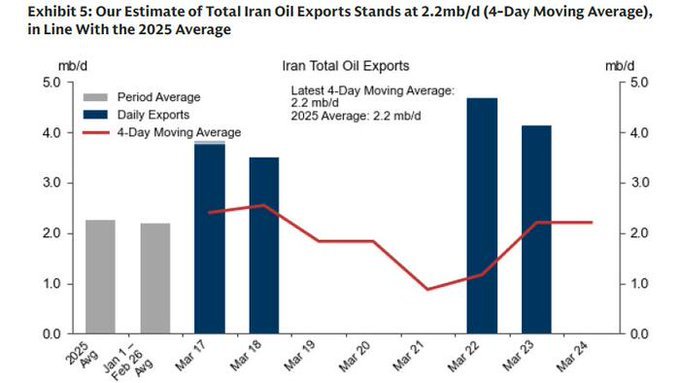
March 27, 2026: Iran is earning an estimated $139 million a day from oil sales amid the ongoing crisis in the Strait of Hormuz, capitalising on surging prices and its unique ability to keep exports flowing while regional rivals face disruption.

Since the war began, Tehran has benefited on two fronts: global crude prices have climbed sharply, with Brent rising above $100 a barrel, while Iranian oil is now selling at its narrowest discount in nearly a year—primarily to buyers in China.

Iran Earning $139 Million A Day From Oil As Hormuz Crisis Locks Out Rivals https://t.co/KW0hxqaWur

— zerohedge (@zerohedge) March 26, 2026

Despite sustained US and Israeli airstrikes, Iran’s exports have held steady at around 1.6 million barrels per day, close to prewar levels. Tankers continue to load at the key terminal on Kharg Island and pass through the Gulf, even as shipments from other major producers have been curtailed.

The contrast is stark. While countries like Iraq, Kuwait, and Saudi Arabia have been forced to cut output or reroute supplies, Iran has managed to maintain—and even accelerate—its shipping activity.

READ: Trump Extends Iran Deadline, Claims Tehran Sought More Time

Tehran is also generating additional revenue by charging transit fees of up to $2 million for some commercial vessels crossing the Strait, turning a geopolitical chokepoint into a source of leverage and income.

Analysts say the financial windfall has helped blunt the impact of wartime damage and sanctions pressure. Washington’s decision to temporarily ease restrictions on certain Iranian oil cargoes at sea has further eased the strain, allowing additional barrels to reach the market.

“I would have thought interdicting Iranian oil sales would have been a priority,” said Richard Nephew, a former US sanctions official, noting the apparent contradiction in US policy.

Iran’s flagship crude, Iranian Light, is now trading at a discount of just over $2 per barrel to Brent—down sharply from more than $10 before the conflict—boosting per-barrel revenues at a time when the country faces mounting reconstruction costs and military expenditures.

Satellite imagery suggests export activity is increasing. Multiple very large crude carriers have been observed loading at Kharg Island in recent weeks, while shipments have also resumed from the Jask terminal, located outside the Hormuz chokepoint.

Meanwhile, much of the region’s energy infrastructure has come under strain. Strikes have damaged facilities across the Gulf, including major gas assets, disrupting production and export capacity.

The evolving dynamics have underscored Iran’s resilience—and the limits of military pressure—at a time when the conflict continues to reshape global energy flows.

Over the weekend, US President Donald Trump warned he could target Iran’s energy infrastructure if it failed to reopen the strait, before softening his stance and citing ongoing “productive” discussions with Tehran.

Iran, however, has denied that formal talks are underway and continues to reject US ceasefire proposals, even as hostilities persist across the region.

Tags: HormuzIRAOil Exports
Plugin Install : Subscribe Push Notification need OneSignal plugin to be installed.
Previous Post

Trump Extends Iran Deadline, Claims Tehran Sought More Time

Next Post

Trump Signals Peace Talks Even as Pentagon Weighs 10,000 More Troops

Related Posts

Ladakh apricot
National

Ladakh’s Apricot Exports Mark Big Global Boost

16 April 2026
Trump-Vatican
News

Pope Slams ‘Tyrants’ Spending Billions on Driving Wars After Tussle with Trump

16 April 2026
Amit Shah Assures South: No Loss of Seats in Delimitation
National

Amit Shah Assures South: No Loss of Seats in Delimitation

16 April 2026
Pm Modi
National

Modi Assures No Bias in Women’s Reservation, Delimitation

16 April 2026
Strait of Hormuz
National

Iran Threatens to Take US Troops Hostage in Hormuz Standoff

16 April 2026
Iran World CUP
Iran War

FIFA Chief Confirms Iran’s Participation in 2026 World Cup

16 April 2026
Next Post
Trump-Iran

Trump Signals Peace Talks Even as Pentagon Weighs 10,000 More Troops

Israel Army

Israel General Warns Army Nears Breaking Point

Poppy War

Poppy War: Kuki Volunteers Torch Naga Poppy Fields in Ukhrul

Leave a Reply Cancel reply

Your email address will not be published. Required fields are marked *

POWER CORRIDORS

Former Vice President Venkaiah Naidu commended Power Corridors as a commendable news magazine, affirming that it not only upholds Media Dharma but also fulfills its societal obligations. Power Corridors, as its name implies, delves into realpolitik—examining the essence of influential circles, unraveling the intricacies of political maneuvers, and exploring the pulse of the state’s affairs. However, it transcends mere power dynamics, encompassing a broader spectrum of issues beyond the confines of Delhi’s elite circles.

For PC, which is published by the Interactive Forum on Indian Economy, not only highlights the issues of the day but also throws up what ought to be the subjects that the country should be debating about. It reports about the plans, strategies, and agendas of politicians and others; it also sets the agenda for the nation.

Browse by Category

  • Appointments/Transfers
  • Automobile
  • Aviation
  • Blog
  • Business
  • Crime
  • Education
  • Entertainment
  • Event
  • GMF
  • HEALTH
  • IFIE
  • IPL 2024
  • Iran War
  • Law
  • Motorsports
  • National
  • News
  • Politics
  • Science
  • Space
  • Sports
  • Technology
  • Weather
  • WEIGHT LOSS
  • World

Recent News

Ladakh apricot

Ladakh’s Apricot Exports Mark Big Global Boost

16 April 2026
Trump-Vatican

Pope Slams ‘Tyrants’ Spending Billions on Driving Wars After Tussle with Trump

16 April 2026
  • About
  • Advertise With Us
  • Privacy & Policy
  • Contact Us

© 2023 Power Corridors

Welcome Back!

OR

Login to your account below

Forgotten Password?

Retrieve your password

Please enter your username or email address to reset your password.

Log In

Add New Playlist

  • Login
  • Cart
  • News
  • National
  • Politics
  • Business
  • World
  • Entertainment
  • Crime
  • Law
  • Sports
  • Contact Us

© 2023 Power Corridors