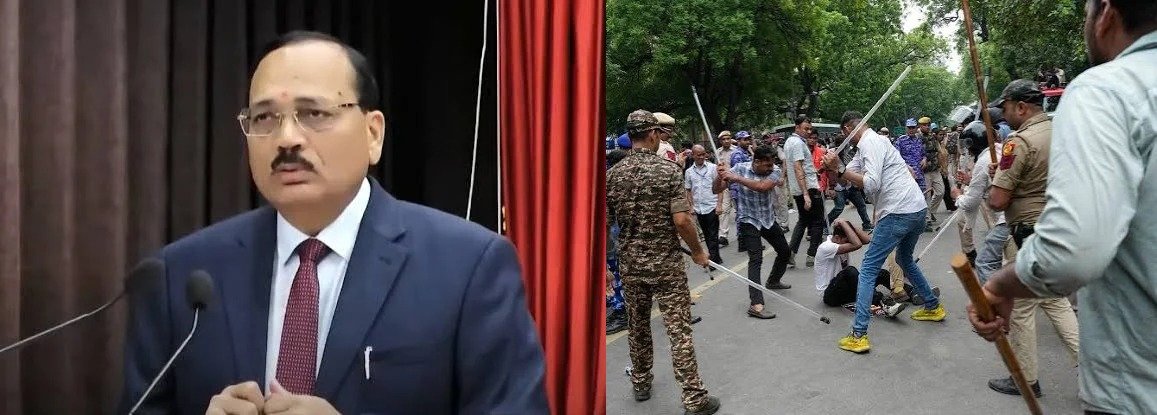
TheCJI remarks came as up to 17 Metro stations in central Delhi remained shut or restricted due to heightened security around the ongoing NEET paper leak protests at Jantar Mantar.
BY PC Bureau
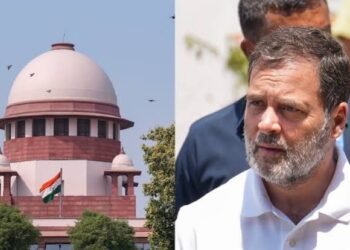
New Delhi, July 23: Chief Justice of India Surya Kant on Wednesday cautioned authorities that the Supreme Court would step in if the prolonged closure of Delhi Metro stations caused by security arrangements for the Cockroach Janta Party (CJP) protests was not resolved by lunchtime.
Hearing a matter related to the ongoing demonstrations, the CJI expressed concern over the inconvenience caused to lakhs of commuters by the restrictions in central Delhi.
“If the situation does not improve by lunchtime, the Supreme Court will intervene,” the Chief Justice observed, signalling the court’s concern over the disruption to public life.
The remarks came as heightened security around the CJP-led agitation at Jantar Mantar led to the closure or restricted access at up to 17 Metro stations across central Delhi, including major interchange hubs such as Rajiv Chowk, Patel Chowk, Janpath, Central Secretariat, Mandi House and the Supreme Court station. The restrictions severely affected commuters during peak hours, forcing many to take longer routes or rely on costlier road transport.
Protests Enter Fourth Week
The demonstrations, spearheaded by the Cockroach Janta Party (CJP) along with students and youth groups, have entered their fourth week. Protesters are demanding the resignation of Union Education Minister Dharmendra Pradhan over the alleged NEET-UG 2026 paper leak, criminal action against those responsible and comprehensive reforms to India’s examination system.
The agitation escalated earlier this week when protesters attempted a “Chalo Parliament” march, prompting Delhi Police to use barricades, lathi-charge and tear gas to stop the procession. Both the police and the protesters have accused each other of violence during the clashes.
READ: Commuters Face Hard Time as 16 Metro Stations Remain Shut
Metro Disruptions Hit Thousands
The security measures led the Delhi Metro Rail Corporation (DMRC) to temporarily close or restrict access to several stations in the heart of the capital, causing widespread disruption to office-goers, students and daily commuters.
Long queues, overcrowding at operational stations and a surge in cab fares added to the commuters’ woes as thousands struggled to reach workplaces and educational institutions.
Following the Supreme Court’s observations and a review of the security situation, DMRC gradually restored services, reopening all affected stations by Wednesday evening.
Court Declines Urgent Hearing on Police Action
In a separate development, the Supreme Court declined an urgent hearing on petitions seeking immediate intervention over the alleged use of excessive force by Delhi Police during the protests.
When counsel sought to place video footage of the clashes before the Bench, the Chief Justice indicated that the court could not take up the matter immediately because of its scheduled workload.
The CJP-led agitation, which began over the NEET paper leak controversy, has since evolved into a broader youth movement demanding accountability, transparency and reforms in the country’s examination and recruitment system. With organisers vowing to continue the sit-in until their demands are met, security remains tight across central Delhi even as Metro services have resumed normal operations.