With only one registered cadre reportedly found against an expected 159 in the Sinai camp, the operation has intensified scrutiny of designated camps and compliance with the SoO framework.
BY PC Bureau
October 24: Security forces have taken control of Sinai Camp, a designated Suspension of Operations (SoO) camp in Manipur’s Kangpokpi district, arresting 17 people allegedly posing as registered cadres and seizing 24 firearms along with ammunition, explosives and other military equipment. The operation also revealed a major discrepancy between the number of cadres expected at the camp and those found during verification: only one registered cadre was reportedly present out of an expected strength of around 159.
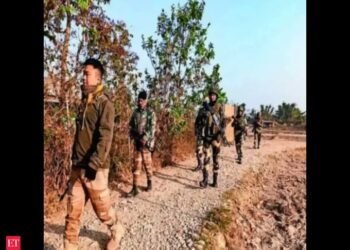
The operation involved Manipur Police, the Central Reserve Police Force (CRPF), including its CoBRA unit, and other central security personnel. It followed the October 19 killing of three Meitei civilians, reportedly firewood collectors, near Nongshum/Sunurok, amid continuing tensions in the state.
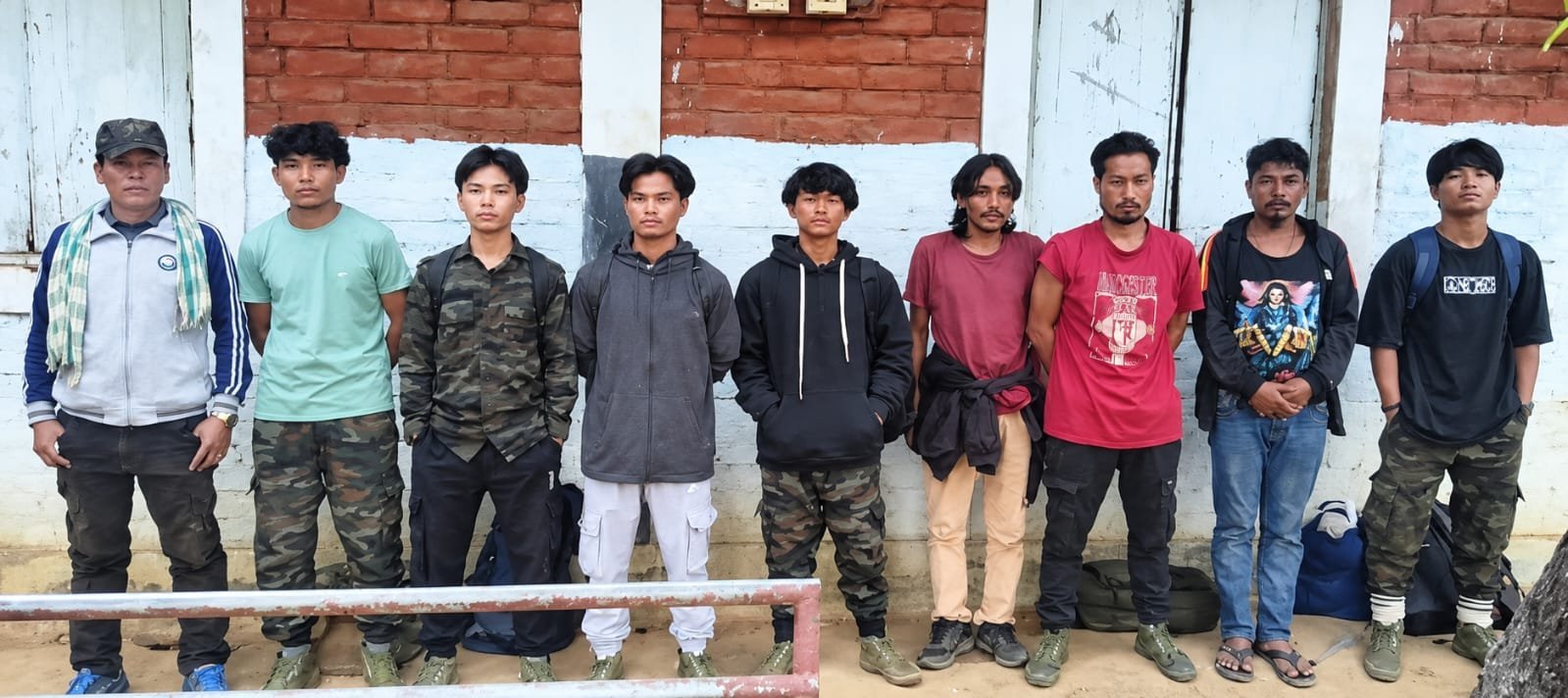
According to reports, the 17 arrested individuals could not be matched with the registered cadres of the Kuki National Army (KNA) or Kuki Liberation Army (KLA), groups operating under the Kuki National Organisation (KNO). They were taken into custody and remanded to police custody until October 31. Authorities have registered a case and are investigating alleged impersonation, possession of unauthorised weapons and the possible involvement of camp functionaries.
The seized items included 24 firearms, magazines, ammunition, explosives, wireless communication sets and other combat equipment. The findings are likely to intensify scrutiny of compliance with the SoO ground rules, which require participating cadres to remain in designated camps and abide by restrictions on their activities and weapons.
Sinai Camp Operation (23/10/2026)
On 23/10/2026, a joint operation by Manipur Police, QAT CRPF and CoBRA was conducted at Sinai Camp, a designated SoO camp of KNO/KNA and KNO/KLA.
During verification, 17 individuals were found impersonating registered SoO cadres (8 KNA and 9 KLA) using false identities. All 17 were arrested.
Seizures: 24 firearms, 38 magazines, a large quantity of ammunition, explosives, wireless communication equipment and other combat gear.
Accordingly, FIR No. 20(10)2026 YPI-PS was registered under relevant provisions of the BNS, Arms Act, Indian Wireless Telegraphy Act and Explosive Substances Act.
All 17 accused have been remanded to 08 days’ police custody till 31/10/2026. Their medical examinations have been completed.
Further investigation is underway regarding the involvement of camp functionaries, impersonation, unauthorised possession of arms and violations of SoO ground rules.
— Manipur Police (@manipur_police) October 24, 2026
SoO agreement expired in September
The operation comes amid uncertainty over the future of the SoO arrangement, which expired on September 4, 2026, without renewal.
Manipur Home Minister Govindas Konthoujam has confirmed that the tripartite agreement involving the Centre, the state government and Kuki armed groups under the KNO and the United People’s Front (UPF) has lapsed. He has also cited opposition to its continuation, particularly from Meitei organisations and some Naga groups, as a factor in the delay in renewing the agreement.
READ: Van Dyke Freed, 10 KNA-B Cadres Killed: The Contradictions in India’s Myanmar Policy
The decision on whether to renew or formally terminate the arrangement rests with the Centre. Meanwhile, security agencies are continuing a statewide verification exercise covering all 14 designated camps to establish the actual number of cadres present and assess compliance with the prescribed conditions.
The lapsed agreement has raised questions about the status of the camps and the restrictions that previously governed the activities of participating groups. Security sources have stressed the need to verify the presence of cadres and the handling of weapons, while state officials have indicated that operations will proceed according to the prevailing legal and security situation.
Compliance concerns under renewed scrutiny
The SoO arrangement, signed in 2008 after earlier ceasefire efforts, covered roughly two dozen armed outfits with a combined cadre strength of around 2,000. Its ground rules required participating cadres to remain in designated camps, refrain from violence and keep weapons under controlled arrangements while political dialogue continued.
The agreement has faced mounting criticism since ethnic violence erupted between Meitei and Kuki-Zo communities in May 2023. The conflict has resulted in hundreds of deaths and displaced large numbers of people. Meitei organisations have repeatedly alleged that SoO-designated camps were used as bases for attacks on civilians and security personnel, and have demanded that the arrangement be scrapped or the camps relocated. The Manipur Assembly also adopted a resolution seeking an end to the agreement in early 2024.
Naga organisations have raised objections to its continuation as well. Kuki-Zo groups, meanwhile, have previously alleged selective targeting and inadequate protection in the hill areas.
The findings at Sinai Camp—particularly the reported presence of only one registered cadre against an expected strength of about 159, alongside 17 people whose identities did not match the registered lists—are likely to renew demands for a comprehensive review of all designated camps. The operation has been described in reports as the first takeover of a designated Kuki-Zo camp since the ethnic violence began in 2023.
Wider security and political implications
The ongoing audit could establish whether the discrepancies found at Sinai Camp are isolated or reflect broader compliance problems across the SoO network. Verification of personnel, weapons and camp records is also likely to shape decisions about the future of the arrangement.
The operation carries risks in an already volatile environment. Any perception that security measures are directed at a particular community could deepen mistrust, while failures to enforce restrictions on armed groups could further undermine confidence in the peace process.
The October 19 killings of three Meitei civilians have added urgency to the security response. Meitei organisations have linked civilian attacks and earlier incidents to armed groups covered by, or previously associated with, the SoO framework. Such allegations require investigation and should not be treated as established findings without supporting evidence.
Authorities have emphasised that security operations and verification exercises are based on evidence and are not intended to exempt any group from scrutiny on the basis of community affiliation.
The Centre now faces decisions over whether to renew, revise or formally terminate the SoO arrangement. The outcome will have implications not only for the designated camps but also for efforts to restore security and rebuild trust between communities.
The Sinai operation has brought the issue of compliance back into focus. Whether the discrepancies uncovered there are exceptional or part of a wider problem will become clearer as the audit of the remaining camps proceeds. Until then, the future of the SoO framework—and its role in Manipur’s fragile security environment—remains uncertain.