Framing the move as a security necessity, Trump’s rhetoric on Greenland echoes imperial ambitions and risks normalising coercion in international relatio
BY PC Bureau
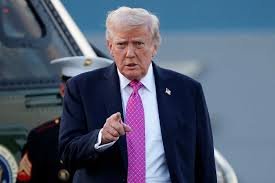
January 10, 2026: In a startling revival of imperial-era rhetoric, US President Donald Trump has once again set his sights on Greenland—this time with explicit threats of coercion. Speaking at a White House meeting with oil executives on January 9, Trump declared that the United States would “do something on Greenland, whether they like it or not,” adding that if the acquisition could not be achieved “the easy way,” Washington would pursue it “the hard way.”
The remarks, framed as a response to alleged Russian and Chinese activity in the Arctic, have sent shockwaves through diplomatic circles. They raise a deeply unsettling question: in an era supposedly governed by international law and collective security, will the world confront such naked assertions of power—or quietly look away?
READ: Mamata Accuses Amit Shah of Coal Scam Link Amid ED Raids
Trump’s fixation on Greenland is not new. During his first term, he openly floated the idea of purchasing the island, brushing aside Denmark’s firm rejection with characteristic disdain. Now, in his second term, the tone has hardened. Coming on the heels of decisive US intervention in Venezuela, his words carry an unmistakable implication: sovereignty may be negotiable when American interests are at stake.
TRUMP: “If we don’t do it, Russia or China will take over Greenland, and we’re not going to have Russia or China as a neighbor. Okay?”
“I would like to make a deal the easy way. But if we don’t do it the easy way, we’re going to do it the hard way.”
“I’m a fan of Denmark…but,… pic.twitter.com/xDuqtD4yKT
— Fox News (@FoxNews) January 9, 2026
Greenland, an autonomous territory within the Kingdom of Denmark, holds vast reserves of rare earth minerals crucial for modern technology and defence systems. Its strategic Arctic location is becoming ever more valuable as climate change opens new shipping routes and intensifies global competition in the region. While Russia and China have expanded their Arctic presence, neither has laid claim to Greenland. The US already operates the Thule Air Base under long-standing defence agreements—making Trump’s threat of outright control appear less about security necessity and more about power, resources, and legacy.
The response from Denmark and Greenland has been swift and defiant. Danish leaders have warned that any use of force would shatter the foundations of NATO and the transatlantic alliance. Greenlandic officials have expressed deep alarm, stressing the island’s autonomy, identity, and right to self-determination. Across Europe, leaders have closed ranks, rejecting what they see as colonial overreach by a supposed ally.
This episode risks opening an unprecedented fracture within NATO. If Washington can threaten force against a fellow alliance member, what meaning does collective defence still hold? European strategists increasingly describe the crisis as a test of sovereignty itself—one that will determine whether post–World War II norms still matter.
Inside the United States, Trump’s stance has exposed sharp divisions. While parts of his base defend the rhetoric as aggressive negotiation, senior Republicans have openly criticised the threat as reckless and damaging. Critics warn that normalising such behaviour erodes America’s moral authority and accelerates a global slide toward “might makes right” geopolitics.
The stakes extend far beyond Greenland. If the international community fails to respond meaningfully, Trump’s gambit could set a precedent that powerful states may redraw borders by intimidation alone. For Europe—already strained by war, energy insecurity, and strategic uncertainty—the dilemma is stark: confront Washington and risk strategic rupture, or acquiesce and invite further encroachments.
This is not merely a dispute over an icy landmass in the Arctic. It is a litmus test for whether sovereignty, alliances, and international law still restrain power—or whether the world is drifting back toward an age where force determines ownership. The coming weeks will reveal whether diplomacy prevails, or whether silence once again emboldens ambition.