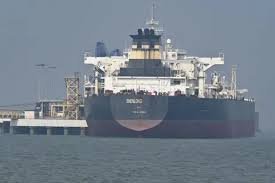
The US waiver, valid until April 19, applies only to Iranian crude and petroleum products already at sea and does not allow fresh exports or a broader sanctions rollback.
BY PC Bureau
March 21, 2026: Amid escalating war with Iran, US Treasury has taken the unusual step of temporarily authorising the delivery and sale of Iranian oil already loaded on tankers at sea, in a bid to ease supply pressures in global energy markets. The move reflects growing alarm within the administration over the sharp rise in crude prices triggered by the war and the disruption of shipping through the Strait of Hormuz.
Reuters reported that the waiver, issued by the Treasury’s Office of Foreign Assets Control on March 20, will remain in force until April 19 and is designed to release roughly 140 million barrels of Iranian oil into the market.
The temporary easing on Iranian oil does not amount to a broader rollback of sanctions. It applies only to cargoes already at sea and does not authorise new Iranian exports. Even so, the decision is striking: at the same moment Washington says it is crushing Iran militarily, it is also allowing some Iranian oil back into global circulation to prevent the war from driving energy prices even higher.
VERY INTERESTING 🔴
The U.S. is considering temporarily allowing about 140 million barrels of Iranian oil already at sea to be sold instead of blocked, aiming to inject more supply into the market and bring down global oil prices at a time when war risk… pic.twitter.com/rLi6u3aiTo
— NΞMICO (@NemicoNetwork) March 19, 2026
Trump, meanwhile, claimed the US had inflicted severe damage on Iran’s military capacity. He said Washington had succeeded in “completely degrading” Iranian missile capability, destroying its defence industrial base, and eliminating its navy and air force, while insisting that Iran would never be allowed to develop a nuclear weapon.
He also portrayed the campaign as one aimed at securing key US partners in the region. “Protecting, at the highest level, our Middle Eastern allies, including Israel, Saudi Arabia, Qatar, the United Arab Emirates, Bahrain, Kuwait, and others,” Trump wrote.
READ: Trump Signals Iran War Drawdown, Says US Nears Objectives
Oil pressure shapes US response
The Treasury waiver underscores how rapidly energy concerns have become central to Washington’s war strategy. Treasury Secretary Scott Bessent said earlier this week that the administration was considering allowing Iranian oil already stranded at sea to reach buyers, arguing that the release of about 140 million barrels could provide short-term physical relief to a market rattled by conflict. Reuters reported that Energy Secretary Chris Wright said some of that oil could reach Asian ports within days and begin filtering into the market over the following weeks.
The immediate backdrop is a sharp surge in crude prices. Reuters said Brent crude settled Friday at $112.19 a barrel, its highest settlement since July 2022, while the front-month US WTI contract settled at $98.32, after the conflict disrupted regional supplies and intensified fears over the Strait of Hormuz.
That price spike has already started feeding into consumer markets. In India, premium petrol prices were raised on March 20 for the first time in four years, with oil marketing companies citing the jump in global crude prices linked to the Middle East conflict.