

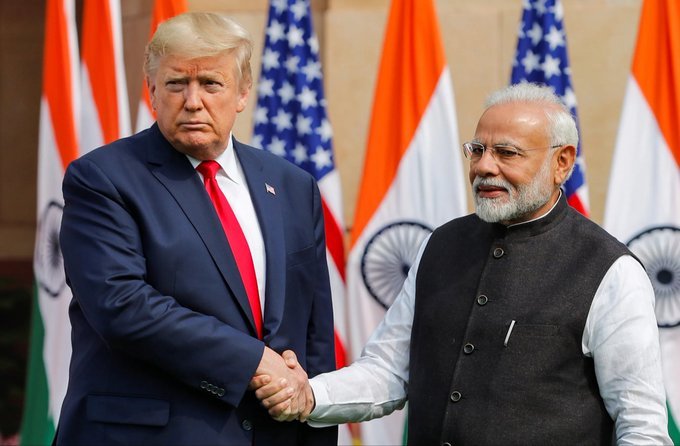
Washington targets India under a Section 301 probe on surplus production, proposing 25% tariffs. New Delhi calls the notice under review and insists it has no excess capacity in any sector while pushing for talks within the bilateral trade agreement framework.
BY PC Bureau
November 25: The United States has proposed tariffs of up to 25 per cent on Indian goods if the two countries fail to reach a trade deal. The Indian government said on Wednesday that it is examining the notice while rejecting Washington’s claim that India has structural excess capacity in manufacturing.
In a statement, the Ministry of Commerce & Industry said: “Government of India has taken note of the Notice of Determination and Request for Comments issued by the United States Trade Representative (USTR) in the Section 301 Investigation concerning Acts, Policies, and Practices of 14 economies, including India, relating to Structural Excess Capacity and Production in Manufacturing Sectors.”
“India does not have structural excess capacity in any sector,” the ministry added.
READ: Suvendu Adhikari’s Sensational Claim: Pranab Mukherjee Asked Me to Leave TMC and Join Modi
The US argues that India produces more than it needs, maintains high barriers to market access, and does not adequately protect workers, practices it claims harm American companies. The proposal stems from a Section 301 investigation launched by the USTR in March that examined 16 economic jurisdictions for policies encouraging surplus production, which the US says depresses prices and damages its manufacturing base.
US Trade Representative Jamieson Greer said: “For decades, many of our trading partners have adopted industrial strategies built on targeting manufacturing, wage and labour suppression, financial and other support, non-market economy inputs, and other market-distorting practices that tilt the trade balance in their favour while eroding America’s manufacturing base.”
🚨 PRESIDENT TRUMP’S ADMINISTRATION JUST PROPOSED SWEEPING NEW TARIFFS ON 14 ECONOMIES, INCLUDING CHINA AND THE EU, PLUS A SEPARATE HIT ON BRAZIL
Proposed rates, up to:• Vietnam: 35%
• India: 25%
• China: 20%
• Singapore: 20%
• Bangladesh: 18%
• Cambodia: 18%
• Indonesia: 18%
• Malaysia: 18%
• Thailand: 18%
• European Union: 15%
• Japan: 15%
• South Korea: 15%
• Switzerland: 15%
• Taiwan: 15%
• Brazil: 10% on finished aircraft, plus a new tariff on sugar— And We Know©🇺🇸 (@andweknow) November 25, 2026
The USTR report on India, titled India’s Acts, Policies, and Practices Relating to Structural Excess Capacity and Production in Manufacturing Sectors, notes that India runs trade surpluses with the US in pharmaceuticals, steel, and ICT goods, creating dependencies in key sectors.
India is not alone. The US has proposed tariffs of 20–35 per cent on China and other countries, while economies that already have trade deals with Washington face lower rates. The European Union, Japan, South Korea, Taiwan and Switzerland would face 15 per cent (including existing duties), and Vietnam 20 per cent once its deal is finalised.
The move follows a US Supreme Court ruling that struck down broad tariffs imposed by the Trump administration under the International Emergency Economic Powers Act. After that decision, the USTR opened two new Section 301 probes — one covering about 100 countries for alleged forced-labour export violations and another targeting 16 jurisdictions, including India, over surplus production.
The Supreme Court ruling also forced a reset in India-US trade talks. A framework agreed in February returned to the negotiating table, and the two sides are now working on an interim bilateral trade agreement.
The Commerce Ministry reiterated India’s position: “It has been India’s position that any trade-related concerns should be addressed within the framework of these negotiations. Government of India remains committed to working closely with the United States towards the early conclusion of the India-US Bilateral Trade Agreement.”
The USTR has invited public comments by 5 January and scheduled hearings for 25 January. Until then, the proposed tariffs remain open for discussion.