Amit Shah has set a 2029 deadline for implementing the Uniform Civil Code across all 21 BJP- and NDA-ruled states, saying the process will be completed before the next Lok Sabha elections.
BY PC Bureau
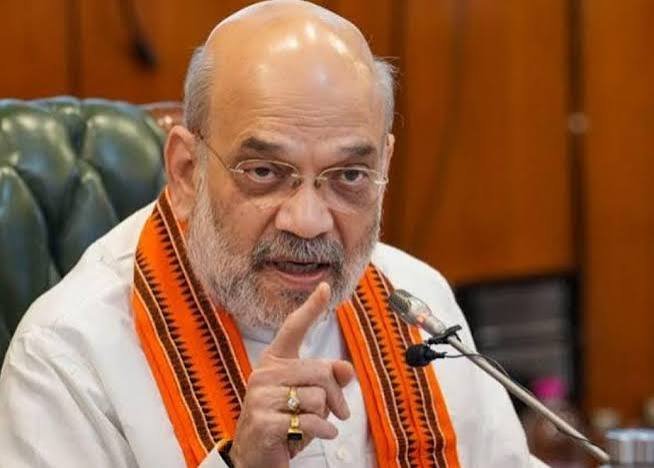
September 13, 2026: Union Home Minister Amit Shah has set a 2029 deadline for implementing the Uniform Civil Code (UCC) across all states governed by the BJP and its National Democratic Alliance allies, saying he expects the process to be completed before the next Lok Sabha elections.
Speaking to reporters in Mumbai on Sunday, Shah said the UCC had already been introduced in several states and expressed confidence that the remaining BJP- and NDA-ruled states would follow before the 2029 general election.
“We introduced the Uniform Civil Code in several states. I am confident that the UCC will be implemented in all 21 BJP and NDA-led states before 2029,” he said.
The next Lok Sabha election is scheduled to be held in 2029.
Uttarakhand became the first state in India to enact a UCC law, passing the legislation in February 2024 and bringing it into force in January 2025.
Gujarat followed with its UCC legislation in 2025, while Assam became the first state in the Northeast to pass a UCC Bill in May 2026. Madhya Pradesh approved its measure last month at a special Cabinet meeting in Bhopal.
The UCC measures in Gujarat, Assam and Madhya Pradesh are awaiting presidential assent and subsequent notification, while states including Maharashtra, West Bengal and Chhattisgarh have constituted committees to prepare draft legislation.
The proposed UCC seeks to establish a common framework for personal laws governing matters such as marriage, divorce, inheritance and succession, replacing separate provisions applicable to different religious communities.
🚨 बड़ा ऐलान
केंद्रीय गृह मंत्री अमित शाह ने कहा कि 2029 से पहले NDA शासित सभी 21 राज्यों में समान नागरिक संहिता (UCC) लागू की जाएगी। pic.twitter.com/HSuQEmKAHp
— Oc updates (@ocjain4) September 13, 2026
Criminal law, terrorism and Naxalism
Shah also highlighted the government’s changes to criminal law and its internal-security record.
He said the Bharatiya Nyaya Sanhita (BNS) had strengthened the criminal justice system and claimed that conviction rates in several states had risen to around 30 per cent within a year.
The government, he said, was also developing a mechanism aimed at ensuring that cases are resolved and justice delivered within three years.
On internal security, Shah claimed that the NDA government had brought an end to five decades of Naxalism and signed more than 14 peace agreements in the Northeast.
More than 9,000 insurgents have surrendered in the region, he said, adding that the Northeast was now moving towards a development-oriented future.
“Today we have taken the North East on the path of development,” Shah said.
He cited the abolition of triple talaq as a measure that, according to him, strengthened the rights of Muslim women.
Shah also pointed to the abrogation of Articles 370 and 35A, saying the constitutional changes in Jammu and Kashmir were carried out without violence.
He cited the surgical strikes, the Balakot air strike and Operation Sindoor as evidence of what he described as the government’s policy of zero tolerance towards terrorism.
READ: Kuki-Zo Black Day Turns Bloody as Four Killed in Manipur
Manipur NRC baseline still under discussion
On the proposed National Register of Citizens (NRC) exercise in Manipur, Shah said the Centre was still holding discussions with its political allies and parties in the state before taking a final decision on the baseline year.
Asked specifically whether 1951 would be used as the cut-off year, Shah said a decision would be announced after consultations.
The question of the baseline has become politically sensitive in Manipur, where sections of the Meitei community have been demanding that 1951 be used as the reference point for identifying citizens and alleged illegal migrants.
Shah was also asked how the government planned to identify illegal migrants.
He declined to disclose the operational details, saying that revealing the methods would make it easier for those being targeted to evade detection.
“You are asking the Home Minister to make the tools public… Then how will we catch them?” he said.
Shah reiterated the government’s commitment to identify illegal infiltrators individually and deport them from the country.
His remarks on the Manipur NRC came amid the wider debate over immigration, citizenship and demographic change in the Northeast, where the issue has become particularly contentious in the wake of the ethnic conflict in Manipur.