



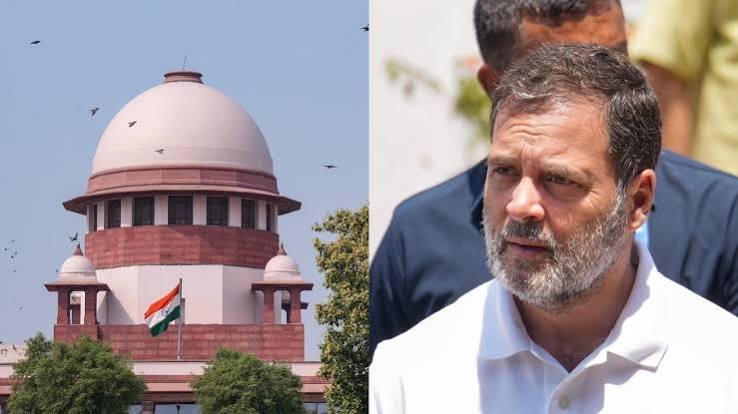
The top court has issued notice on Gandhi’s plea and stayed further trial court proceedings pending consideration of the matter.
BY PC Bureau
New Delhi/ October 13: The Supreme Court has put the brakes on criminal defamation proceedings against Congress leader Rahul Gandhi over his alleged description of Prime Minister Narendra Modi as “Choro Ke Sardar” (chief of thieves) and “Commander-in-Thief”, granting him interim relief in his legal battle against a BJP worker’s complaint.
A bench of Justices Vikram Nath and Aparesh Kumar Singh issued notice on Gandhi’s petition challenging the Bombay High Court’s September 8 order refusing to quash the case. The bench directed that further proceedings before the trial court remain stayed in the meantime and made the notice returnable in four weeks.
Senior advocate Abhishek Manu Singhvi appeared for Gandhi.
The case originated in a complaint filed by BJP worker Mahesh Shrishrimal before a Metropolitan Magistrate, who subsequently summoned Gandhi. The complainant argued that the remarks against Modi also cast aspersions on the BJP and its members, effectively portraying them as thieves and damaging their reputation.
READ: CJP Volunteers Scale Barricades at Jantar Mantar in Defiance of Protest Ban; Detained
Gandhi challenged the summons before the Bombay High Court, arguing that he had neither named the BJP nor targeted any identifiable group. His counsel, senior advocate Sudeep Pasbola, contended that an inference that the remarks referred to party workers could not, by itself, justify a criminal defamation prosecution.
The High Court rejected the plea, holding that a registered national political party constituted an identifiable body. Citing a Delhi High Court ruling in a separate case involving Shashi Tharoor, it observed that whether Gandhi’s remarks amounted to defamation of the party and its members would have to be examined during trial.
The Maharashtra government also opposed Gandhi’s plea, arguing that the complaint should not be dismissed at the threshold if the alleged imputation concerned a definite and identifiable group.
The Supreme Court’s interim order pauses the trial while the challenge is considered. The central legal question is whether remarks directed at the Prime Minister can sustain a criminal defamation complaint by an individual party worker when neither the political party nor its members were expressly named







Comments 1