Northwestern Polytechnical University—part of China’s “Seven Sons of National Defense”—acquired H200 processors and rented access to more banned Nvidia chips. Procurement records reveal a wider pattern of Chinese universities obtaining restricted AI hardware.
BY PC Bureau
November 11: A Chinese university with close ties to the People’s Liberation Army purchased two Nvidia H200 artificial intelligence chips last month, even though it has long been on a US trade blacklist, according to procurement records cited by Reuters. The deal underscores the challenges Washington faces in stopping restricted American technology from reaching Chinese institutions connected to the military.
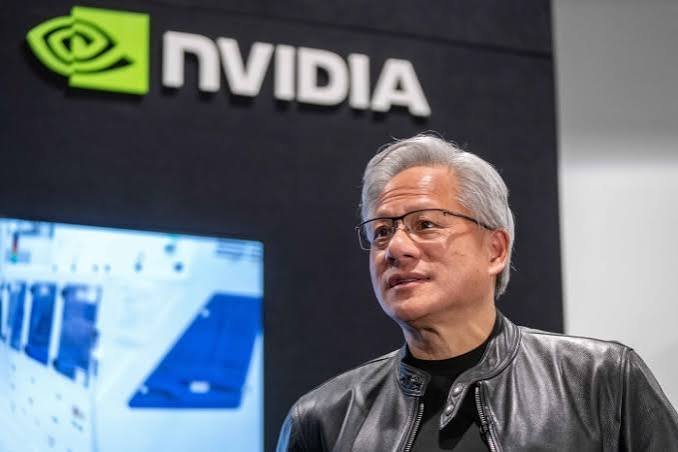
The purchases come as US lawmakers intensify scrutiny of Nvidia CEO Jensen Huang and the company’s push to loosen restrictions on AI chip sales to China. That scrutiny has grown after reports that Huang was targeted in an alleged Chinese intelligence operation.
Huang has maintained that continued sales to China would help preserve US technological leadership by keeping Chinese customers dependent on American technology. Some lawmakers from both parties argue that access to Nvidia’s advanced processors could speed China’s development of military AI applications, including weapons design, intelligence analysis, and defence modernisation. They have called for tighter safeguards such as chip-tracking systems and greater congressional oversight of exports. Three Republican committee chairmen have also requested a briefing with Huang on 18 November regarding his reported contacts with an alleged Chinese intelligence operative.
Two H200 Chips Purchased for About $123,000
Northwestern Polytechnical University bought two H200 processors for 874,700 yuan (roughly $123,000), according to a procurement notice dated 21 October on the university’s website.
Based in Xi’an, the university belongs to China’s elite “Seven Sons of National Defense” group. These institutions maintain close links to the country’s defence establishment and are subject to US sanctions. It acquired the chips for its management school through a domestic supplier, Shaanxi Bosuan Network Technology, rather than directly from Nvidia.
The H200 is one of Nvidia’s most powerful processors for training and running advanced AI systems. Exports to China require US government approval, and licences for blacklisted entities such as Northwestern Polytechnical are generally subject to a policy of denial.
The university also gained access to H200 processors and other high-end Nvidia chips through multiple contracts with Chinese companies that supplied rented computing capacity.
Reuters said it was reporting these purchases and computing contracts for the first time. Northwestern Polytechnical University, Nvidia, and the US Commerce Department’s Bureau of Industry and Security (which administers the export controls) did not respond to requests for comment. Reuters said it could not establish contact details for Shaanxi Bosuan Network Technology.
How the University Circumvented US Restrictions
The US Commerce Department added Northwestern Polytechnical to its Entity List in 2001 over alleged involvement in missile-proliferation activities and military research. Restrictions were tightened in 2019, so that licences for the export of controlled American technology to the university are subject to a presumption of denial in most cases.
The university’s purchases show how Chinese institutions with military links can still obtain restricted American computing power through domestic suppliers—either by buying the processors outright or by renting access to servers that contain them.
READ: Anthropic CEO Predicts AI Could Make Cancer, Alzheimer’s History Within A Decade
A Reuters review of 26 Chinese procurement and corporate records from this year found universities and research institutions buying US-restricted Nvidia chips or leasing computing services powered by them. Several of those institutions had close connections to China’s defence industry or military research programmes.
The records show that the university’s cybersecurity school secured two seven-month contracts in January for access to servers containing eight H200 chips each. The contracts, valued at 441,700 yuan and 441,000 yuan, covered AI model fine-tuning and reinforcement-learning training.
A Chinese university linked to the People’s Liberation Army bought Nvidia’s powerful H200 AI chips despite being on a US export blacklist, exposing gaps in Washington’s efforts to restrict China’s access to advanced technology https://t.co/21afuEG7IK https://t.co/ZKKHRhzXnL
— Reuters Business (@ReutersBiz) November 11, 2026
Separately, the university rented access to servers containing eight Nvidia A100 processors and eight A800 chips. Both models are barred from export to Chinese entities; the H200 is the most advanced processor identified in the university’s procurement records.
In April, another institute at the university purchased computing services requiring at least 24 A100 chips under a 375,000-yuan contract for structural and fluid-dynamics simulations.
The contracts went to several relatively obscure Chinese technology suppliers. The procurement documents provided little information about where the processors originated or where the servers were located. Chinese law requires public procurement agencies to verify that suppliers can fulfil contracts before announcing successful bidders and signing agreements.
Restricted Nvidia Chips Found at Other Universities
The procurement records point to a broader market for restricted Nvidia processors and related computing services among Chinese universities.
- Shenzhen University bought three H100 processors—another high-end Nvidia chip barred from export to China—for 769,800 yuan in September.
- Wuhan University of Technology purchased a server containing an H100 chip for 355,000 yuan in June. It also bought four A100 processors in a separate transaction worth 344,000 yuan.
- Beihang University, another member of the Seven Sons of National Defense group, purchased four A800 processors for 489,000 yuan in April. The university has close ties to China’s aerospace and defence sectors and conducts research linked to military aviation and space programmes.
- Two government procurement notices issued in July and September identified suppliers selected to provide computing services using Nvidia H800 and A800 processors to the University of Chinese Academy of Sciences. One contract listed access to H800 chips at 10 yuan per chip-hour.
- A separate procurement award in January named a supplier for six A100 processors worth 484,800 yuan for a public institution in Shenzhen.
Reuters has previously reported that Chinese universities and research institutions with military links obtained restricted Nvidia processors embedded in servers manufactured by Super Micro Computer, Dell, and Gigabyte through domestic resellers. It has also documented an underground market in China for restricted Nvidia chips sourced from overseas inventories and intermediaries in third countries.
Last week, Reuters reported that small quantities of H200 processors had reached China through indirect routes even as Beijing held back approval for large-scale imports.