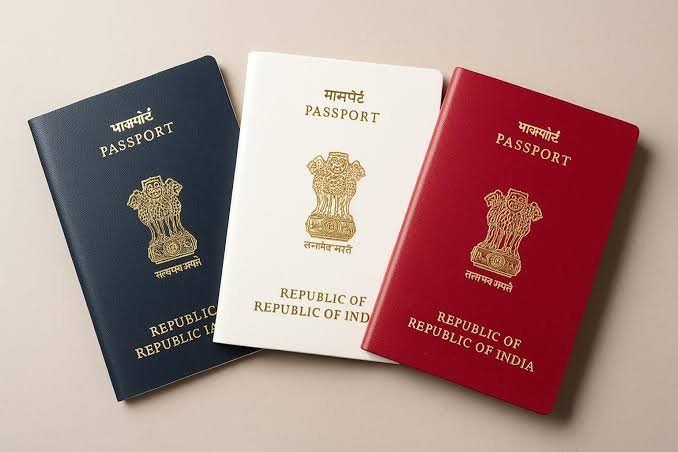
The Tourist Visa has been replaced with a broader Visitor Visa covering tourism, short-term business meetings, medical consultations, wellness retreats and cultural courses.
BY PC Bureau
New Delhi/ NOVEMBER 11: Foreign visitors to India will find it easier to combine tourism with short-term business, medical consultations, wellness programmes and cultural activities under a sweeping overhaul of the country’s visa framework announced by the government.
The Ministry of Home Affairs has reduced the number of principal visa categories from 13 to nine and cut the sub-categories from 49 to 23. In a parallel exercise, it has simplified visa application forms, reducing the number of fields by 65-70% across all 23 sub-categories.
The changes are aimed at making it easier for foreign nationals to travel to India for tourism, healthcare, education, research and business. The government said it had examined visa systems in developed countries and international standards before finalising the revised framework.
The latest exercise follows an earlier rationalisation undertaken in October 2025.
Tourist Visa Replaced With Visitor Visa
A major change is the replacement of the Tourist Visa with a broader Visitor Visa category. The new framework extends beyond conventional sightseeing to include short-term business meetings, medical consultations, wellness retreats and cultural and educational courses.
The Visitor Visa will have two sub-categories, V-1 and V-2.
The V-1 visa will be issued for 30 days with multiple entries. It will cover tourism, short-term business meetings, medical consultations, wellness retreats, short-duration medical treatment and courses in Indian languages, music, art and craft. Short-term yoga programmes will also be eligible.
The V-2 visa will cater to longer visits and may be granted for one, five or 10 years, depending on eligibility. It will cover activities permitted under the V-1 category as well as mountaineering. A separate six-month multiple-entry provision has also been introduced for mountaineering.
The broader category is intended to accommodate visitors who undertake several short-term activities during a single trip to India.
Read: CCTV Footage Offers Clues As Security Forces Hunt Kulgam Attackers
Medical Visas To Get One-Year Validity
The government has reorganised the Medical Visa framework while retaining separate provisions for conventional medical treatment and treatment under AYUSH systems.
The M-1 visa will cover medical treatment other than AYUSH, while the M-3 category will apply to treatment under AYUSH systems. Both, including their electronic visa variants, will carry a default validity of one year with multiple entries.
Separate attendant visas have been introduced for people accompanying patients. The M-2 visa will cover attendants of M-1 visa holders, while M-4 will be issued to attendants accompanying M-3 visa holders.
The changes are expected to benefit foreign patients requiring multiple consultations, follow-up visits or medical procedures over an extended period. Multiple-entry validity will also reduce the need to apply for a fresh visa during treatment.
The restructuring is part of the government’s broader ‘Heal in India’ initiative to promote the country as a healthcare destination.
A press release by Ministry of Home Affairs reads, “Under the leadership of Prime Minister Shri Narendra Modi and guidance of Union Home Minister Shri Amit Shah, Government of India rationalizes Indian visa regime. Under Visa regime rationalization, main categories for Visa reduced from 13 to 09 and sub categories from 49 to 23. Indian visa regime rationalization to boost foreign tourist arrivals, enhance medical value travel and foreign student arrivals. Number of fields to be filled in the application forms for all 23 visa sub-categories reduced by 65%–70%, now application process easier, faster, and more applicant-friendly. Changes reduce overlap between visa categories and make framework easier to navigate for visitors, patients, students, researchers, investors and business professionals. Rationalization intends to boost legitimate travel, education, healthcare and economic engagement with India through clearer, purpose-based visa options.”
— Press Trust of India (@PTI_News) November 11, 2026
New Visa Provisions For Foreign Students, Researchers
The Student Visa framework has been consolidated into two broad sub-categories, S-1 and S-2.
The S-1 category will cover school education as well as graduate and postgraduate courses. The S-2 category will include PhD scholars, research students, visiting faculty, scientific and anthropological expeditions, internships and exchange programmes.
Foreign students admitted to Indian educational institutions through the Study in India portal may be granted an e-S1 visa for up to five years or for the duration of their academic course, whichever is shorter. The visa will allow multiple entries.
The government expects the changes to provide greater certainty to international students and researchers planning to pursue academic programmes or research in India.
Business Visa Categories Streamlined
The Business Visa category has also been divided into two sub-categories, B-1 and B-2.
The B-1 visa will cover longer-term business activities, including foreign nationals seeking to establish industrial or business ventures in India.
The B-2 category will cover short-term and contract-based activities, including production investment-related business, conferences, sports events, cultural performances and film shoots.
A specific provision has also been introduced for foreign subject-matter experts, engineers and technical personnel engaged by Indian companies.
It will cover specialists involved in installation and commissioning, quality checks, maintenance, production, IT and ERP operations, training, supply chain development, plant design and technical support.
Such professionals may obtain a Production Investment Business Visa under the B-2 category through the e-visa platform. The government said these activities were previously covered under the e-B4 visa nomenclature.
The revised provisions are intended to make it easier for Indian companies to bring in foreign technical expertise for industrial and business operations.
E-Visa Facility Available To 172 Countries
India currently offers electronic visas through an electronic travel authorisation system covering 13 sub-categories. The facility is available to citizens of 172 countries.
The government is upgrading its information technology systems to implement the revised framework. The Ministry of Home Affairs expects visas under the new system to be issued by the end of 2026.
The nine main visa categories under the revised framework are Business, Diplomatic, Work, Journalist, Medical, Official, Student, Visitor and Miscellaneous.
The Miscellaneous category will cover people of Indian origin and their spouses and children, dependants of foreign nationals holding long-term visas, people joining specified institutions such as the Auroville Foundation, Afghan nationals seeking stay visas and certain long-term visa categories for nationals of neighbouring countries.