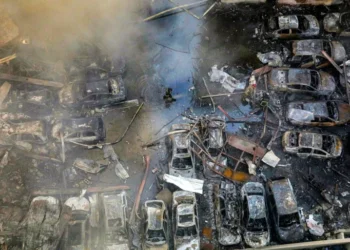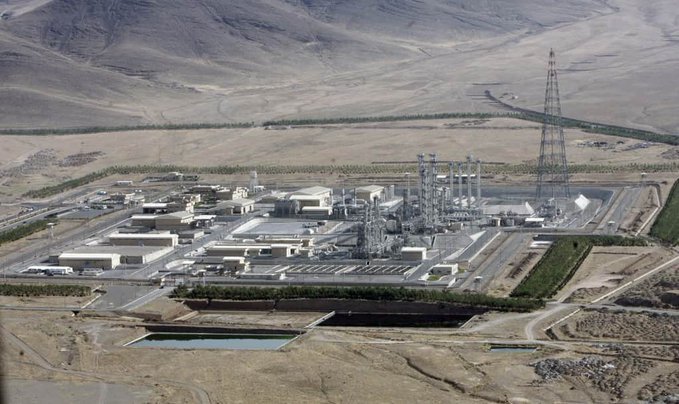
Iranian authorities said the latest strike on natanz nuclear facility caused no radiation leakage or wider radiological consequences.
BY PC Bureau
March 21, 2026 — Iran’s Natanz nuclear enrichment facility, the country’s main uranium enrichment site, was reportedly struck again on Saturday, according to Mizan, Iran’s official judiciary news agency. Iranian authorities said the attack caused no radiation leak or other radiological consequences.
The Natanz complex, located about 220 km southeast of Tehran in Isfahan province, has been repeatedly targeted during the ongoing regional conflict, now in its fourth week. Iranian officials said the latest strike did not result in reported casualties or environmental damage beyond the immediate impact area.
Natanz had already sustained damage earlier in the conflict. Previous assessments indicated that earlier strikes caused limited structural damage, mainly to access points and support buildings linked to the underground Fuel Enrichment Plant. The site was also hit during the Iran-Israel war in June 2025, when both above-ground and underground sections reportedly suffered serious damage.
The latest reported strike comes amid continued attacks on Iran’s nuclear and military infrastructure as part of the wider conflict involving Iran, the United States, and Israel. Neither Washington nor Tel Aviv had immediately confirmed the latest reported strike on Natanz.
The development comes despite recent signals of possible de-escalation from Washington. US President Donald Trump said on Friday he was considering winding down military operations in the Middle East, even as the Pentagon moved ahead with additional deployments, including three amphibious assault ships and about 2,500 Marines to the region.
🇮🇷🇺🇲 Iranian sources, including the Tasnim news agency, reported a US and Israeli strike on the Natanz nuclear facility.
The Atomic Energy Organization of Iran (AEOI) stated that no radiation leaks were detected, thanks to the facility’s design. pic.twitter.com/a6UiGe3a3s— Argonaut (@FapeFop90614) March 21, 2026
READ: Iran Fires Two Missiles Toward Diego Garcia; None Hits US-UK Base
Analysts say the parallel track of de-escalatory rhetoric and military reinforcement suggests preparations for a prolonged confrontation, including possible operations tied to key maritime routes such as the Strait of Hormuz.
The broader conflict has also spread to energy infrastructure across the Gulf, heightening fears of wider regional disruption. Recent strikes and counterstrikes have pushed up global oil prices amid concerns over supply risks.
Iran has long maintained that its nuclear programme is peaceful and subject to international oversight, though the International Atomic Energy Agency has repeatedly raised concerns over monitoring, access, and undeclared nuclear activities.
As the war enters its fourth week, the renewed targeting of Natanz underscores the risk of further escalation, with questions growing over whether the conflict is moving toward de-escalation or a deeper military confrontation.