The Islamic Revolutionary Guard Corps claimed coordinated operations brought down U.S. transport planes and helicopters during the attempted extraction.
BY PC Bureau
April 5, 2026 — Iranian military officials on Sunday claimed a major victory, saying a high-risk U.S. search-and-rescue (SAR) mission inside Iranian territory ended in failure, with multiple American aircraft destroyed. The assertions come amid sharply conflicting narratives following the downing of a U.S. F-15E Strike Eagle and the reported rescue of at least one crew member.
According to statements from the Khatam al-Anbiya Central Headquarters and the Islamic Revolutionary Guard Corps, the incident unfolded in southern Isfahan after an American F-15E was shot down earlier in the week. While one crew member was reportedly recovered, Iranian officials said a second airman remained missing, prompting a rapid U.S. special operations response deep inside Iranian territory.
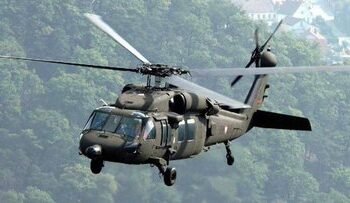
Iranian spokesperson Ebrahim Zolfaghari described the U.S. mission as a failed “deception and escape operation,” alleging it was carried out under the pretext of recovering the downed pilot. He claimed that Iranian forces destroyed two C-130 military transport aircraft and two Black Hawk helicopters during the operation. Iranian outlets, including Tasnim News Agency, circulated images and videos said to show charred wreckage of large transport aircraft and helicopter debris at what appeared to be a remote landing site.
Some reports and independent analyses of imagery suggested the presence of smaller special operations helicopters, possibly MH-6 “Little Bird” platforms, alongside the larger aircraft wreckage. These aircraft are typically used by elite U.S. units for high-risk insertions and extractions in contested environments.
READ: Concealing War Damage? US Curbs Iran War Satellite Imagery
U.S. officials, including Donald Trump, have maintained that the rescue operation was successful, stating that the missing crew member was “safe and sound” after what he described as one of the most daring missions in U.S. history. However, Washington has not publicly acknowledged the loss of transport or support aircraft.
#BREAKING
According to the released photos, a US helicopter was also downed south of Isfahan. pic.twitter.com/sU2TNiOUhq— Tehran Times (@TehranTimes79) April 5, 2026
Some Western and independent reports suggest that at least two MC-130J Commando II aircraft may have been damaged or stranded at an improvised airstrip during the operation. According to these accounts, U.S. forces may have destroyed the aircraft themselves to prevent sensitive technology from falling into Iranian hands before withdrawing from the area.
Images circulating online, reportedly geolocated to southern Isfahan, show burned remains consistent with large four-engine aircraft and helicopter components. Iranian state media has presented these as evidence of successful defensive action by air defense units, ground forces, and auxiliary formations. In contrast, some U.S.-linked accounts describe the destruction as a deliberate “denial operation” carried out after personnel were safely extracted.
Earlier reports also indicated that at least one U.S. helicopter may have come under Iranian fire during the mission but managed to withdraw. The use of small, agile helicopters such as the MH-6 would be consistent with standard U.S. special operations tactics in hostile environments.
The incident forms part of a rapidly escalating confrontation between the United States and Iran, which has included airstrikes, retaliatory attacks, and competing claims of battlefield successes. The downing of the F-15E marked a significant escalation, representing one of the first confirmed losses of a U.S. fighter aircraft in the current conflict.
Iranian authorities have also announced measures to locate any remaining U.S. personnel, reportedly mobilizing local forces and intensifying surveillance in remote areas. U.S. operations in the region are believed to have involved low-altitude flights and coordination with allied intelligence assets, though details remain unconfirmed.
Despite the volume of claims, no independent verification has reconciled the competing narratives. Iranian accounts emphasize a decisive defensive success, while U.S. statements focus on the recovery of personnel and mission accomplishment. The exact number of aircraft lost, the circumstances of their destruction, and the full outcome of the operation remain unclear.
Military analysts note that the loss—or destruction—of specialized aircraft such as C-130 variants and support helicopters would represent a significant tactical setback, even if the primary objective of rescuing personnel was achieved. At the same time, Iran’s claims, if accepted domestically, serve to reinforce its narrative of military resilience and deterrence.
The episode highlights the growing role of information warfare alongside military operations, with both sides presenting sharply divergent versions of events. As the broader conflict continues, clarity is likely to remain limited, with key details obscured by restricted access and the fog of war.