

Indigenous communities across Imphal valley, staged a coordinated ‘war cry’ protest on October 23, beating traditional drums, honking vehicle horns and banging on electric poles and utensils to demand action on the prolonged conflict and identity-related concerns.
BY PC Bureau
October 23, 2026: Drums beat, utensils clanged and vehicle horns blared across Imphal Valley on Thursday evening as indigenous groups staged a coordinated protest to demand justice for civilians killed in the ongoing Manipur conflict.
The demonstration echoed Prime Minister Narendra Modi’s 2020 appeal to people to bang utensils and clap in recognition of frontline workers during the Covid-19 pandemic. This time, protesters used noise to express anger over the killings and the government’s handling of the crisis.
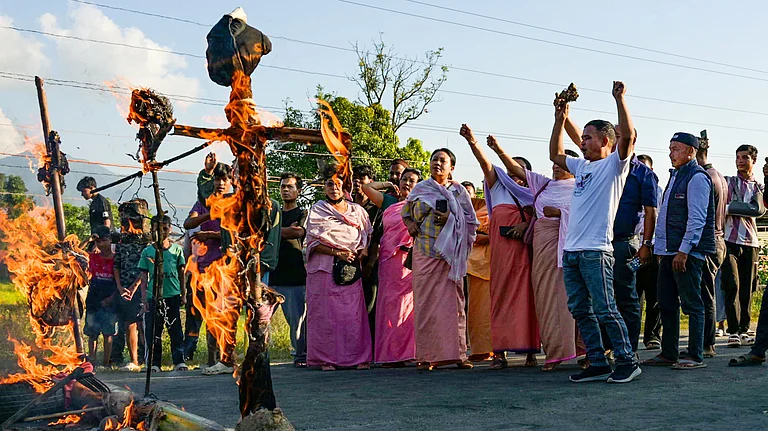
Organised by the Federation of Haomei, the protest ran from 7.30 pm to 8 pm. The main gathering was held at Sawombung Kabui Khunjao. Men, women and children took part. Protesters beat traditional drums, struck utensils against their heads, banged on electric poles and honked vehicle horns.
The demonstration followed the killing of three Meitei civilians, which protesters blamed on Kuki militants. The allegations and circumstances surrounding the killings require separate verification.
This is the level of frustration with the Government of Manipur. Unprecedented protest erupt in Manipur where people bang thalis and make all sort of noise as a form of protest over the killing of 3 innocent by Meiteis by Kuki Militants in Manipur. @PMOIndia @HMOIndia @AmitShah https://t.co/60S23VbUYL
— Apunba Khunai (@ApunbaKhunai) October 23, 2026
Protesters raised a list of demands, including scrapping the Suspension of Operations (SoO) agreement with Kuki armed groups, updating the National Register of Citizens (NRC) and deporting people they described as foreigners.
They also opposed the free movement of armed militants in the hill areas and rejected any proposal for a separate administration for Manipur. Several slogans targeted what demonstrators called the government’s “divide-and-rule” policy.
READ: Delhi HC Rejects Neha Bora’s Plea Against Peace-Bond Notice
READ: Centre Admits China Border Friction; Arunachal Soldier Killed
Federation of Haomei Explains Protest
Local media reports quoted Federation of Haomei secretary general Vicisy Shimrey as saying that the “war cry” is a traditional way for indigenous people to express anguish and dissent.
Shimrey said the people of Manipur had endured the crisis for more than three years. He alleged that the authorities had failed to take adequate steps to restore lasting peace.
Manipur, India.
“Lanpung Yeiba” (specifically rooted in the historic tradition of Kangla Senbung Yeiba) represents a powerful, unique mode of public dissent in ManipurUnique Protest #LanpungYeiba ( Lan =War, Pung =Drum, Yeiba = Hitting \ Banging) A traditional ways in early days a drum was used to bang to alert the people of a possible threat of war or to prepare for war)
Protesting against the killing of civilians. Protesters came out on the streets in different localities to bang utensils, electric posts with hammers while honking vehicular horns from 7.30 pm to 8 pm to protest against failure of the government to resolve the ethnic crisis in the state.
#ManipurProtest #LanbungYeiba— huidrom athouba (@HuidromAthouba) October 23, 2026
He also raised concerns about demographic changes, alleged attacks on indigenous communities and illegal immigration. He called for a review of the SoO arrangement and said the NRC should be updated before a fresh census.
The claims reflect the organisers’ position. The protest itself does not independently establish allegations about immigration, demographic changes or responsibility for attacks.
Protesters Appeal to Centre and State
Another participant, Hera Kabui, urged the Centre and the Manipur government to abandon what she described as vote-bank politics and a divide-and-rule approach.
She called on the authorities to focus on protecting indigenous communities. Kabui also expressed concern over what she saw as limited public attention to the crisis and urged people to speak out about its impact on future generations.
The protest highlighted divisions over the SoO agreement, the NRC, security in the hill areas and demands for a separate administration.
By taking their grievances to the streets through drums, utensils and horns, the demonstrators sought to draw attention to the killings and press the government to act. Their demands also reflected wider disputes over identity, security and Manipur’s political future.
BY PC Bureau
October 23, 2026: Beating traditional drums, raising slogans, honking vehicle horns and banging on electric poles and utensils, members of indigenous communities across Imphal Valley staged a coordinated “war cry” protest on Thursday evening, demanding government action on the prolonged conflict and issues they say threaten their rights and future.
The demonstration, organised by the Federation of Haomei, took place in areas inhabited by indigenous communities, with the main gathering at Sawombung Kabui Khunjao in Imphal from 7.30 pm to 8 pm. Men, women and children participated in the protest.
The demonstrators raised slogans demanding the abrogation of the Suspension of Operations (SoO) agreement, an update of the National Register of Citizens (NRC) and the deportation of alleged foreigners. They also called for an end to what they described as the government’s “divide-and-rule” policy, opposed the free movement of armed militants in the hill areas and rejected any proposal for a separate administration for Manipur.
READ: Delhi HC Rejects Neha Bora’s Plea Against Peace-Bond Notice
READ: Centre Admits China Border Friction; Arunachal Soldier Killed
This is the level of frustration with the Government of Manipur. Unprecedented protest erupt in Manipur where people bang thalis and make all sort of noise as a form of protest over the killing of 3 innocent by Meiteis by Kuki Militants in Manipur. @PMOIndia @HMOIndia @AmitShah https://t.co/60S23VbUYL
— Apunba Khunai (@ApunbaKhunai) October 23, 2026
Federation of Haomei Explains Protest
Local media reprots quoted Federation of Haomei secretary general Vicisy Shimrey describing the “war cry” as a traditional form of expression through which indigenous people communicate anguish, dissatisfaction and suffering.
He said people in Manipur had endured the crisis for more than three years and alleged that the authorities had failed to take adequate steps towards lasting peace.
Shimrey also expressed concern over what he described as a demographic imbalance, alleged continuing attacks on indigenous communities and the issue of illegal immigration. He called on the government to review the SoO arrangement and said the NRC should be updated before a fresh census is undertaken.
The demands reflect the participating groups’ position on the conflict and the state’s political future. Their allegations concerning demographic changes, immigration and attacks on indigenous communities were not independently established by the demonstration itself.
Manipur, India.
“Lanpung Yeiba” (specifically rooted in the historic tradition of Kangla Senbung Yeiba) represents a powerful, unique mode of public dissent in ManipurUnique Protest #LanpungYeiba ( Lan =War, Pung =Drum, Yeiba = Hitting \ Banging) A traditional ways in early days a drum was used to bang to alert the people of a possible threat of war or to prepare for war)
Protesting against the killing of civilians. Protesters came out on the streets in different localities to bang utensils, electric posts with hammers while honking vehicular horns from 7.30 pm to 8 pm to protest against failure of the government to resolve the ethnic crisis in the state.
#ManipurProtest #LanbungYeiba— huidrom athouba (@HuidromAthouba) October 23, 2026
Protesters Appeal to Centre and State
Another participant, Hera Kabui, urged the Centre and the Manipur government to move away from what she called vote-bank politics and a divide-and-rule approach, and instead focus on protecting indigenous communities.
Kabui expressed concern over what she described as insufficient public attention to the crisis. She appealed to people to speak out about their grievances and consider the consequences of the continuing turmoil for future generations.
The demonstration comes amid continuing disagreements over the SoO agreement with Kuki-Zo armed groups, demands concerning the NRC, security arrangements in the hill areas and proposals for a separate administration.