Observers warn that symbolic gestures and enforced peace cannot replace inclusive dialogue and accountability, as unresolved grievances continue to threaten lasting peace in Manipur.
BY Navin Upadhyay
December 17, 2025: An exchange of gunfire late on December 16 in the highly sensitive Torbung buffer zone has once again laid bare the fragility of the uneasy calm prevailing in Manipur. The incident, reported around 9 pm near Torbung and Phougakchao Ikhai villages on the foothills separating Bishnupur district in the Meitei-dominated Imphal Valley from Kuki-Zo–inhabited Churachandpur hills, triggered the immediate deployment of additional security forces.
While no casualties were officially reported, the sound of gunfire alone was enough to reignite fears that a single spark could plunge the state back into large-scale violence.
Officials said several rounds were fired in quick succession, once again exposing how fragile and volatile the buffer zones remain despite the deployment of substantial central security forces. The firing came at a moment when the administration has renewed efforts to resettle Meitei internally displaced persons (IDPs) in peripheral and contested areas—a move that has provoked strong objections from Kuki-Zo organisations and sharply heightened tensions on both sides.
An Ill-Conceived Move
The decision is difficult to comprehend, to say the least. With both communities heavily armed and poised to react to even the slightest trigger, enforced resettlement in sensitive buffer zones is almost guaranteed to be perceived as a provocation rather than a confidence-building exercise. Had displaced families been resettled in clearly secured locations within the valley, the move may not have generated such alarm. Instead, placing them in contested zones reflects a serious lapse in judgment, rooted in the mistaken belief that symbolic administrative steps can substitute for genuine reconciliation.
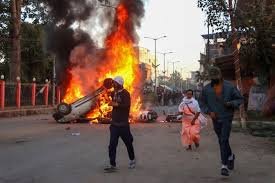
This assumption ignores the scale and savagery of the violence that erupted on May 3, 2023, and unfolded in the days that followed—marked by sexual violence, killings, beheadings, and the burning of civilians. These are not wounds that time alone can heal. The chilling images of women paraded naked through the streets of Imphal remain seared into public memory, a stark reminder that no gesture of peace—least of all one imposed through haste or force—can erase such trauma or dissolve the deep mistrust that continues to fracture Manipur.
Equally pressing is the question of justice for the victims of that violence. More than two years on, not a single conviction has been secured for the brutality witnessed, and in many cases, investigators have failed to even identify a suspect. The repeated extensions granted to the Ajai Lamba–led Commission of Inquiry, along with the handling of the alleged Biren Singh audio tapes, have only deepened public scepticism and reinforced perceptions that the authorities are unwilling to hold perpetrators accountable. Without credible justice, peace risks becoming little more than a hollow refrain. Governor Ajay Kumar Bhalla and his administration must confront this fundamental question: can reconciliation truly take root in the absence of accountability? Before attempting to impose calm at the barrel of a gun, the state must demonstrate—clearly and convincingly—that justice is not optional.
Talking of justice, Torbung holds particular symbolic and traumatic significance in the Manipur conflict. It was here, in the early days of the violence in May 2023, that some of the first killings took place, setting off a chain of retaliatory attacks that rapidly engulfed large parts of the state. More than two-and-a-half years on, the scars of that violence remain raw.
The ethnic clashes that erupted on May 3, 2023—initially triggered by protests against a proposed extension of Scheduled Tribe status to the Meitei community—have left Manipur deeply fractured. At least 260 people have been killed, and an estimated 60,000 displaced from their homes. Entire populations have been segregated along ethnic lines, with Meiteis largely confined to the Imphal Valley and Kuki-Zo communities retreating to the surrounding hills. What was once a mixed social landscape has hardened into mutually exclusive territories policed by fear, memory, and mistrust.
Fragile Peace
Buffer zones manned by central security forces have succeeded in preventing full-scale confrontations, but they have not eliminated sporadic firing, attempted incursions, or the deep suspicion that pervades daily life. The latest Torbung incident illustrates how fragile this enforced calm is. Kuki-Zo groups argue that government-backed resettlement drives in such sensitive zones are inherently provocative. The Kuki-Zo Council (KZC) has termed the recent resettlement of Meitei IDPs in Torbung as “irresponsible,” warning that pushing displaced populations into buffer zones without broad consensus risks reopening old wounds and triggering fresh bloodshed.
Amid this backdrop, isolated gestures of reconciliation have been projected by sections of the valley as signs of a thaw, but they have largely failed to convince Kuki-Zo communities. On December 8, 2025, Meitei BJP MLA Yumnam Khemchand Singh made a heavily guarded visit to a Kuki-Zo relief camp in Naga-dominated Ukhrul district, appealing for peace ahead of Christmas. While the visit was showcased by supporters as a breakthrough moment, Kuki-Zo organisations dismissed it as a “calculated political exercise” and a publicity stunt, objecting to its unannounced nature and questioning its sincerity.
Similarly, a meeting held in Delhi on December 14–15, where 34 BJP MLAs—including four from the Kuki-Zo community—met party leaders for the first time since the outbreak of violence, was described by participants as “positive” and “fruitful.” Discussions reportedly touched on restoring peace and the possibility of forming a government while the state remains under President’s Rule, imposed in February 2025. Yet the symbolism rang hollow for many in the hills. Most of Manipur’s 10 Kuki-Zo MLAs have boycotted the state assembly for over two years, insisting that normal political processes cannot resume without addressing their core demand for a separate administrative arrangement. Their limited participation in Delhi, critics argue, does not reflect a genuine consensus or reconciliation.
READ: KZC Warns Againt IDP Resettlement in Manipur’s Buffer Zone
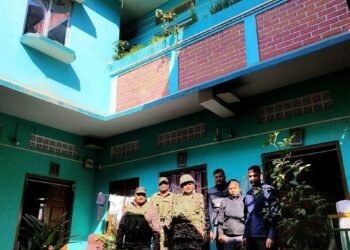
On the ground, attempts to facilitate the return of IDPs remain fraught. Recent resettlements have been small, heavily securitised, and accompanied by incentives, underscoring the lack of confidence among displaced families. Many Kuki-Zo IDPs living in relief camps say they are unwilling to return to valley or fringe areas, citing persistent safety concerns. Civil society organisations and armed groups—some of which are currently under Suspension of Operations agreements with the Ministry of Home Affairs—maintain that reintegration is impossible, and creating a Union Territory for the tribal community was the only way out for peace.
A Tinderbox Situation
This volatile mix of armed preparedness—marked by the presence of Meitei groups such as Arambai Tenggol in the valley and constant vigilance by Kuki-Zo village volunteers in the hill areas—combined with political posturing and an imposed sense of normalcy, has created a tinderbox situation. Public discourse and social media exchanges lay bare how deeply unhealed the wounds remain, with mutual accusations and competing narratives of victimhood continuing to harden attitudes on both sides.
Governor Ajay Kumar Bhalla, who has been engaging various stakeholders since assuming office, faces a daunting challenge. Symbolic gestures, high-security visits, and peace enforced at the barrel of a gun may produce headlines about returning normalcy, but they cannot substitute for genuine, inclusive dialogue. Building trust with Kuki-Zo civil society organisations, engaging armed groups already in talks, and acknowledging long-standing grievances in the hill districts are essential steps toward lasting peace.
Manipur’s experience shows that enforced calm is not the same as reconciliation. The government may resettle IDPs wherever it chooses and provide layers of security, but will that truly lead to a return of normalcy? Will Kuki-Zo IDPs ever dare to return to Imphal? And will the state be able—or willing—to restore their looted property and rebuild the homes that were burnt down?
Flashpoints like Torbung serve as stark reminders that the underlying divide remains unresolved. Without composure, inclusivity, and political courage to confront uncomfortable truths, the current approach risks tipping a fragile peace into another cycle of violence. Sustainable reconciliation will require patience, honesty, and a willingness to listen—anything less could prove disastrous.